He leads projects and consulting services under LEED, EDGE, and FITWEL standards, integrating facade optimization strategies, life cycle assessments, and energy modeling to develop high-performance buildings.
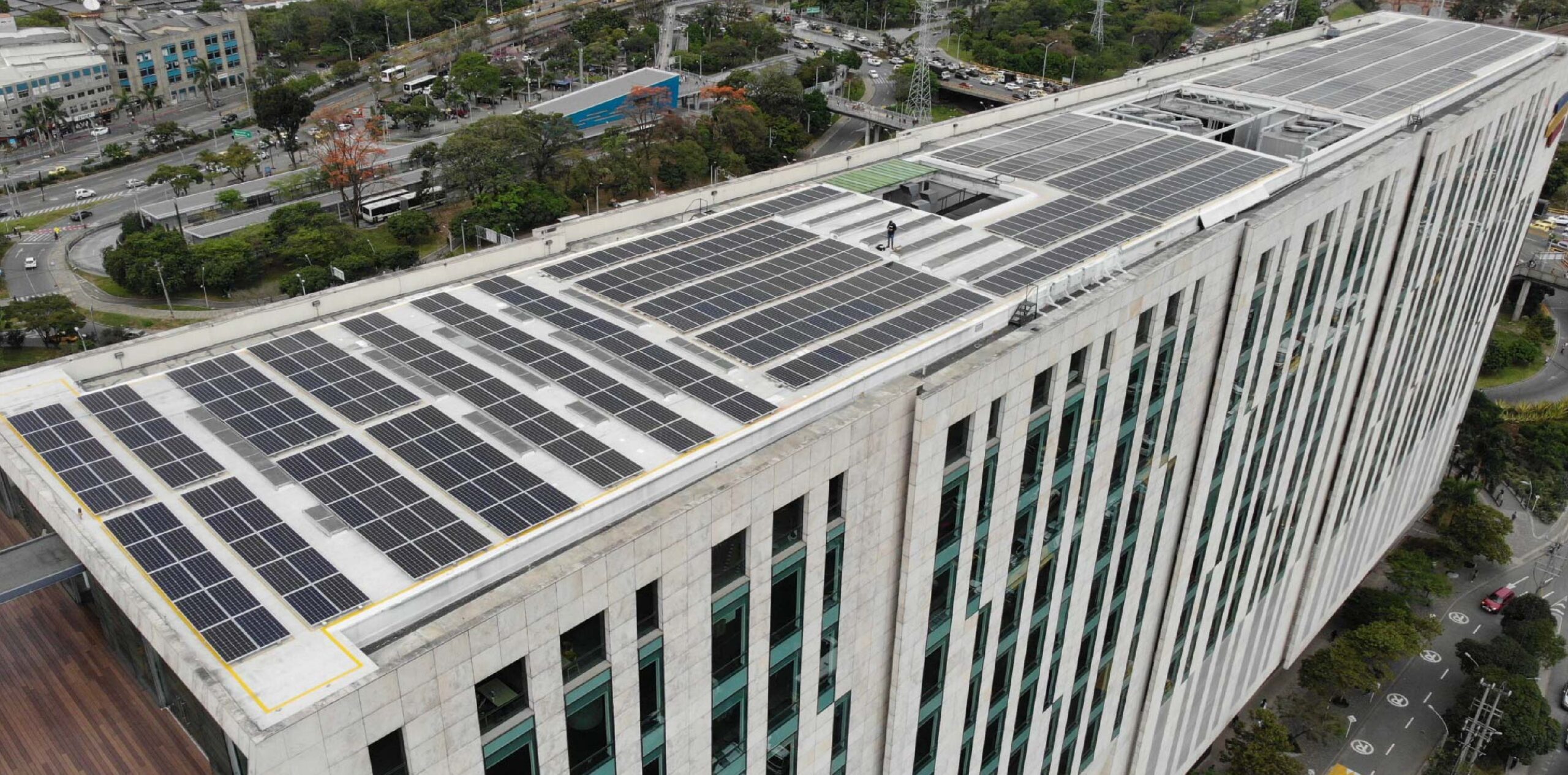
Photovoltaic solar energy integrated in buildings, also known as BIPV (Building Integrated Photovoltaics), is a technology that transforms architectural elements —such as roofs, facades or windows— into clean electricity generators.
Unlike traditional solar systems installed on the roof, BIPV systems are incorporated directly into the architectural design from the start of the project. This means that photovoltaic solar panels not only produce energy, but they also fulfill structural and aesthetic functions: they protect from the climate, thermally insulate and enrich the building design.
This technology represents a key solution to achieve energy efficient buildings, with lower environmental impact and prepared to obtain sustainability certifications like LEED or EDGE.
Building-integrated photovoltaic solar energy, also known as BIPV (for its acronym in English: Building Integrated Photovoltaics), is an intelligent way to incorporate solar panels directly into the architecture. Instead of installing the panels on the roof as an aggregate, the system is designed from the start as part of the building: it becomes a façade, roof, window or even railing.
This allows solar modules to fulfill a double function: to generate clean electricity and, at the same time, to be an active part of the building's design. Thus, the technology not only improves energy efficiency, but also the thermal performance and aesthetic value of the construction.
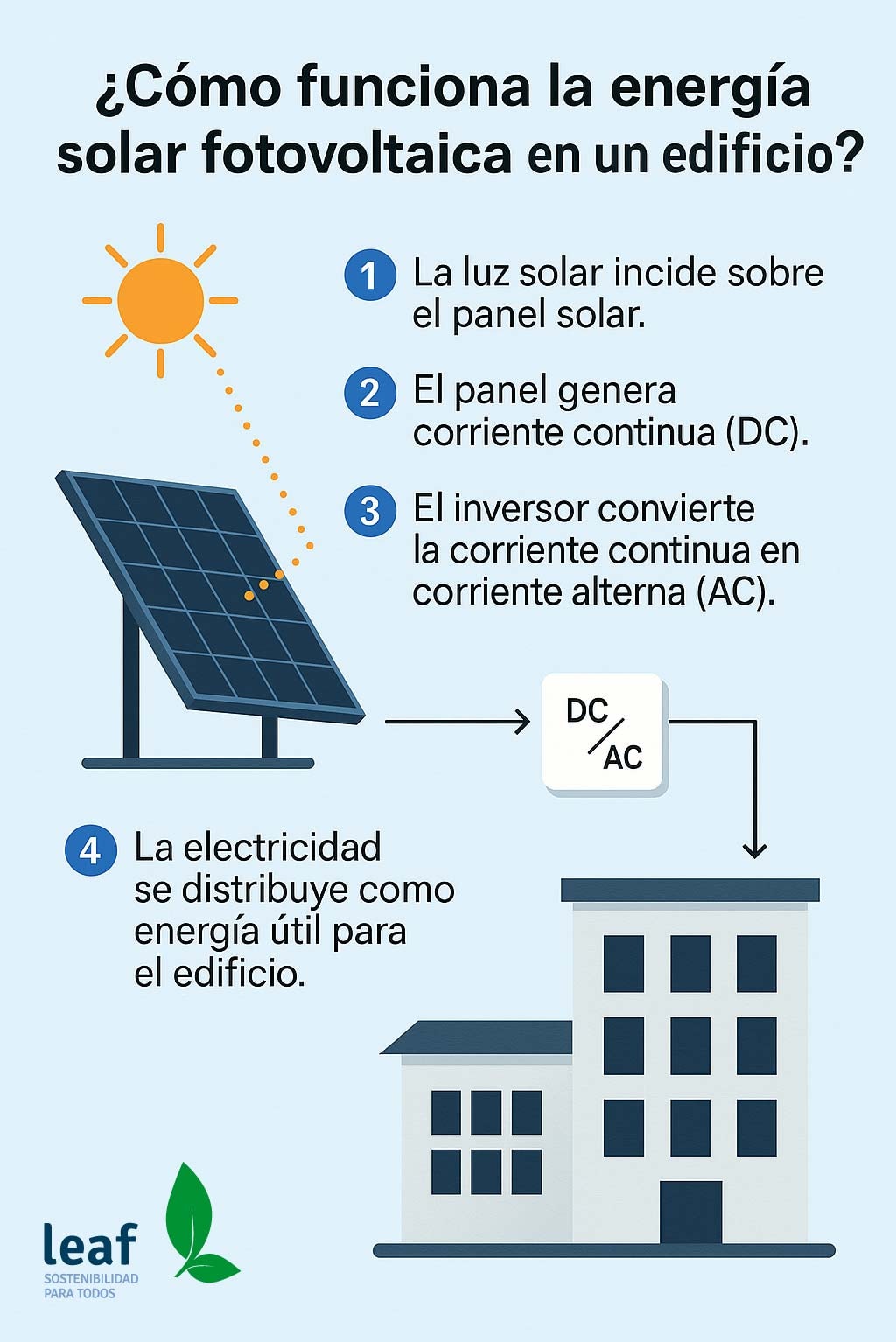
How photovoltaic solar energy works
Photovoltaic energy is a clean technology that converts sunlight into electricity, without the need for fuels or polluting emissions. This process occurs thanks to photovoltaic cells, which are part of the well-known solar panels.
When solar radiation hits these cells (made of semiconductor materials such as silicon), photons stimulate electrons in the material, generating a continuous electrical current (DC).Then, a device called an inverter transforms that current into alternating current (AC), ready to be used in homes, buildings or industrial systems.
This process allows the building to take advantage of solar energy to power lights, appliances, office equipment or HVAC systems, thus reducing its traditional energy consumption, moving towards an urban model of sustainable development.
BIPV systems can be adapted to different parts of the building:
The key is that every centimeter of surface can be used without compromising design.
Not all solar panels are the same. There are different technologies, and each one offers specific benefits:
Choosing the right technology depends on the architectural design, local climate and intended use.
Installing BIPV helps reduce grid energy consumption and, therefore, the building's operating cost. Although the initial investment may be greater, it is offset by long-term savings and the possibility of accessing environmental certifications such as LEED or EDGE. In addition, the building's carbon footprint is reduced and it contributes to a more sustainable city.
From the point of view of sustainability, buildings with BIPV can achieve standards such as Nearly Zero Energy Buildings (nZEB), since they generate a significant part of their energy demand thanks to renewable energies. They also help to reduce the need for additional materials in roofs or facades, promoting more resource-efficient construction.
In addition, solar integration can be combined with passive design strategies, such as cross ventilation, thermal insulation and strategic orientation, multiplying its positive impact.
For everything to work well, planning solar integration from the start of the project is key. Here are some practical tips:
And although maintenance is low, regular checks are always recommended to ensure that everything is working as it should.

© Brigida Gonzalez
Located in Germany, this house from the 1950s was completely renovated to be transformed into a Plus-Energy building, that is, capable of generating more energy than it consumes.
The Yonder — Architektur und Design studio replaced the traditional roof with integrated photovoltaic tiles, which in addition to generating electricity, work as a waterproof roof. Energy efficiency is completed with high-performance thermal insulation and a geothermal system.

Architects Collective
This residential complex designed by Architects Collective stands out for its zigzag façade with integrated solar panels that generate energy and provide visual identity to the building.
It has sustainable solutions such as geothermal heat pump, thermal storage with brine and solar panels on the façade and roof. In addition, its open ground floor is designed to create community and accessibility.

Image by Parker153, via Wikimedia Commons, under a CC BY-SA 4.0 license.
This building is an example of Plus-Zero Energy in Asia, with a ZEB Grade 1 certification, meaning that it produces more energy than it consumes.
Its entire envelope — windows, mezzanines and facades — integrates BIPV solar panels. In addition, it uses technologies such as heat pumps, optimized ventilation and intelligent LED lighting, which makes it a building with very high energy efficiency.

Image taken from rolfdisch.de
This residential neighborhood designed by Rolf Disch is made up of 59 homes that, together, generate more energy than they use.
Thanks to its optimal solar orientation, roofs with solar panels and high-quality insulation, the set achieves a Plus-Energy model. It also uses heat recovery systems and solar thermal energy to maximize its efficiency.

Picture of AMDL Circle
Designed by AMDL CIRCLE and Michele De Lucchi, this building stands out for its BIPV multimedia façade that integrates more than 10,000 organic solar panels in the shape of a diamond.
In addition to generating energy, these panels project digital animations and provide shade and insulation. It is designed as a Zero-Energy building, covering all your energy demand during the day.

Image taken from azuremagazine.com
This school stands out for its solar façade composed of more than 12,000 integrated photovoltaic panels, which generate more than 50% of the energy consumed by the building. Each panel is oriented at an angle to optimize solar collection, while providing texture and dynamism to the architectural design.
The project combines energy functionality with a strong educational and aesthetic component: the panels not only produce electricity, but they also become a pedagogical tool on sustainability for students.

©Stephane_Ramillon
Designed by Elizabeth de Portzamparc, this museum combines solar technology and contemporary design in front of the Roman Colosseum in Nîmes. Its glass enclosure integrates semitransparent photovoltaic modules that filter sunlight and generate energy, without altering the aesthetics or the historical environment.
The undulating façade, inspired by Roman clothing, acts like a double active skin that improves thermal comfort and reduces the building's energy consumption.

Image taken from Arquitecturaviva.com
The headquarters of Apple Inc. has a circular roof covered by integrated photovoltaic panels that generate 17 MW of energy, covering almost 100% of the building's daytime consumption.
Designed to operate with natural ventilation most of the year, it combines energy efficiency, interior comfort and regenerative landscaping with more than 9,000 native trees. Certified with LEED Platinum, is a model of sustainability on a large scale in corporate environments.

Extracted from anahuac.mx
Designed as the headquarters of the Technology and Energy Center of the Anahuac University, this educational building incorporates integrated photovoltaic solutions that make it a benchmark for sustainability in Latin America.
Its architectural envelope includes BIPV solar panels on the façade and roof, which not only generate electricity for self-consumption, but also function as passive solar control devices. This dual function improves interior thermal comfort and reduces the building's energy load.
In 2022, it became the first residential project in Mexico to obtain the LEED certification Zero Energy, in addition to having a level LEED Platinum, which recognizes its capacity to generate as much renewable energy as it consumes. It also functions as a living laboratory for teaching energy efficiency, renewable energy and sustainable design.

Image taken from bancolombia.com
Headquarters of Colombia's largest financial group, this corporate building combines bioclimatic architecture with advanced energy efficiency and renewable energy strategies.
Although it does not fully integrate photovoltaic panels into its enclosure (BIPV), its roof has a solar system that contributes significantly to the generation of clean energy. Its design incorporates natural lighting, cross ventilation, materials with low environmental impact and an intelligent energy management system.
These characteristics earned it the LEED Gold certification. It is a clear example of how large companies can lead the change towards sustainable construction.
The integration of solar panels in buildings is no longer a trend of the future: it is a reality that is making strong progress all over the world. As costs fall and energy efficiency standards become more demanding, more and more projects are betting on including integrated photovoltaic (BIPV) systems from the design.
The interesting thing about this technology is that it's not just about producing clean energy. It also provides aesthetic value, functionality and thermal performance. Solar facades or roofs are not simply “technology”, but are part of a smarter and more efficient architecture.
And beyond energy savings, many buildings that adopt this solution are achieving sustainability certifications such as LEED, EDGE, or even ZEB (Zero Energy Building), which improves its positioning, credibility and commercial value.
In a nutshell: integrated photovoltaic solar energy is not only an ecological alternative, but a strategic decision for those who build with a long-term vision.
Building-integrated photovoltaic solar energy (BIPV) is transforming sustainable architecture by combining design, functionality and clean energy generation. By incorporating photovoltaic modules directly into facades, ceilings, windows or floors, buildings produce renewable electricity, while improving insulation and thermal comfort.
This technology reduces environmental impact, reduces carbon emissions and helps to achieve certifications such as LEED, EDGE or ZEB. In addition, it represents an intelligent investment, since it reduces operating costs and allows the replacement of conventional materials with multifunctional BIPV solutions.
In short, BIPV is not just an energy alternative, but a strategic resource for modern architectural design and the transition to cleaner, more efficient and sustainable cities.
What is BIPV? It is the acronym for Building Integrated Photovoltaics, or photovoltaic systems integrated into buildings. Unlike “placed on top” panels, BIPVs are part of the architectural design: facades, roofs or windows that generate solar energy.
Do integrated solar panels require a lot of maintenance? No. Generally, only regular cleaning and basic technical checks are needed to ensure that everything works well.
Can I access environmental certifications if I use solar panels? Yes. Many buildings with BIPV systems qualify for LEED, EDGE, or even LEED Zero Energy, depending on overall energy performance.
Do they only serve in sunny places? Not necessarily. Although solar radiation is an important factor, even in cloudy climates, panels can generate useful energy. In addition, combined with good insulation and passive design, the overall performance of the building remains very high.
If you want to certify your next real estate development, contact us here.
Leaf Global. Copyright © 2026. All rights reserved.