The EDGE certification was created for emerging markets in 2014 by IFC, members of the World Bank, with the goal of enabling projects in emerging markets to achieve sustainability.
The certification requirement is to achieve at least 20% savings in energy, water, and embodied energy in materials. This certification allows you to obtain a preliminary certificate (at the design stage) and a final certificate (post-construction stage), and once obtained, it lasts forever.
EDGE uses specialized software to compare your project against local and international benchmarks. To certify, you need to achieve 20% savings in energy, water, and materials, with the support of a consultant, an auditor, and the certification body.
The cost varies depending on the building size, but the additional investment to implement the measures is usually only 0% to 3% of the total budget. Having an expert consultant from the beginning helps minimize these costs.
This certification is ideal for a wide range of sectors, including residential projects, commercial buildings, hotels, offices, hospitals, educational institutions, and mixed-use developments.
The key requirement is to demonstrate a minimum 20% reduction in energy consumption, water usage, and embodied energy in construction materials.
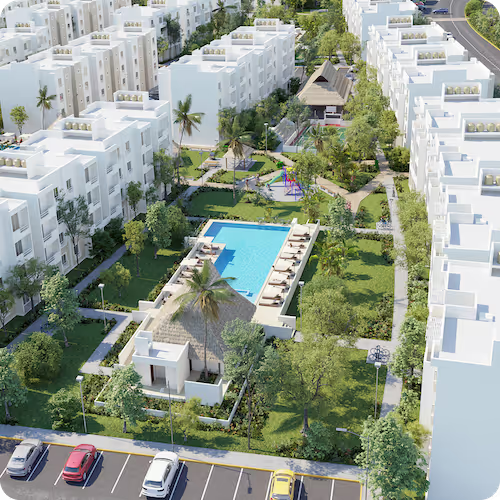
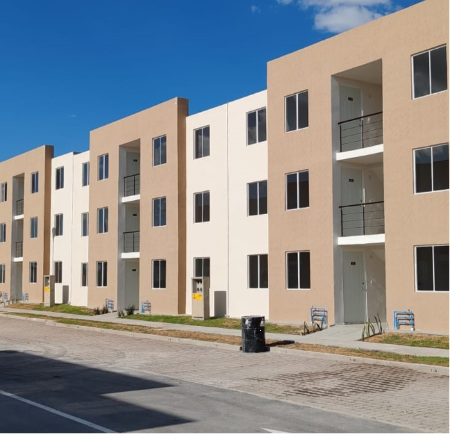
At Leaf, we certify EDGE projects in Peru, Mexico, Colombia, Panama, and other Latin American countries, tailoring the process to the regulations and climate of each market. Examples of our work include Jardines de Magnolias IV, an EDGE-certified social housing development in Peru, and the expansion of the Jorge Chávez International Airport, one of the largest EDGE infrastructure projects in the region. If you are looking to certify your project in any of these countries, our local team will support you from pre-certification to the final audit.
Leave us your message and we will get in touch with you.
Write to us
EDGE reduces operating costs through lower consumption of energy, water, and materials, and increases asset value by making it more attractive to international buyers and investors who focus on efficiency and total cost of ownership.
The timeline varies depending on the scope and stage of the project; typically it takes between 3 and 6 months from the moment we receive all required information until certification, depending on complexity and data availability.
We use energy and water savings modeling, BIM analysis, simulation software, and monitoring platforms to design, validate, and track efficiency measures throughout the project.
Yes. EDGE is compatible and can be complemented with LEED or WELL; many efficiency and management strategies contribute to multiple certifications.
Updated architectural and engineering drawings, technical specifications of building systems, invoices or delivery receipts for materials used on site, calculation reports, and evidence of implemented or planned sustainability measures.
Leaf Global. Copyright © 2026. All rights reserved.





.avif)