He leads projects and consulting services under LEED, EDGE, and FITWEL standards, integrating facade optimization strategies, life cycle assessments, and energy modeling to develop high-performance buildings.
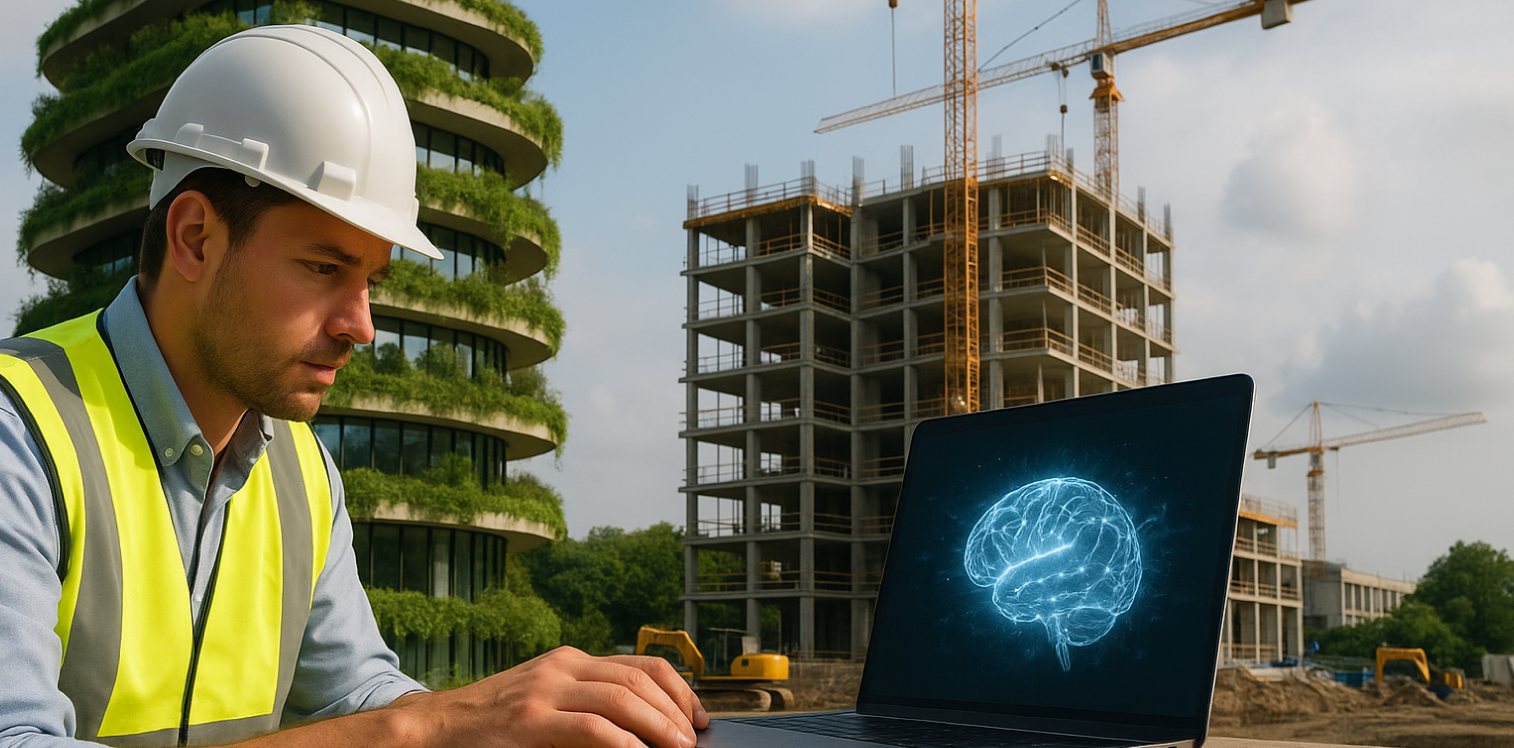
Artificial intelligence (AI) is rapidly transforming the sustainable construction industry. How?, because it not only allows you to automate tasks and make smarter decisions, but it also promotes more efficient designs, reduces environmental impact and even contributes to improving people's quality of life. We'll tell you how he does it in this blog.
In a world where climate change requires concrete solutions, AI is positioned as a key tool to accelerate the transition to a greener, more resilient and cost-effective built environment.
Artificial intelligence (AI) optimizes sustainable design by allowing the creation of advanced architectural models that improve energy efficiency and reduce environmental impact.
It also enables smarter resource management, facilitating informed decisions that increase efficiency and reduce waste on construction projects.
In addition, the integration of innovative energy solutions through AI promotes the adoption of renewable energy and contributes significantly to the reduction of the carbon footprint.
AI thus becomes a strategic ally throughout the entire life cycle of a project: from architectural design to building operation and maintenance. Through the analysis of big data, machine learning and intelligent sensors, it is possible to optimize resources, reduce emissions and anticipate needs, achieving more sustainable, efficient and safe buildings.
The design stage is critical to determining the environmental performance of a building. Here, AI allows:
For example, software with AI can recommend optimal orientation to take advantage of natural light, reduce the use of artificial lighting and reduce energy consumption from the first day of operation of the building.
In addition, by integrating sustainability criteria from the start, projects achieve greater coherence with environmental certifications such as LEED, EDGE or BREEAM.
During the construction phase, AI allows for more efficient management of materials, time and budget. With predictive analytics, systems can:
For example, a construction site can use AI to adjust the amount of concrete requested according to weather conditions, avoiding waste due to premature setting.
This intelligent management directly contributes to reducing the ecological footprint of projects, both in terms of emissions and waste.
Artificial intelligence has revolutionized the way sustainable buildings are designed, built and operated, especially thanks to real-time simulations and predictive maintenance. These tools allow us to continuously monitor project performance and anticipate possible failures, which translates into greater efficiency, resource savings and lower environmental impact.
During the design and construction phase, real-time simulations allow:
Once the building comes into operation, AI remains a key ally. Thanks to intelligent sensors, it is possible to:
For example, if an HVAC system consumes more energy than usual, AI can generate an alert for technical inspection before it fails. This extends the lifespan of equipment, reduces operating costs and improves occupant comfort.
The combination of these capabilities makes AI a key tool for achieving smarter, more resilient and sustainable buildings.
AI is also improving construction site safety through technologies such as:
This technology makes it possible to reduce accidents at work, comply with regulations and protect the human team, all while promoting a culture of prevention and sustainability.
Construction is responsible for approximately 40% of global CO₂ emissions. AI helps reduce this impact by:
With this information, it is possible to make more sustainable decisions, such as preferring recycled or low-impact materials, incorporating passive air conditioning solutions, or choosing clean energy during operation.
Renewable energy systems, such as solar panels or geothermal systems, are more efficient when combined with artificial intelligence. AI can:
This integration makes it possible to create almost zero energy buildings (nZEB) or even energy-positive buildings, capable of generating more energy than they consume.
Intelligent sensors are a key element in building monitoring and preventive maintenance. These sensors collect data on the state of buildings, allowing a real-time analysis of their energy efficiency. The information collected can be used to dynamically adjust systems, thus improving resource efficiency.
In addition, real-time analysis through sensors and smart cameras allows AI to identify and alert to hazardous conditions on the construction site. Using computer vision, AI can identify dangerous situations through images and videos, contributing to the safety and well-being of workers.
Automated maintenance is one of the areas where AI is revolutionizing construction. By predicting problems before they occur, AI makes it easy to:
Artificial intelligence makes it possible to anticipate possible failures and adjust systems in real time, resulting in more proactive and efficient maintenance. This ability of AI to predict and solve problems before they become major failures is key to achieving sustainable, high-quality construction.
The future of sustainable construction is being written today with technologies such as:
These tools, powered by AI, make it possible to scale good practices, improve material traceability and promote a more connected and innovative ecosystem.
AI-based training is helping train workers in safe and sustainable practices within the construction industry. AI makes it possible to customize the training of workers based on their specific abilities and needs, thus increasing the effectiveness of learning. This ensures that workers are better prepared to adopt sustainable practices in their daily activities.
In addition to improving safety, personalized training encourages more effective learning, ensuring that workers understand and apply best practices in sustainability and safety. AI, by offering specific simulations and training, ensures that each worker receives the appropriate instruction for their specific role.
Artificial intelligence in sustainable construction represents a revolution in the sector. AI is not a fad, but an essential tool that is transforming the way we design, manage and execute construction projects.
Thanks to its advanced algorithms and the analysis of large volumes of data, artificial intelligence allows for more accurate and efficient decision-making, optimizing processes and reducing errors.
Its integration into the sustainable construction industry improves energy efficiency, reduces the carbon footprint and minimizes environmental impact, thus contributing to the preservation of the planet. In addition, AI enhances people's quality of life by creating buildings that are smarter, safer and more adapted to current needs.
In short, artificial intelligence is a strategic ally for companies and architects who seek to lead the transformation towards a more sustainable, efficient and environmentally responsible future.

Artificial intelligence in construction optimizes architectural design by facilitating the rapid execution of repetitive tasks and improving designs through incremental adjustments. This saves time and increases the quality of the final result.
AI is improving energy efficiency in buildings by analyzing real-time data on energy consumption and automatically adjusting systems to optimize their use. This technology reduces energy waste and maximizes sustainability.
Smart sensors are essential in sustainable construction, since they allow the collection of real-time data that optimizes energy efficiency and improves building safety. Its implementation is very useful to promote more sustainable construction practices.
AI helps reduce material waste in construction by optimizing planning and resource use, prioritizing recyclable options and improving waste logistics. This translates into a significant reduction in the waste generated.
Leaf Global. Copyright © 2026. All rights reserved.