He leads projects and consulting services under LEED, EDGE, and FITWEL standards, integrating facade optimization strategies, life cycle assessments, and energy modeling to develop high-performance buildings.

How can the nature-based solutions and green infrastructure in cities solve urban and climate problems? This blog post explores how these innovative approaches improve quality of life and environmental resilience. We'll discuss benefits, successful examples, and implementation strategies.

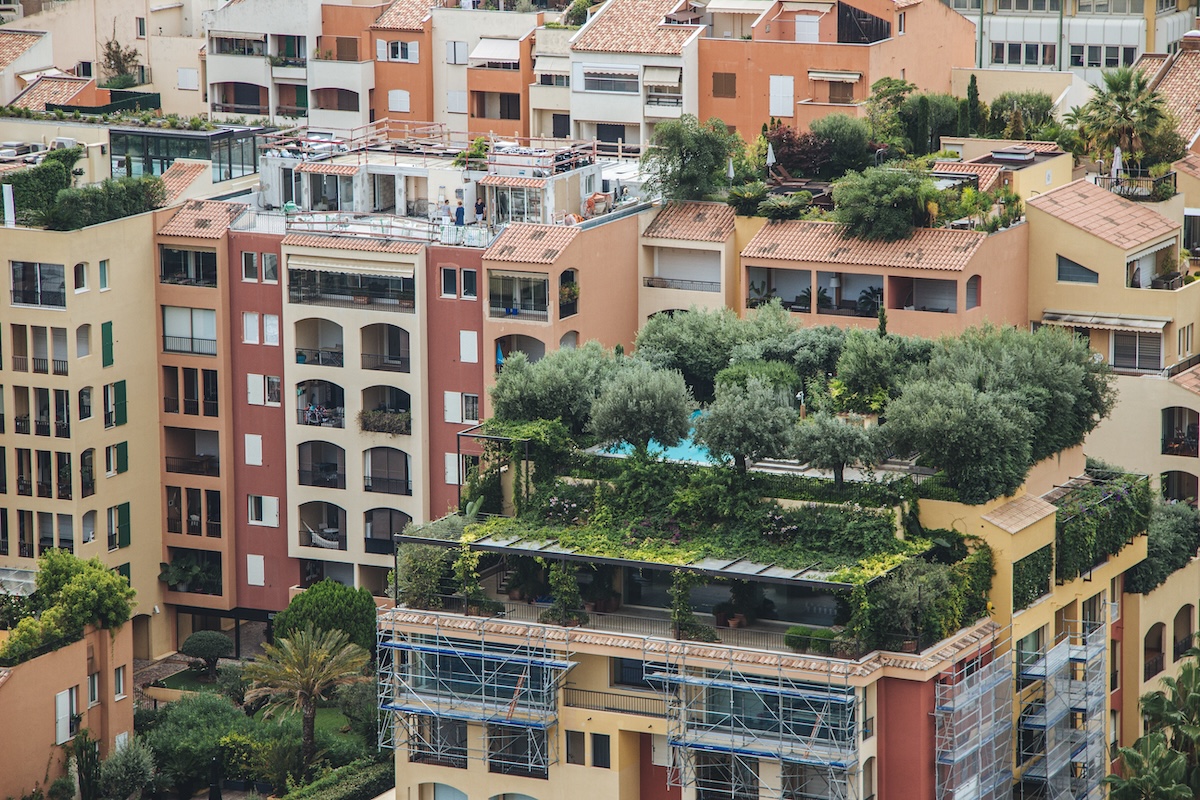
Examples of nature-based solutions
Nature-based solutions represent a paradigm shift in the way we approach urban challenges and systems. This concept focuses on using natural processes and green infrastructure as a solution to solve environmental and social problems. With more than 90% of new urban inhabitants expected in Latin America, Africa and Asia in the next decade, the need for sustainable solutions is more urgent than ever.
Green infrastructure, ranging from urban parks to green roofs and rain gardens, is key to building more resilient and sustainable cities. Despite their importance, investment in nature-based solutions remains minimal compared to other types of urban infrastructure.
Increasing this investment is critical to meeting the challenges of climate change and accelerated urbanization. Committing to nature not only drives climate action, but also contributes to the restoration of ecosystems, the creation of habitats and the promotion of biodiversity, generating long-term environmental, social and economic benefits.
Healthy ecosystems are fundamental to the leadership of cities against climate change. The transformation of municipalities into Sponge cities, for example, is a key strategy for managing heavy rains and preventing floods. By promoting biodiversity and improving water management, green infrastructure not only protects the environment, but also improves the quality of life of urban inhabitants.
In short, nature-based solutions are a strategic investment for a sustainable future. Civil society plays a crucial role in driving these initiatives, demanding an approach that prioritizes both public health and ecological sustainability. Adopting these solutions can serve as a road map to sustainable water resilience and a healthier environment.
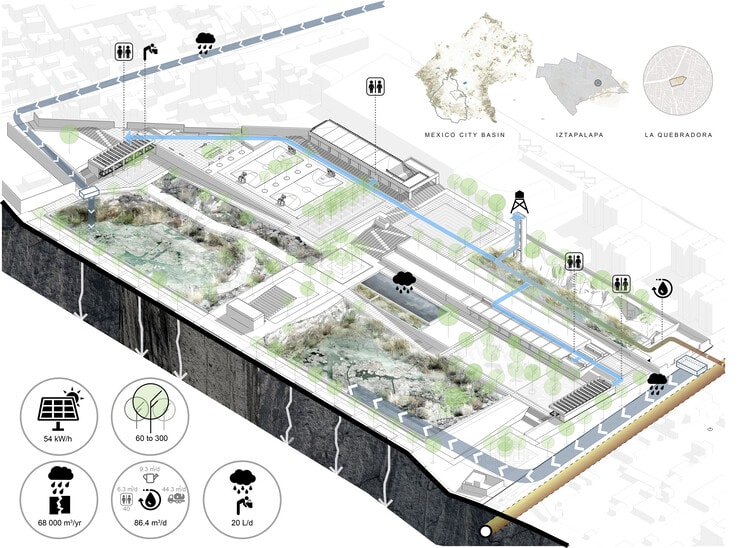
La Quebradora Water Park. Axonometry. Source: Arquine.com. 2019
Implementing green infrastructure in cities requires careful planning and the participation of multiple actors. Los Rain gardens and green roofs are clear examples of how rainwater can be effectively managed, reducing the risk of flooding and improving the quality of the environment. Incorporating green infrastructure into urban planning is essential to address climate challenges and promote sustainability.
Successful projects such as the La Quebradora Water Park in Mexico City and the Amunas in Peru they demonstrate the viability of these solutions in different urban contexts. The Amunas, ancient water infiltration systems in the Andes, have been restored to improve aquifer recharge and guarantee water supply in cities such as Lima. Las Sponge cities of China are another inspiring example, where innovative techniques are used to manage rainwater throughout the urban surface, preventing floods and promoting climate resilience.
Involving civil society from the start of projects is crucial to ensure inclusive planning and address potential negative impacts. Not only is green infrastructure cheaper than gray infrastructure solutions, but it also offers greater capacity to adapt to climate and urban changes.
In conclusion, the application of urban green infrastructure is an effective strategy to improve the resilience of cities in the face of climate change. With the active participation of civil society and proper planning, these solutions can transform our urban landscapes into more sustainable and livable spaces.

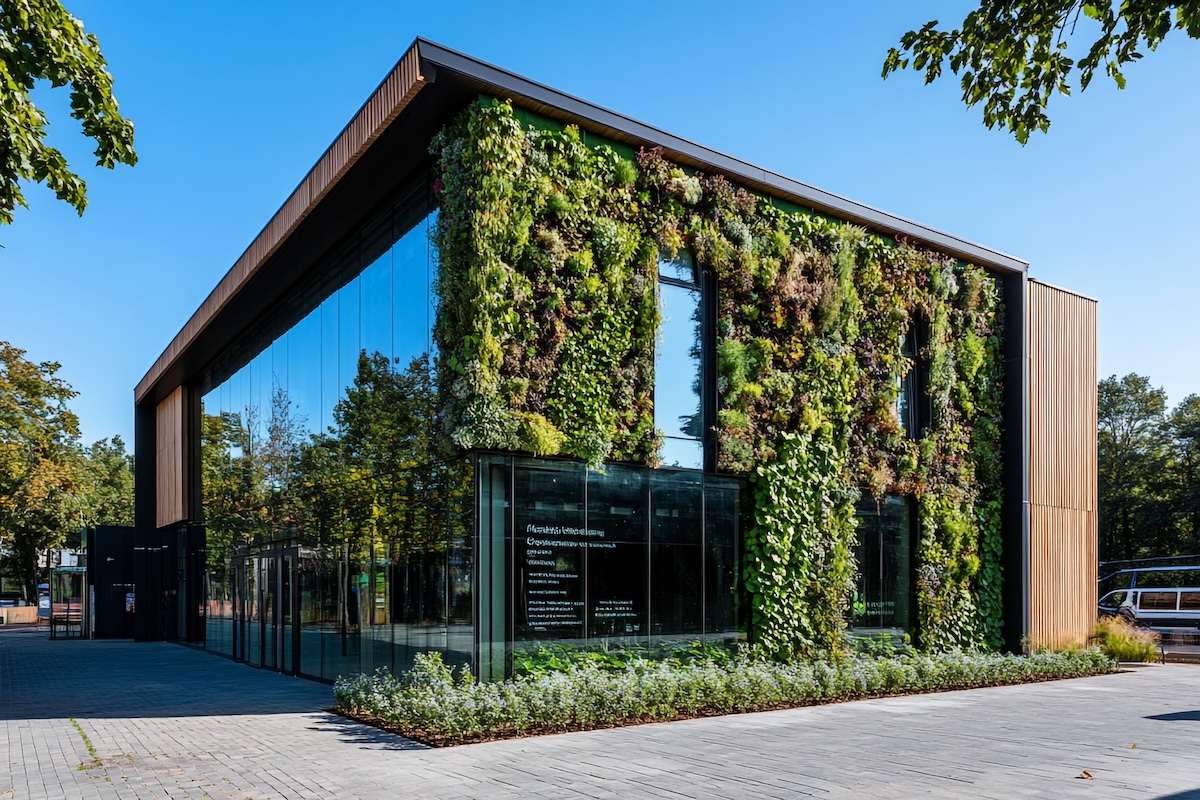
Image taken from the Sustainable Design Network LinkedIn
Green infrastructure offers a wide range of ecological and social benefits that improve the quality of life in cities.
One of the main ecological benefits is its ability to improve air quality, since urban vegetation acts as a natural filter, trapping polluting particles and reducing the population's exposure to harmful agents. In addition, it helps regulate urban temperature by mitigating the heat island effect, reducing temperatures between 3 and 5 °C and reducing the demand for energy for air conditioning.
Nature-based solutions (SBN) are critical to achieving concrete development objectives such as water security, reducing the risk of floods and landslides, mitigating climate change and improving human health. These benefits are crucial for fostering more resilient and sustainable cities.
The social benefits are equally significant. Green spaces provide recreational areas that promote the mental and physical well-being of urban inhabitants, especially in densely populated areas. Not only do these spaces offer an escape from the hustle and bustle of the city, but they also promote social cohesion and a sense of community.
In addition, urban green infrastructure contributes to climate resilience by improving water management and reducing the risk of flooding. Green infrastructure projects can also generate employment and economic opportunities, benefiting both local communities and the environment.
In short, the ecological and social benefits of green infrastructure are vast and varied. By integrating these solutions into urban planning, cities can become healthier, more resilient and enjoyable places to live.
SBN can be more cost-effective than conventional infrastructures, depending on the context and type of project. Several studies and cases have demonstrated that these solutions can reduce long-term costs by reducing the need for maintenance and increasing resilience to extreme weather events.
For example, in Cuenca, Spain, the company Rebi expanded its heat network with biomass, allowing a community to reduce energy bills and avoid 36 tons of CO₂ per year. Also in Spain, IES Las Fuentes installed photovoltaic panels managed by the City Council, generating up to 60% of its energy and reducing electrical costs (source: cadenaser.com).
While SBN can represent a significant initial investment, their long-term economic, environmental and social benefits make them an attractive alternative. However, its funding remains a challenge, making it necessary to develop investment mechanisms and public policies to promote its adoption.
Developing adequate financing and insurance mechanisms is crucial to encourage the adoption of these solutions. It is important to group projects to attract investment and achieve economies of scale, which can increase the financial viability of green infrastructure projects. Public-private partnerships are also effective in increasing the efficiency of projects throughout their lifecycle.
The active participation of civil society can help ensure that investments in infrastructure are sustainable and benefit both people and the environment. By combining resources and efforts, financial barriers can be overcome and the widespread implementation of nature-based solutions promoted.

Green corridors in Medellín, Colombia. Image taken from c40knowledgehub.org
In Latin America, there are several successful examples where nature-based solutions have positively transformed cities.
In Medellín, Colombia, the project of the Green Corridors has significantly improved air quality and reduced urban temperature, turning gray spaces into vibrant green areas. This approach has been key to combating the effects of climate change and improving the quality of life of the inhabitants.
In Mexico, the La Quebradora Water Park is a prominent example of how green infrastructure can effectively manage rainwater, preventing flooding and promoting urban resilience. This project has been a model of sustainability and climate adaptation in the region.
In Peru, the Amunas have been restored to improve aquifer recharge and guarantee water supply in cities such as Lima. This ancient water infiltration system is a clear example of how nature-based solutions can be adapted to modern urban contexts.
These success stories in Latin America demonstrate that nature-based solutions are an effective strategy for dealing with urban and environmental challenges. By adopting these strategies, cities can improve the quality of life of their inhabitants and create more resilient and sustainable environments.
Despite the obvious benefits, implementing green infrastructure faces several challenges and barriers.
The lack of collaboration between different sectors and actors is a significant obstacle, since green infrastructure requires an integrated and multidisciplinary approach. In addition, green infrastructure often competes with other land uses that prioritize immediate benefits over long-term ones.
Another major barrier is the scarcity of technical knowledge about planning and maintaining green infrastructure. This can lead to ineffective implementation and loss of potential benefits. Civil society is essential to promote sustainable infrastructure, ensuring that projects are executed in a responsible manner and aligned with local needs.
Cities face multiple challenges in implementing green infrastructure, but with proper planning and the collaboration of all the actors involved, it is possible to overcome these barriers and move towards a more resilient future.
To facilitate the implementation of urban green infrastructure, it is necessary to update the current regulation in many cities.
Reforms in policies and laws are necessary to encourage sustainable investment and promote green infrastructure. The lack of integration of nature-based solutions into policy and legislation limits their effective adoption, so a more cohesive approach is needed.
It is important for governments to recognize the economic value of natural capital to maximize the benefits of nature-based solutions.
An example of how legislation can support green infrastructure is that of the European Union, where there are legal requirements that force developers to consider sustainable alternatives during environmental assessments.
The Inter-American Development Bank has published manuals which provide practical examples of urban green infrastructure to guide their implementation.

Image taken from ArquitecturaySustentabilidadutem.com
The participation of civil society is essential for the implementation of nature-based solutions.
Including all stakeholders in decision-making ensures that projects are inclusive and reflect local needs. However, the lack of involvement of all stakeholders can be a significant obstacle.
A lack of public awareness of the benefits of green infrastructure can lead to a lack of support and commitment. Civil society organizations have a key role in raising awareness of the importance of infrastructure that respects biodiversity and supports environmental well-being.
Partnerships are critical to amplifying the benefits of nature-based solutions.
In short, nature-based solutions are essential for creating resilient and sustainable cities. From the importance of green infrastructure to ecological and social benefits, and the challenges in its implementation, every aspect must be carefully considered. With the support of appropriate public policies and the active participation of civil society, we can move towards a greener and healthier future.
Nature-based solutions are strategies that take advantage of natural processes and green infrastructure to address environmental and social problems in urban environments.
Urban green infrastructure offers significant benefits such as reducing air pollution and regulating temperature in cities, thus improving quality of life and climate resilience. Implementing it is key to creating healthier and more sustainable environments.
Nature-based solutions are funded through appropriate, secure funding mechanisms, public-private partnerships and the active participation of civil society. This ensures a comprehensive and sustainable approach to its implementation.
Implementing green infrastructure faces significant challenges, such as a lack of collaboration between sectors, competition with other land uses, and a lack of technical knowledge.
Civil society is critical to raising awareness, ensuring the inclusion of all stakeholders and promoting the responsible implementation of solutions. Their active participation is very important for the success of the projects.
The integration of nature-based solutions with traditional infrastructure, known as green-gray infrastructure, is essential to maximize benefits and encourage investment. However, it is still necessary to carry out this integration effectively.
Leaf Global. Copyright © 2026. All rights reserved.