He leads projects and consulting services under LEED, EDGE, and FITWEL standards, integrating facade optimization strategies, life cycle assessments, and energy modeling to develop high-performance buildings.
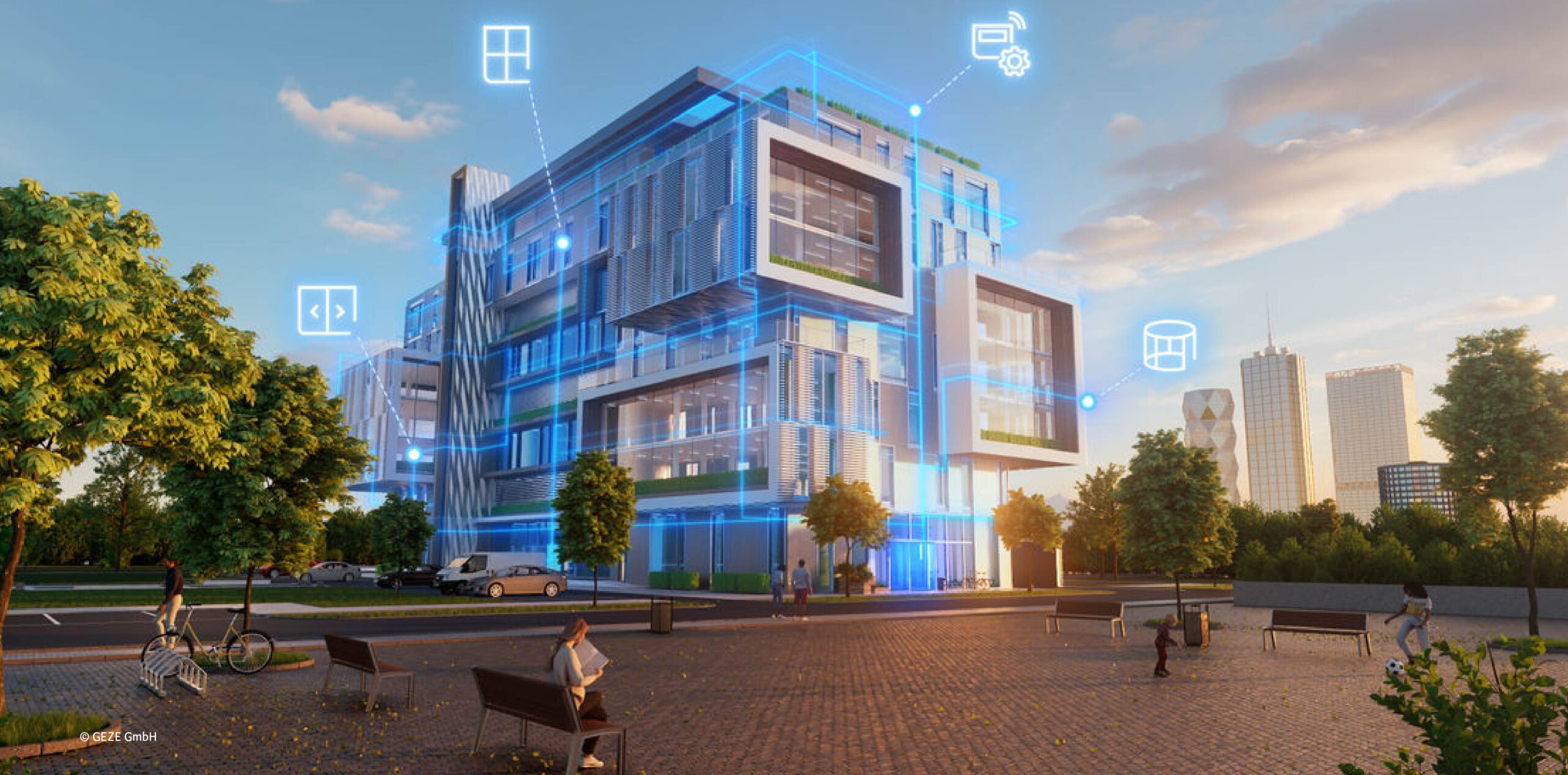
Regenerative architecture transforms buildings into living systems that restore the environment. It's not just about being sustainable, but about improving biodiversity, purifying the air and generating energy.

Photo by Antonio Navarro Wijkmark. Image taken from Arquitecturaydiseno.es
Regenerative architecture seeks to restore and improve ecosystems through buildings that act as living systems, integrating with their environment. This approach turns buildings into agents of positive change, beyond traditional sustainability that only reduces negative impact. Instead of minimizing damage, regenerative architecture strives to regenerate and revitalize the environment.
This innovative concept proposes a new way of seeing buildings. Buildings are no longer mere consumers of resources and are transformed into energy producers, air purifiers and biodiversity promoters.
Regenerative architecture is, in essence, a holistic approach that considers the full impact of a construction on its natural and social environment, promoting a continuous and positive life cycle.

Image taken from blogs.salleurl.edu
The benefits of regenerative architecture are wide and profound. It allows the generation of more energy than buildings consume, contributing to a positive environmental impact through the use of renewable energy. In addition, it promotes biodiversity and improves the health of local ecosystems by better integrating nature into architectural designs.
In addition to environmental benefits, it also has a significant social impact. Urban projects that adopt regenerative principles revitalize public spaces and encourage community interaction, in addition to improving ecosystem health. This approach also encourages the creation of legacies, that is, constructions that benefit future generations and the community.
From an economic perspective, companies are integrating sustainability into their business models to improve their performance and environmental impact. Successful public-private partnerships have demonstrated how cooperation can boost regenerative initiatives and economic development.
In short, regenerative architecture is not only more sustainable, but it also represents an investment in the future well-being of our communities and the planet.
Regenerative architecture is based on principles that go beyond conventional sustainability, seeking deep integration with ecosystems and natural cycles.
One of its foundations is the use of recycled, biodegradable and low-impact materials, promoting a closed cycle of resources. Projects such as Circular Building in London they demonstrate how the reuse of components and the removable design can drastically reduce waste and promote a true circular economy.
In addition, this approach promotes the abandonment of obsolete technologies in favor of innovative and sustainable solutions, integrating tools such as artificial intelligence, 3D printing and energy modeling to maximize the efficiency and regeneration of the environment.
An essential component in this transformation are passive strategies and bioclimatic design, which make it possible to make the most of the natural resources of the environment. Through the correct orientation of the building, cross ventilation, natural lighting and the use of ecological thermal insulation, the need for mechanical systems is minimized and energy consumption is reduced from the design phase.
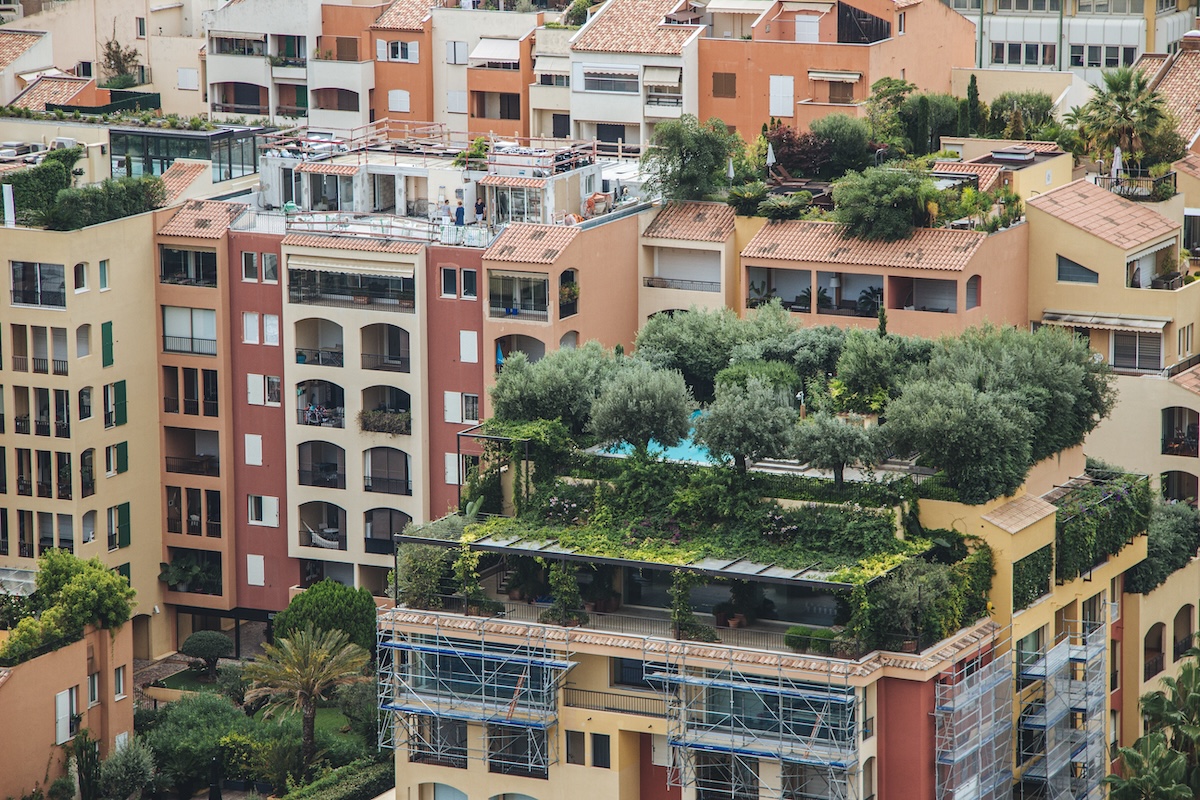
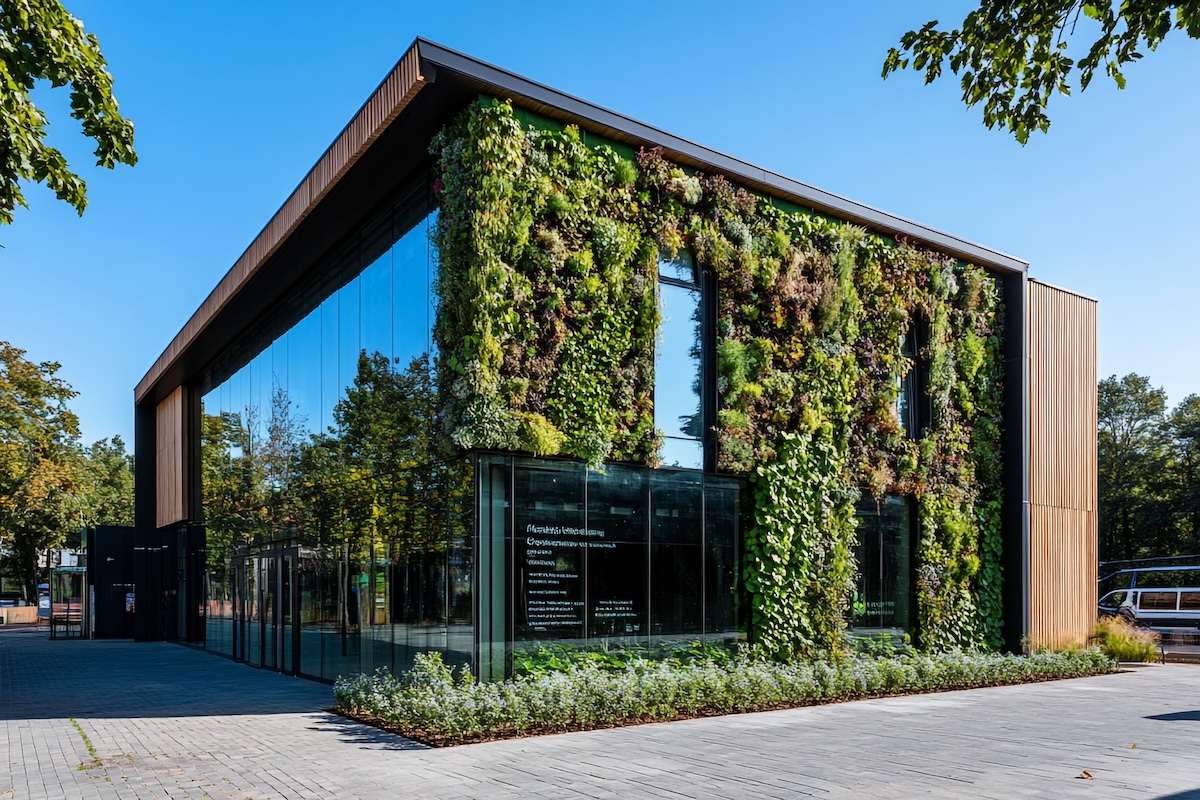
Green infrastructure, such as living roofs, vertical gardens, rainwater collection and greywater treatment systems, also plays a vital role. These solutions improve the urban microclimate and promote biodiversity, as well as actively regenerate local ecosystems.
Finally, the regenerative approach requires a systemic vision, where buildings are conceived as active parts of their environment. They seek to generate more than they consume: energy, water, well-being, and biodiversity. With an integration of sustainability into construction practices and corporate strategies, a lasting positive impact on the environment and society can be achieved.

Building E of the EAN University in Bogotá, Colombia.
To better understand what we mean when we talk about regenerative architecture, we will present some outstanding cases in the world. From the innovative work of Workshop 13 to urban projects and individual buildings, once you experience the benefits of living in a regenerative building, you don't want to return to conventional conditions.
Next, we'll dive deeper into these examples and the pioneering architects who are leading the way.
Taller 13 is an architecture studio that stands out for its focus on regenerative design, seeking to restore and improve the environment through architecture. This study advocates interdisciplinary collaboration and the use of sustainable materials to promote social and environmental well-being. Its philosophy focuses on transforming buildings into living systems that interact positively with their environment, encouraging ecosystem regeneration.
Recent Workshop 13 projects include buildings designed to maximize energy efficiency and the conservation of natural resources. This study has demonstrated how architecture can be a force for good, integrating innovative practices that not only reduce environmental impact, but also contribute to the recovery and revitalization of ecosystems.
Urban regeneration makes it possible to revitalize deteriorated spaces, improving the quality of life of its inhabitants. Projects such as the revitalization of the Floresta neighborhood in Barcelona have transformed a degraded area into a cultural and ecological hub. These projects seek sustainability and the integration of the community in the design of their environment.
Regenerative architecture is also making its mark in Latin America. A notable example is the La Mexicana Park regeneration project in Mexico City, which has transformed an old landfill into a vibrant and multifunctional green space. Another case is the Innovation Center of the UAI Campus in Chile, designed to be a sustainable building with a focus on energy efficiency and the integration of the natural environment.
In the field of regenerative architecture in LATAM, several architects are leading the way with innovative and sustainable approaches.
Tatiana Bilbao, a Mexican architect, is known for her work on projects that integrate nature and community, using local and sustainable materials. Its focus on bioclimatic design and energy efficiency has been fundamental to promoting regenerative architecture in the region.
Alejandro Aravena, from Chile, has gained recognition for its approach to socially conscious design, creating housing and public spaces that promote urban regeneration and social cohesion. His work at Elemental, a design studio, has pioneered the implementation of regenerative architectural solutions.
Taller 13, an architecture studio in Mexico, stands out for its focus on regenerative design, seeking to restore and improve the environment through architecture. This study advocates interdisciplinary collaboration and the use of sustainable materials to promote social and environmental well-being.
These architects, along with other innovators, are transforming the architectural landscape by integrating regenerative practices that educate environmental impact, and contribute to the recovery and revitalization of ecosystems.
In Latin America, regenerative architecture is gaining ground with projects that demonstrate its viability and effectiveness. These buildings are not only examples of sustainability, but they also serve as models for the regeneration of the urban and natural environment.
A notable example in the region is Building E of the EAN University in Bogotá, Colombia. This building has been designed to be a benchmark in sustainability and urban regeneration, integrating energy efficiency technologies, rainwater collection systems and green spaces that promote biodiversity.

Image taken from contierra.com.mx
Sustainable technologies and materials are revolutionizing the way spaces are built and experienced. Of the most common materials, those that are recycled and recyclable are preferred because of their lower environmental impact. In regenerative architecture, materials are sought that are sustainable and also promote biodiversity and energy efficiency.
Some examples include the use of bamboo, which is a renewable and resistant resource, and permeable concrete, which helps manage rainwater more efficiently. With the use of technologies such as solar energy and recycled water, buildings can be created that are more sustainable and efficient. In the urban context, the implementation of green technologies can significantly improve the quality of life of inhabitants.

Gran Parque de Valle Condesa. Certified with SITES by Leaf.
The environmental certifications play a key role in promoting sustainable and regenerative practices within the built environment. Although many of these certifications were created with the objective of reducing negative impacts, today they evolve towards more ambitious standards that seek to generate positive and restorative impacts on the environment.
Certifications such as LEED, BREEAM, EDGE or WELL have paved the way by establishing criteria for energy efficiency, responsible use of resources and indoor environmental quality. However, it is the SITES certification, focused on the sustainability of landscapes and outdoor spaces, which most directly aligns with the principles of regenerative architecture, considering aspects such as the improvement of biodiversity, the management of rainwater and the ecological health of the site.
In addition, regenerative architecture requires a holistic vision that some traditional certifications are still beginning to adopt. For this reason, more and more studies, such as Taller 13 regenerative architecture, are integrating multiple certifications to ensure that their projects respond not only to sustainability criteria, but also to those of regeneration, resilience and adaptation to climate change.
The adoption of these certifications not only legitimizes the environmental efforts of projects, but also increases their market value, improves their social acceptance and attracts responsible investment. In this sense, they function as bridges between regenerative innovation and the regulatory, financial and technical frameworks of the present.

Image taken from taller13.com
Regenerative architecture faces several challenges, but it also has a promising future. From funding problems to the lack of adequate public policies, these obstacles require innovative solutions and collaboration.
The potential of regenerative architecture to address problems of urban decay and promote collective well-being is immense.
One of the main barriers is resistance to change in conventional construction practices. The high cost of sustainable technologies can also be an impediment.
The scarcity of funding for regenerative projects is a significant barrier. Economic constraints and cultural resistance to unconventional approaches are common challenges that must be overcome.
Advances in renewable energy systems, such as more efficient solar panels, will positively influence regenerative architectural design. Artificial intelligence and 3D modeling are emerging as trends that could revolutionize design and efficiency in this field.
Las emerging technologies play a crucial role in shaping the future of regenerative architecture. They offer new opportunities to create more sustainable and resilient buildings and communities.
Regenerative architecture represents an evolution in the way we conceive and build our environments. Throughout this blog, we have explored its definition, key principles and the multiple benefits it offers, from improving biodiversity to revitalizing urban communities. Workshop 13 regenerative architecture and other pioneering architects have demonstrated how this approach can transform not only buildings, but also our cities and our way of life.
In short, regenerative architecture is not only a response to current environmental and social challenges, but an inspiring vision for a more sustainable future. By integrating regenerative principles into education, governance policies and public-private partnerships, we can create a lasting legacy that benefits future generations. The key lies in collective action and in the adoption of innovations that allow architecture to become a true agent of positive change.
Regenerative architecture seeks to restore and improve ecosystems through buildings that operate as living systems, integrating with their environment to generate positive change. This practice not only focuses on sustainability, but it also promotes environmental recovery and growth.
The principles of sustainability are based on the idea of balancing economic, social and environmental needs. Of the three dimensions, the environmental dimension is crucial, since it refers to the conservation of natural resources and the reduction of the carbon footprint. In the context of architecture, Workshop 13 regenerative architecture is an example of how these principles can be applied to create more sustainable buildings and spaces. With a focus on sustainability, architects can design structures that are not only aesthetic, but also functional and environmentally friendly. In the city, sustainability can be achieved through the implementation of green technologies and community education about sustainable practices.
Regenerative architecture offers numerous benefits, such as the production of more energy than buildings consume, the promotion of biodiversity and the revitalization of public spaces. In addition, it helps to improve the health of local ecosystems.
The key principles of regenerative architecture include the use of recycled materials, the implementation of sustainable and innovative technologies, and the promotion of a harmonious relationship between the built environment and nature. These approaches are essential to promote more responsible and environmentally conscious construction.
These principles are being implemented through regenerative architecture projects, such as those carried out by Taller 13, as well as in urban regeneration initiatives in cities such as Barcelona and Hamburg, led by leading architects.
The main challenges in regenerative architecture are resistance to change, the high costs of sustainable technologies and the lack of funding. Despite this, future innovations such as artificial intelligence and renewable energy systems promise to significantly transform the sector.
Leaf Global. Copyright © 2026. All rights reserved.