He leads projects and consulting services under LEED, EDGE, and FITWEL standards, integrating facade optimization strategies, life cycle assessments, and energy modeling to develop high-performance buildings.

This luxury residential tower of more than 400 m in height and 111 floors with LEED Platinum certification is located in Dubai and is currently under construction.
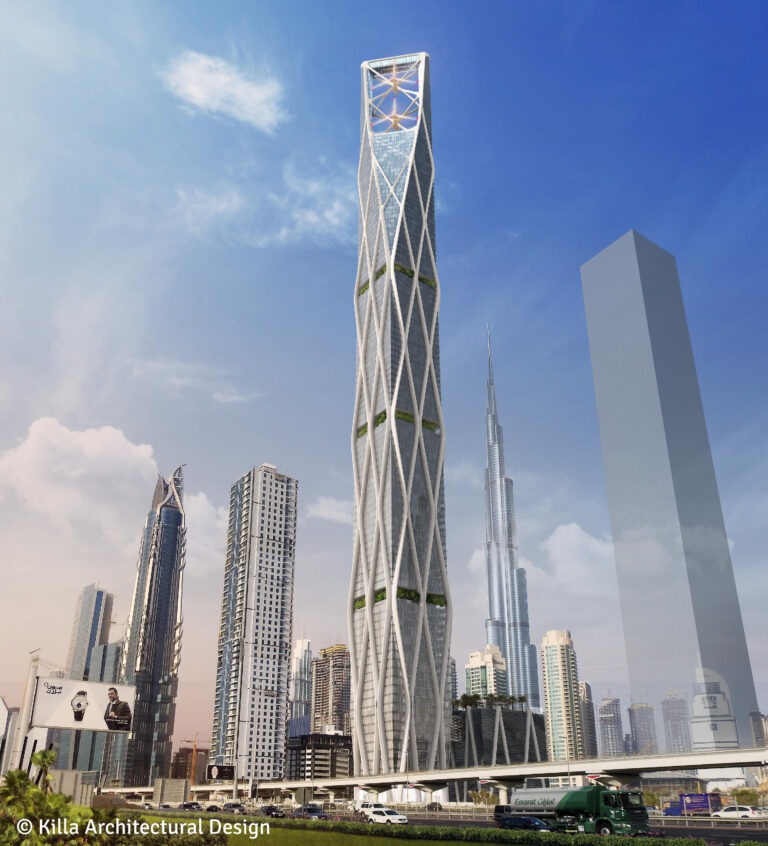


It has two wind turbines with an observation deck: the maximum power generation capacity of each of the turbines is 500 kW. These turbines can convert the kinetic energy of the wind into electrical energy.
It includes highly efficient photovoltaic solar panels on each floor: these will generate renewable energy for the common areas of the building. These panels are designed to convert solar energy into electricity through the photovoltaic effect, they are a source of renewable and clean energy, since they do not emit pollutants during their operation and take advantage of the energy of sunlight.
It has three double-height sky gardens: they offer communal green spaces inside the tower and help reduce the wind load on the façade. Having these gardens can improve air quality, reduce the urban heat island effect, provide thermal and acoustic insulation, and offer various environmental benefits for the urban environment and occupants.
It has a Diagrid megastructure: highly efficient at resolving lateral wind loads and transferring them directly to the ground, which can improve building stability and reduce the risk of wind damage. In addition, the efficient use of the material and the flexibility of its design contribute to the sustainability of the building by reducing the consumption of natural resources and the carbon footprint associated with its construction and operation.

The SRG Tower is a case of efficiency, innovation and sustainability that incorporates a holistic approach by reducing the energy consumption of the building in operation, while taking advantage of available renewable energy generated by wind and sun (Killa Design).
This 121-story, 632 m high tower with commercial facilities, entertainment facilities, cultural services, conference center and the J Hotel, has LEED Platinum certification and is located in Shanghai, China.
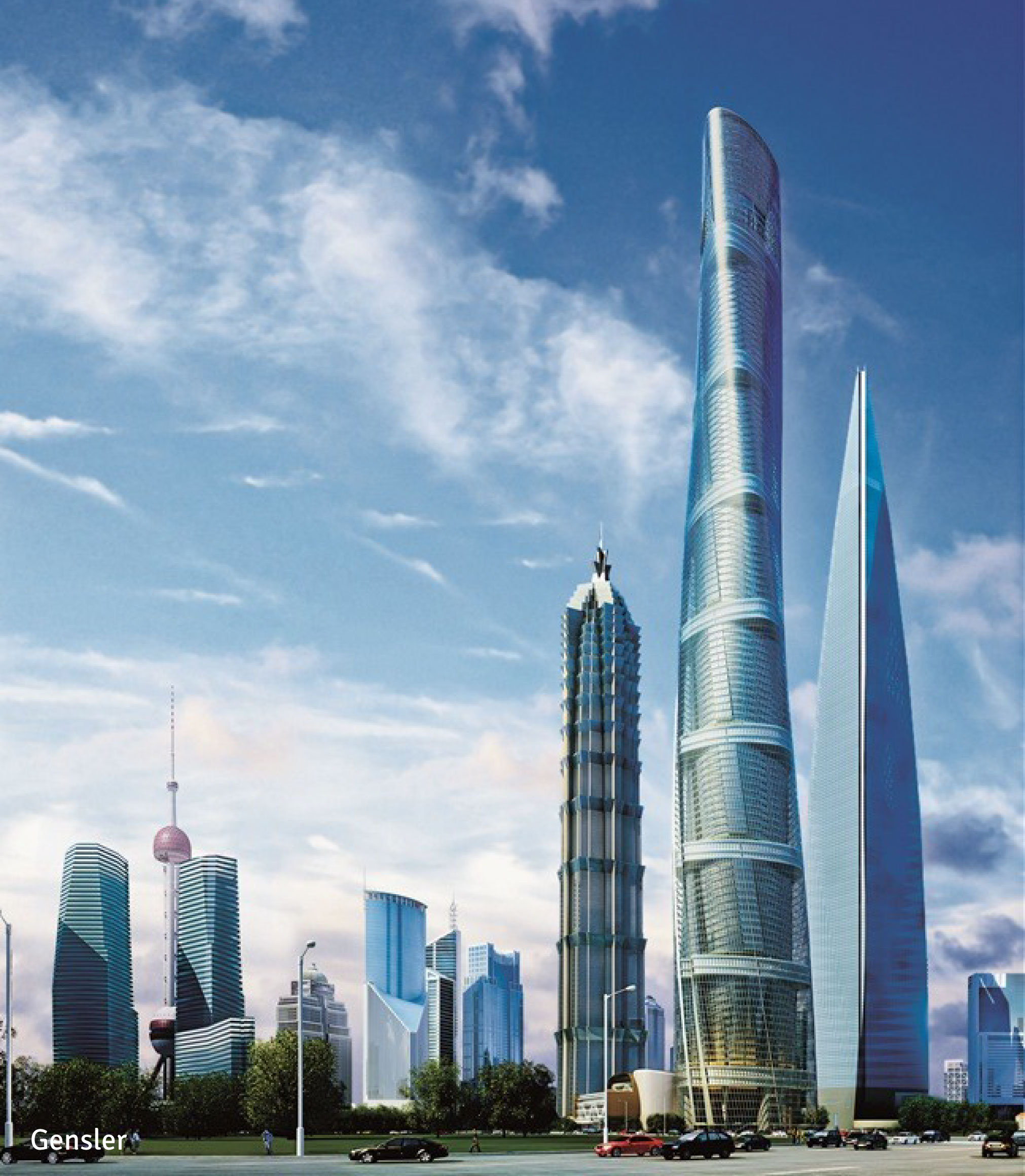

Its structure has double transparent walls: these allow ventilation and the maximum entry of sunlight, which reduces the need for electric light.
The outer skin of the tower: insulates the building, reducing energy consumption for heating and cooling.
Its spiral parapet: collects rainwater and is used for heating and air conditioning systems.
Because of these characteristics, it uses 80% less energy for heating and cooling compared to other equivalent towers (USGBC).
Its conical and asymmetric façade: it reduces the wind load on the building and allows significant savings in construction materials in general (ArchDaily).
It has green spaces in and around the building: with extensive landscaping that takes up a third of the space.

The Shanghai Tower is a case in which the use of avant-garde sustainable strategies can be seen in the design of its spiral and transparent structure.
This toroid-shaped museum of 17,000 m2, 78 m high, with seven floors of exhibition space and three levels of podium, clad in stainless steel, has the LEED Platinum certification and is located in Dubai.
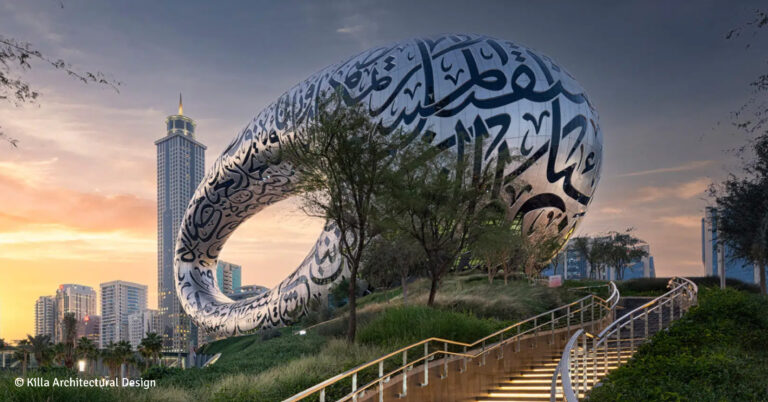
It has a low-carbon civic building design: this is achieved thanks to its parametric design, its passive solar architecture, and the engineering solutions and energy and water recovery strategies implemented to reduce its consumption, as well as air quality filtration systems.
It is equipped with advanced building control solutions, gray water recycling systems and elevators with regenerative drive.

It has windows with calligraphy in the shape of a toroid: which are parametrically optimized, avoiding the structural nodes of the steel mesh through calligraphy. During the day they function as windows that allow natural light to enter and during the night they illuminate the environment with LED lights.

It has photovoltaic solar panels located in a nearby solar farm (on the roofs of parking buildings) that cover their energy needs: visitors can charge their electric vehicles while touring the facilities.
The theme of sustainability is present in the exhibitions: the museum includes topics related to the effect of global warming and possible alternatives to repair the damage caused.

The project had to implement innovative principles, such as the use of BIM and the development of a 3D energy model, due to the complexity of its design. In short, this museum represents the future through its design, implementation and construction.
If you are interested in accessing the LEED certification contact us.
Leaf Global. Copyright © 2026. All rights reserved.