He leads projects and consulting services under LEED, EDGE, and FITWEL standards, integrating facade optimization strategies, life cycle assessments, and energy modeling to develop high-performance buildings.
We are immersed in an era in which we are actively seeking to renew our energy sources to preserve the environment. In this context, geothermal energy emerges as a promising option. It is a form of renewable energy that takes advantage of the heat generated deep inside the Earth. This energy is stored in rocks, soils and groundwater in the form of heat, and its use contributes significantly to the protection of the environment.
Geothermal energy is an energy source renewable and inexhaustible because the heat stored in the subsoil is constantly renewed. This form of energy takes advantage of the energy potential contained in the subsoil to generate electricity, heat, cooling and domestic hot water. It is a sustainable and indigenous energy source, since its use does not depend on external factors. In addition, it is considered safe and minimally invasive in terms of environmental impact on the soil.
One of its greatest advantages lies in its ability to generate energy constantly and continuously, regardless of weather conditions or time of day. Geothermal energy can be used both in small homes and in large buildings, and can supply both the electricity grid and the industrial sector.
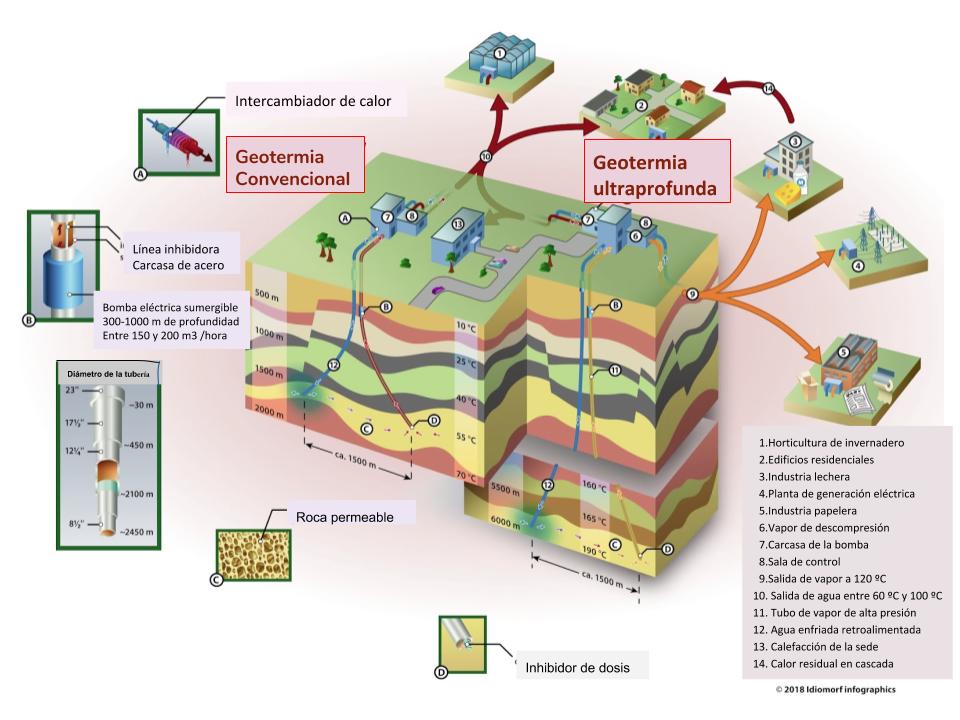
Source: GeoTermiaOnline.com
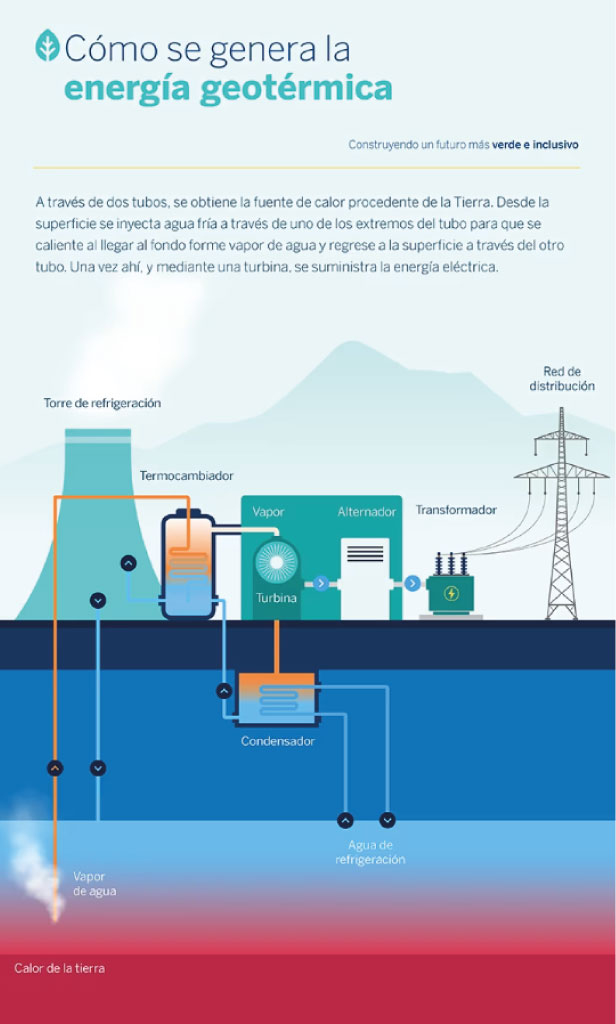
Source: BBVA
Use of geothermal energy for heating and air conditioning of buildings.
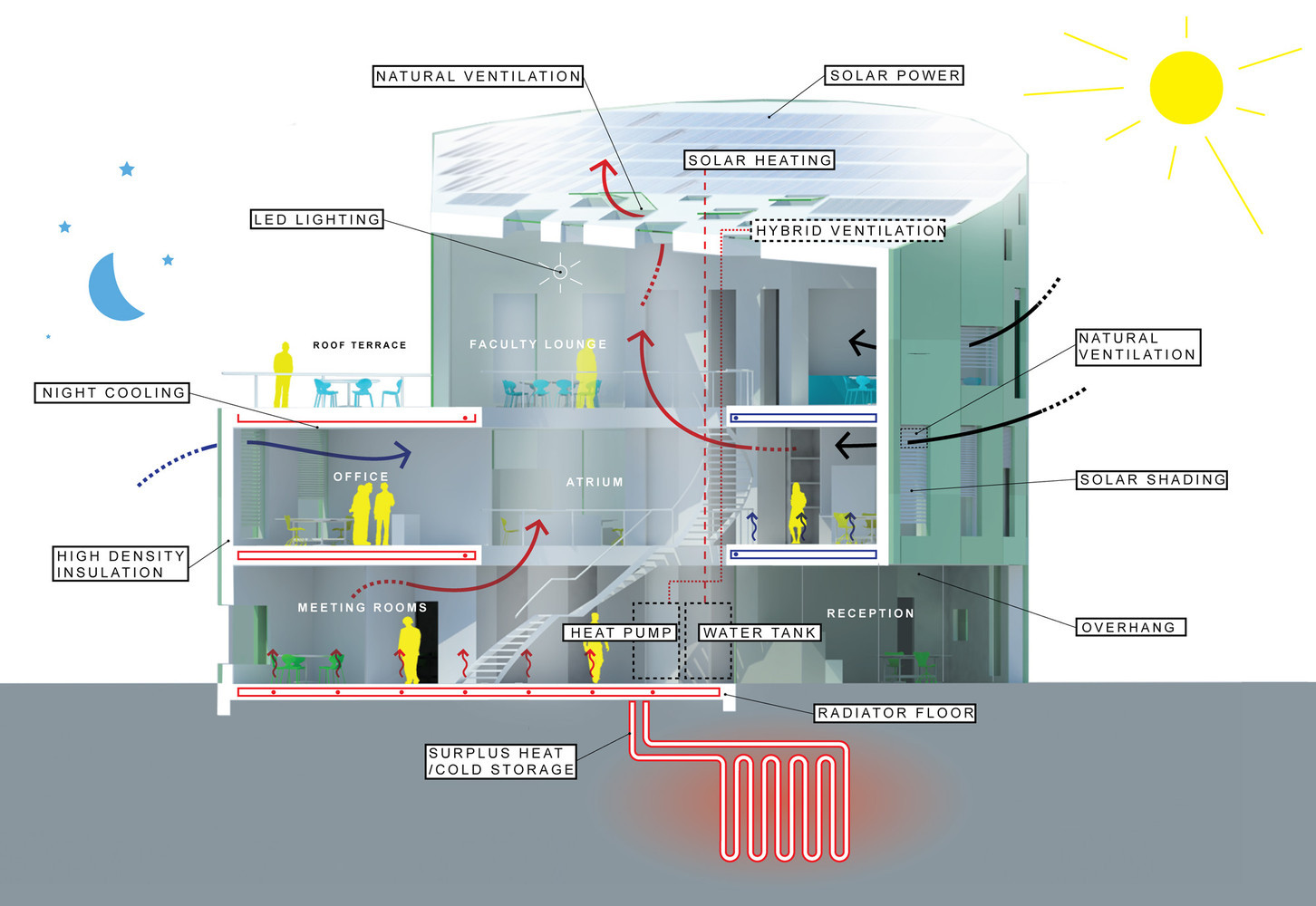
Source: archdaily
It is feasible to take advantage of the heat contained in rocks and fluids located under the Earth's crust to generate electricity through geothermal energy. This form of renewable energy was first used in Italy in 1904 and since then it has experienced significant growth, being recognized as a valuable source of clean energy.
For its use, wells are drilled that allow access to steam and hot water stored in the subsoil. When brought to the surface, this heat is used to drive turbines that generate electricity. Geothermal energy is used in more than 20 countries, including Indonesia, Mexico and Japan, with the United States being the main producer.
Despite its advantages, such as its low level of CO2 emissions, geothermal energy has some disadvantages. First, its initial installation involves a high cost. In addition, sulfur dioxide and hydrogen sulfide emissions can occur.
There is also the possibility of generating small earthquakes, since geothermal exploitation is carried out in areas close to the tectonic plates of the Earth's crust.
Leaf Global. Copyright © 2026. All rights reserved.