He leads projects and consulting services under LEED, EDGE, and FITWEL standards, integrating facade optimization strategies, life cycle assessments, and energy modeling to develop high-performance buildings.

The current goal is for new construction and 20% of existing buildings to be ready to be zero carbon emissions by 2030.
To achieve this, an annual deep renovation rate of the existing building inventory of 2% is required between now and 2030.
Mandatory building energy efficiency standards already exist in Europe, the United Kingdom and China, with strong compliance regimes and penalties for non-compliance. In the case of the United States and India, regulatory frameworks are also being strengthened.
In 2022, the Ministry of Housing and Urban-Rural Development established the General Code for Energy Efficiency in Buildings and the Use of Renewable Energy.
This first mandatory standard requires that all buildings be designed to be energy efficient.
In the code you can find the following: the calculation of carbon emissions from buildings is mandatory, industrial energy savings objectives have increased by 20%, the thermal performance limits of public buildings have been raised and energy saving design indicators for industrial buildings have been incorporated.
The European Parliament has agreed that member states must ensure that public and non-residential buildings reach class F after January 1, 2027 and class E after January 1, 2030.
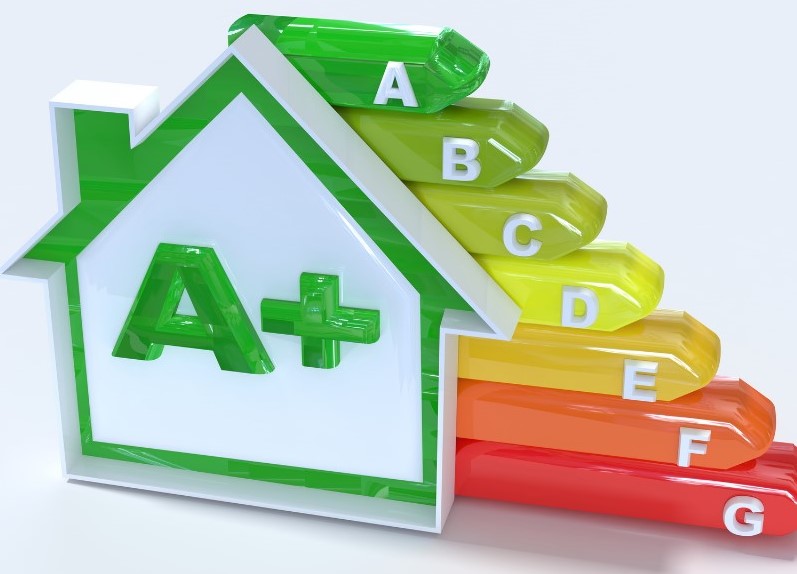
The amended Energy Efficiency Directive, agreed in 2023, more than doubles the annual energy savings obligation for 2028. EU countries must achieve annual savings of 1.3% of final energy consumption by 2024, which should increase to 1.9% by 2028.
European countries are taking individual initiatives at the local level. For example, in the United Kingdom it is currently illegal to rent properties in England and Wales that do not reach an E level of energy efficiency.
In the Netherlands, the government's Building Decree requires that office buildings have at least one C level for operation.
In France, the Energy Transition to Green Growth Act (2016) requires a 60% reduction in final energy consumption in 2050 compared to the 2010 level for commercial buildings.
In the case of Germany, financial support is provided through the “Federal Financing for Efficient Buildings (BEG)” to improve energy efficiency in buildings and use renewable energy.
Although India does not yet have a mandatory national regime, incentives have been incorporated by individual states to achieve sustainability objectives within the National Building Code, and the application of existing sustainability standards is being reinforced.
In 2022, an energy conservation code was incorporated for commercial and residential buildings, which authorizes the central government to establish energy consumption standards, as well as provides standards for energy efficiency and conservation, and the use of renewable energy.
The United States does not have a national energy code for commercial buildings, instead leaving the adoption of the code to individual states. However, there is a national energy reference standard that influences the adoption of the code, Energy Standard for Buildings Except Low-rise Residential Buildings. States that decide to adopt this standard or an equivalent standard are eligible to receive funding to assist in implementing the code.
The Inflation Reduction Act of 2022 also provides tax incentives, rebates, grants, loans and others to improve the energy efficiency and sustainability of existing buildings. For example, the Tax Deduction for Energy Efficient Buildings provides a tiered deduction per square foot for existing buildings, five years old or more, that demonstrate an improvement in existing energy use intensity of 25 to 50%.
The increase in countries that are adopting mandatory energy efficiency standards indicates a greater global commitment to energy efficiency as an alternative to reducing energy consumption, mitigating climate change and contributing to sustainability.
Source: Siemens Financial Services
If you need advice on energy efficiency and sustainable certifications
Leaf Global. Copyright © 2026. All rights reserved.