He leads projects and consulting services under LEED, EDGE, and FITWEL standards, integrating facade optimization strategies, life cycle assessments, and energy modeling to develop high-performance buildings.
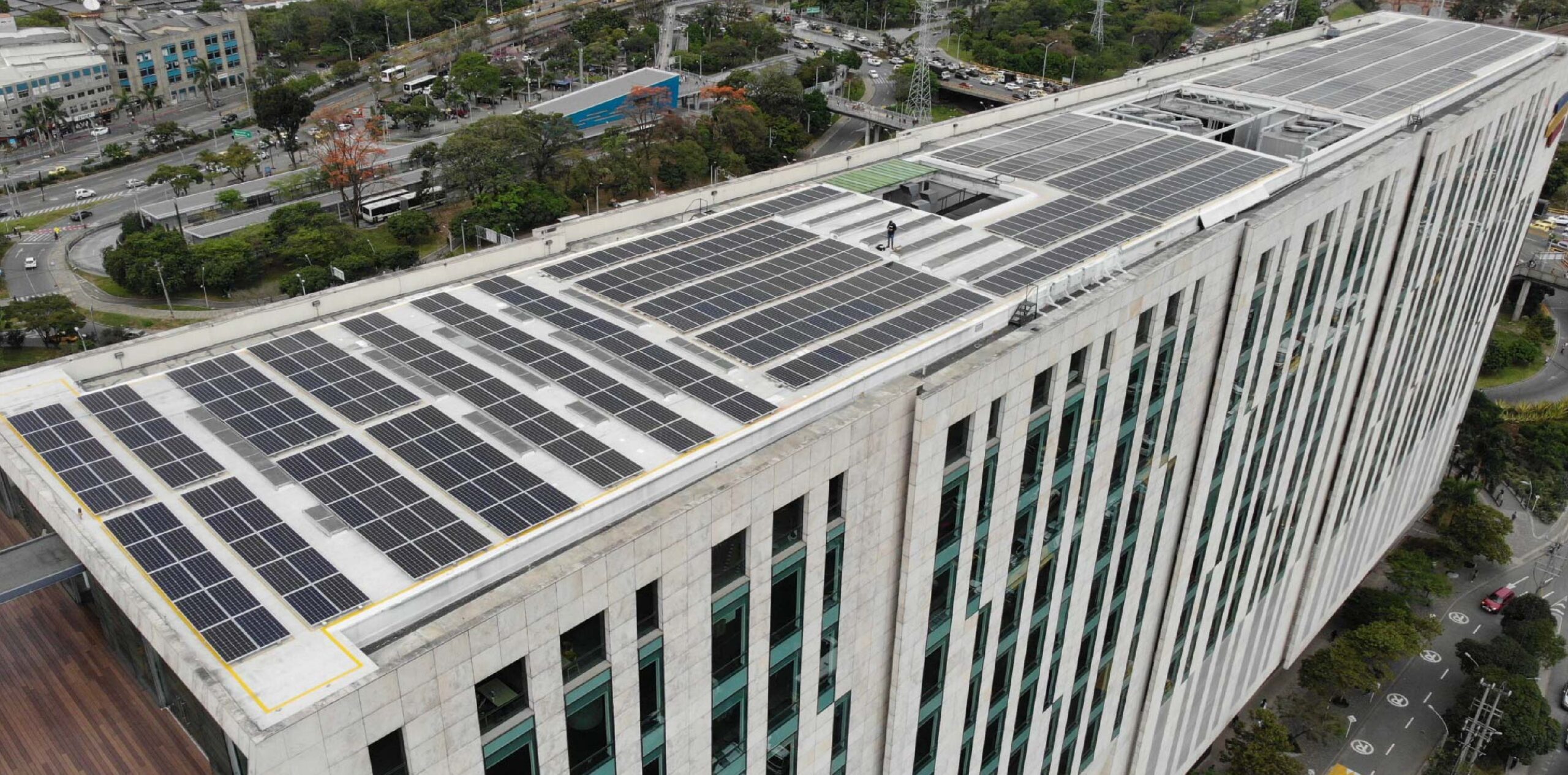
The buildings Net Zero Carbon they are buildings that balance their generated and offset carbon emissions, achieving a net impact of zero in greenhouse gases during their operation.
For a building to be Net Zero Carbon throughout its life cycle, it must reduce and offset both operational and embodied carbon. Offsetting carbon emissions involves neutralizing the amount of carbon dioxide (CO₂) emitted by an activity, funding projects that reduce, capture or avoid equivalent emissions elsewhere.
The incorporated carbon refers to the carbon emissions generated during the manufacture, transport and installation of the materials used in a building throughout its life cycle. This approach is key, as the impact of construction extends beyond the energy used during the operation of the building.
In addition, these emissions are difficult to reduce once the building is built, so it is essential to minimize them from the design phase.
The operating carbon refers to the carbon emissions that come from the building's energy consumption in its daily operation, such as lighting, heating, cooling and electricity supply. These types of emissions can be reduced through energy efficiency practices and the use of renewable energy.
Zero net operating carbon involves a significant reduction in CO₂ emissions generated by the operation of a building over a year. To achieve this, buildings must be energy efficient and use renewable energy (generated on or off site). Any residual emissions must be offset through carbon compensation mechanisms, thus achieving zero net balance.
However, the challenge of creating sustainable cities is not only about buildings generating 100% of their energy from renewable sources, such as solar panels or wind turbines, which are known as “zero net energy buildings”. Although this is a key objective, it is not always feasible for all buildings.
For this reason, WorldGBC proposes a broader and more ambitious approach: the concept of zero net incorporated carbon, which goes beyond energy sources to address the environmental impact of manufacturing a building's construction materials and processes.
The construction sector is responsible for 35% of global energy consumption, 38% of energy-related carbon emissions and 50% of natural resource use. It is projected that, if no action is taken, the total footprint of the sector could double by 2060.
For mitigate the impact of the sector, you need a collaboration across the entire value chain, as well as a significant transformation in the design, construction, use and dismantling of buildings. This involves adopting new business models that promote the circularity and reuse of materials and buildings, integrating an approach based on the full life cycle, improving operational performance and reducing dependence on fossil fuels.
Efficient design, sustainable construction and the use of renewable energy are pillars of this transformation towards sustainable urban development. The concept of Net Zero Buildings is redefining how we understand urban development. It's not just about reducing energy consumption, but about taking a holistic approach that covers the entire lifecycle of a building.
WorldGBC's Carbon Life Cycle Vision:
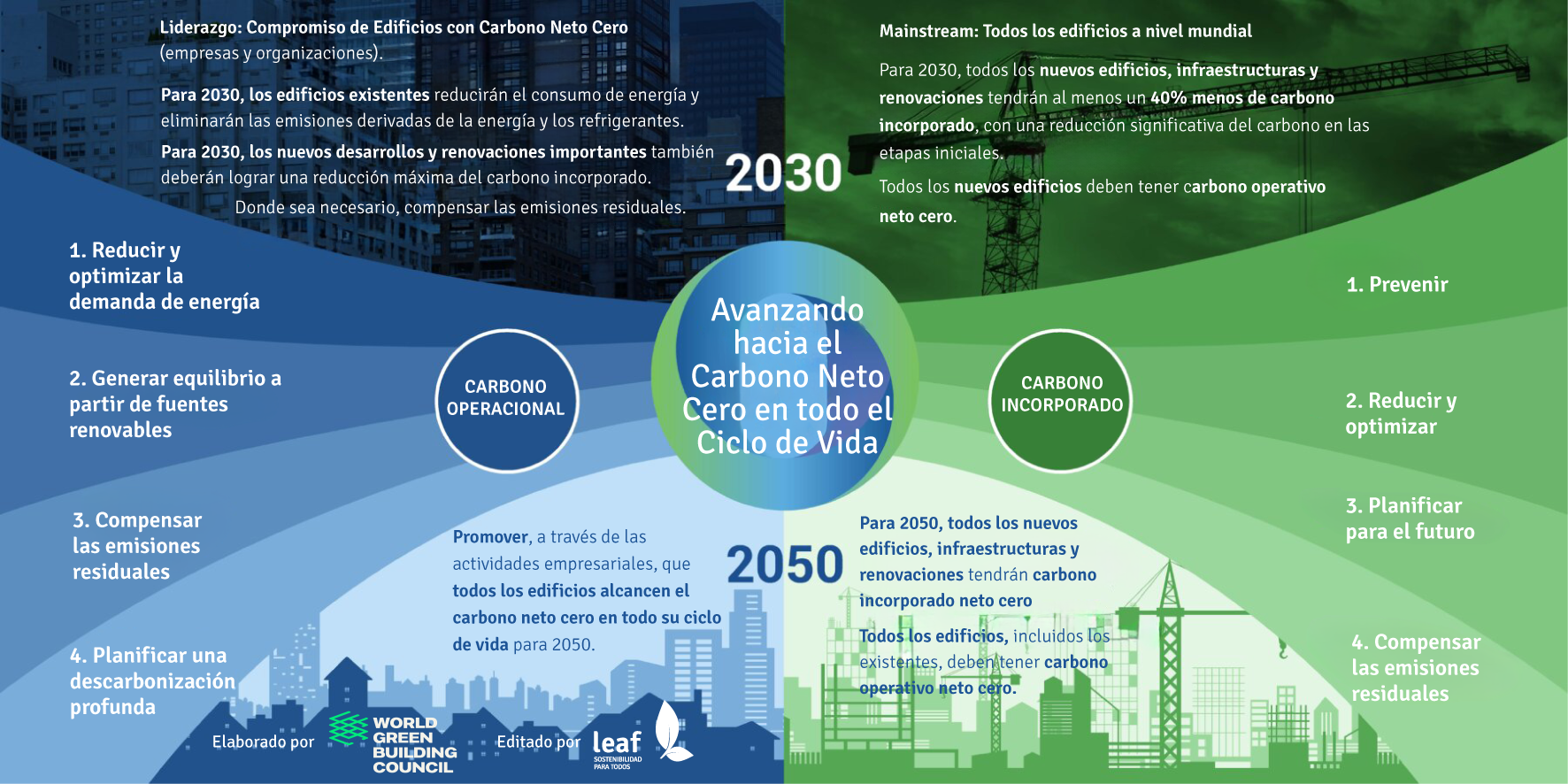
Source: WorldGBC
Leaf Global. Copyright © 2026. All rights reserved.