A project that is connected to the community through pedestrian paths and designated bicycle routes encourages people to walk or ride a bicycle instead of driving a car, and so they not only help reduce air pollution, but also promote physical activity. In this article, we will address the different strategies for selecting and designing sustainable sites in LEED certification.
In ideal situations, sustainable design projects can have two initial approaches. On the one hand, the team you can start by analyzing a specific site and determining the best features and uses for that particular location. On the other hand, the team you can start with a specific function in mind and then identify the best location in terms of land use. In both cases, the team must take into account a series of attributes of the overall system, including aspects such as the local climate, the site's development history, connectivity to local infrastructure and public transportation, the species in the area that could be affected or benefited by the project, the dynamics of urban life in the area and how the project can contribute to the community, as well as the location of the homes and workplaces of local people and their movement patterns.
LEED classification systems address project location, site design, and maintenance through a series of key topics, including location and connectivity, the pattern and design of the neighborhood, the transporting, the stormwater management And the mitigation of the heat island effect.
Location and Connectivity
- Opt for revitalization and development on land already used. This involves building in previously developed areas or on abandoned land, known as “brownfields”.
- Prioritize proximity to existing infrastructure. Avoid suburban sprawl and unnecessary resource use by focusing development around pre-existing streets, energy and water supply lines.
- Safeguard natural habitats. Give preference to locations that do not include environmentally sensitive areas.
- Encourage greater density. Seek to reduce the land footprint and maximize the ratio between built space and total area or the number of square feet/meters per acre.
- Promote diversity. Provide essential services in communities and promote a balance between housing and work areas.
- Encourage a variety of modes of transport Make it easier for residents to walk, use bicycles and access public transportation as means of mobility.
Neighborhood Pattern and Design
- Encourage pedestrian accessibility: Prioritize the creation of streets designed for foot traffic, with a focus on the appearance and functionality of building fronts, ground-level facades, and the balance between the width and height of sidewalks. Implement speed limits on streets and provide elements such as trees, shadows, benches and other services for pedestrians.
- Adopt compact development practices: Consolidate urban development by increasing the density of residential units and the amount of commercial space per area.
- Promote connectivity: Reduce dead ends, avoid the creation of closed communities and use an urban layout pattern that promotes connectivity and accessibility.
- Diversify land uses: Include a wide range of services and activities in the neighborhood, such as stores, restaurants, schools, religious centers, warehouses, parks, civic buildings and recreational areas.
- Fostering community diversity: Offer a variety of housing types for different income levels and abilities, avoiding segregation and promoting the integration of affordable housing and nursing homes rather than their separation.
- Supporting alternative transportation: Reduce dependence on cars by limiting parking, connecting buildings to public transportation systems and bike routes, and providing public transportation hubs.
- Promote access to sustainable food: Include elements such as community gardens, farmers' markets, urban farms, and community-supported agriculture programs. Ensure that all residents have convenient access to healthier food options, in addition to fast food.
Transportation
Strategies to address the design and planning of transport:
- Prioritize proximity to public transport: Choose project locations in areas that have access to an existing public transportation network.
- Reduce parking space: Limit the availability of parking at the project site to encourage the adoption of alternative transportation options.
- Promote cycling: Facilitate the use of bicycles by installing secure bike racks and providing shower facilities for people who commute to work by bike.
Strategies to address operations and maintenance of transport:
- Promote car sharing: Reserve preferred spaces for shared use vehicles in the parking area.
- Supporting alternative fuel vehicles: Provide a convenient on-site fueling station for vehicles that use more sustainable fuels.
- Encourage transportation alternatives: Develop an incentive program that promotes the use of alternative modes of transport for building occupants, especially for their commutes to work.
- Encourage alternative transportation options: Promote alternatives to the use of individual vehicles for commutes to work both at the building level and throughout the city.
Stormwater Management
Strategies for Stormwater Management through design:
- Reduce waterproofed areas: Increase the surface area of permeable surfaces, such as green roofs, porous pavement and urban pavers, in order to minimize rainwater runoff.
- Implement stormwater control: Introduce elements such as dry lagoons, rain gardens and bio-drainage channels into the landscape to retain and slow down the rate of rainwater runoff.
- Integrate stormwater management into site design: Use design features that fulfill multiple functions, such as planters that capture rainwater, streets with biocanals for draining water to collect and conserve rainwater, and mulch that improves moisture retention in the soil.
Strategies for stormwater management in operations and maintenance:
- Redirect stormwater: Channel rainwater flow into dry lagoons, rain gardens, drainage biocanals, and other landscape features designed to hold water.
- Collect rainwater: In many areas, rainwater can be collected for use in building systems, such as process water, toilets or irrigation, following local regulations.
Mitigation of the Heat Island Effect
- Use reflective roofs: Install light-colored or white roofs that reflect more sunlight and absorb less heat.
- Reduce the paved surface exposed to the sun: Limit the amount of hard areas in the urban environment. This can be achieved by designing narrower streets, using light-colored pavement and providing shade through abundant vegetation. In addition, consider the location of underground parking lots.
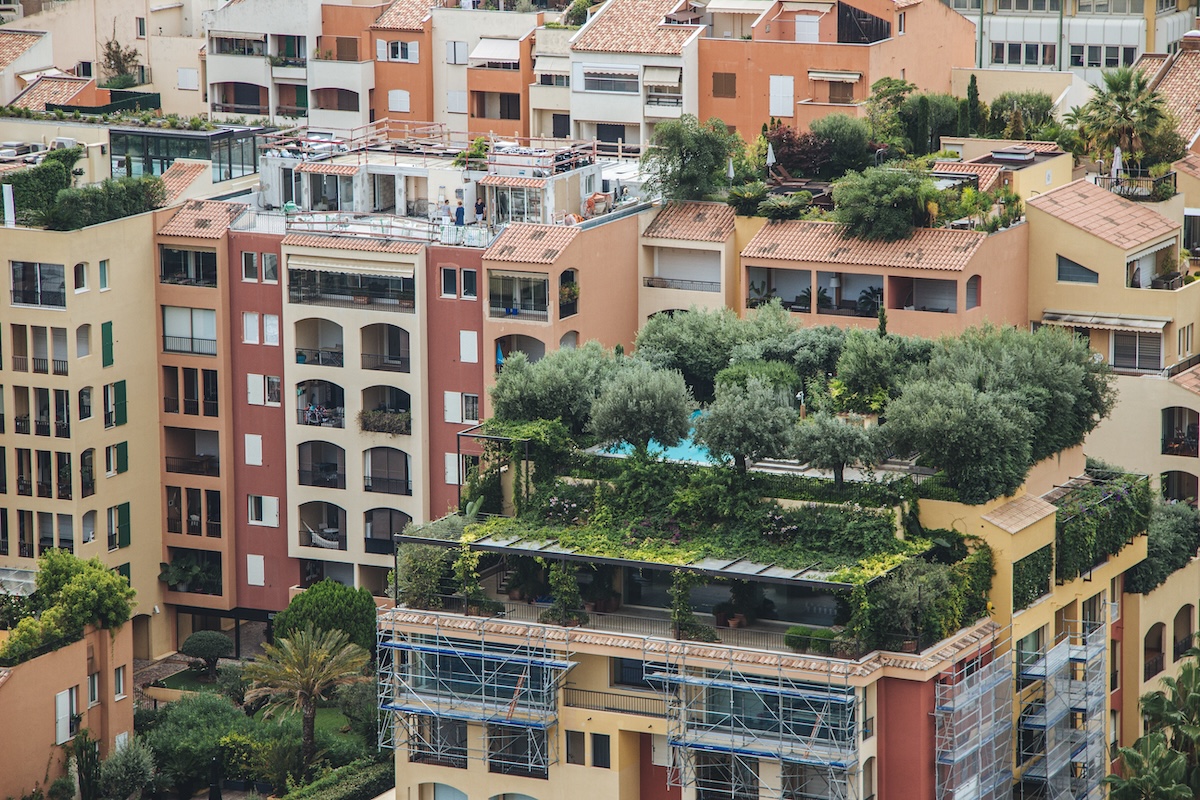
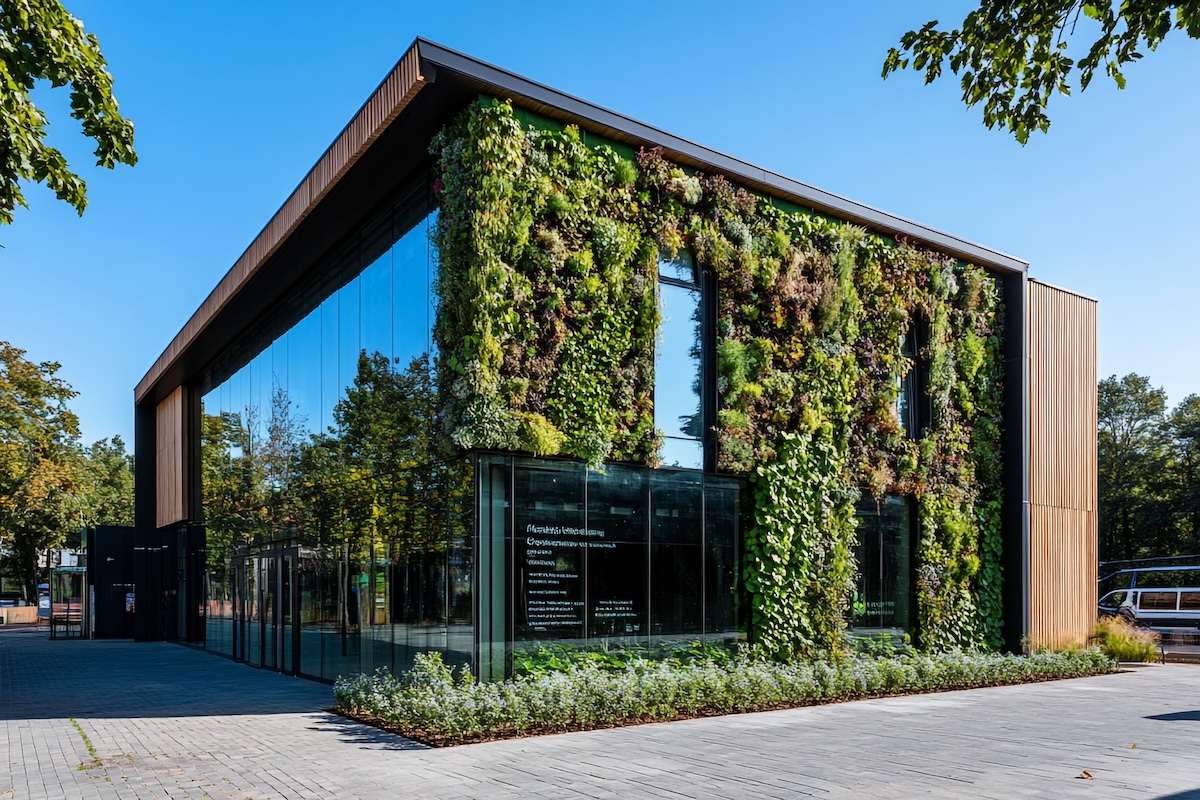
- Encourage urban vegetation: Plant trees, shrubs and carry out street landscaping to reduce the effects of the heat island effect. Vegetation helps cool the environment through evaporation and provides shade. In addition, creating green roofs can also be an effective strategy.
Conclusion
In conclusion, apply strategies of selection and design of sustainable sites under the criteria of the LEED certification is essential to promote sustainable urban development. From choosing locations connected to public transport and existing infrastructure, to integrating solutions such as green roofs, rainwater management and mitigation of the heat island effect, these practices make it possible to significantly reduce the environmental impact of projects.
In addition to improving energy efficiency and the quality of urban life, the sustainable site design fosters more connected, healthy and resilient communities. Implementing these principles helps to achieve the LEED certification, while positioning projects as references for environmental responsibility in the construction sector.
If you are planning a real estate development and want to ensure its sustainability from the design stage, contact us to advise you on complying with LEED credits and maximizing the positive impact of your project.