He leads projects and consulting services under LEED, EDGE, and FITWEL standards, integrating facade optimization strategies, life cycle assessments, and energy modeling to develop high-performance buildings.

Hotel operators in the region are increasingly seeking to adopt sustainable practices, as tourists are currently being influenced by their level of environmental awareness and their perception of the attributes of green building design.
Nearly 60% of travelers prefer to book green hotels (TripAdvisor).
The You Core Pinheiros hotel, with 5 671 square meters and 152 rooms, located in the Pinheiros neighborhood in São Paulo, has received the preliminary EDGE certificate.
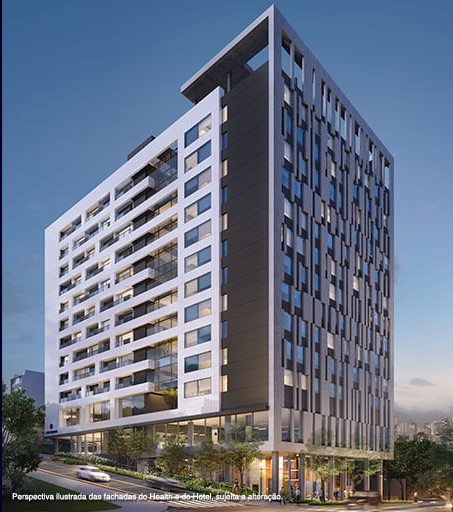
In order to achieve greater sustainability, advanced energy saving technologies were included from the design and construction stage.
Energy savings are expected to be 28%. This is thanks to the fact that the hotel has solar collectors for heating water, highly efficient hot water boilers, low-consumption luminaires in indoor and outdoor spaces, a smaller proportion of windows compared to walls, external shading elements and a variable coolant volume system.
Water savings are projected to be 21%. This is possible because the hotel has a rainwater collection system for irrigation, double-flush toilets, timed faucets and low-flow showers, making its water consumption efficient.
It is predicted that there will be 27% less of energy incorporated in materials. This is feasible because reinforced concrete slabs have been used in situ to build ceilings and floors, aluminum structures for windows, internal wall construction systems with drywall mounted on metal structures, and construction materials for exterior walls that include lightweight concrete blocks and prefabricated concrete elements.
The 5,200 square meter, 415-room Andaz y Mondrian hotel, located in the Condesa neighborhood of Mexico City, has the preliminary EDGE certificate.
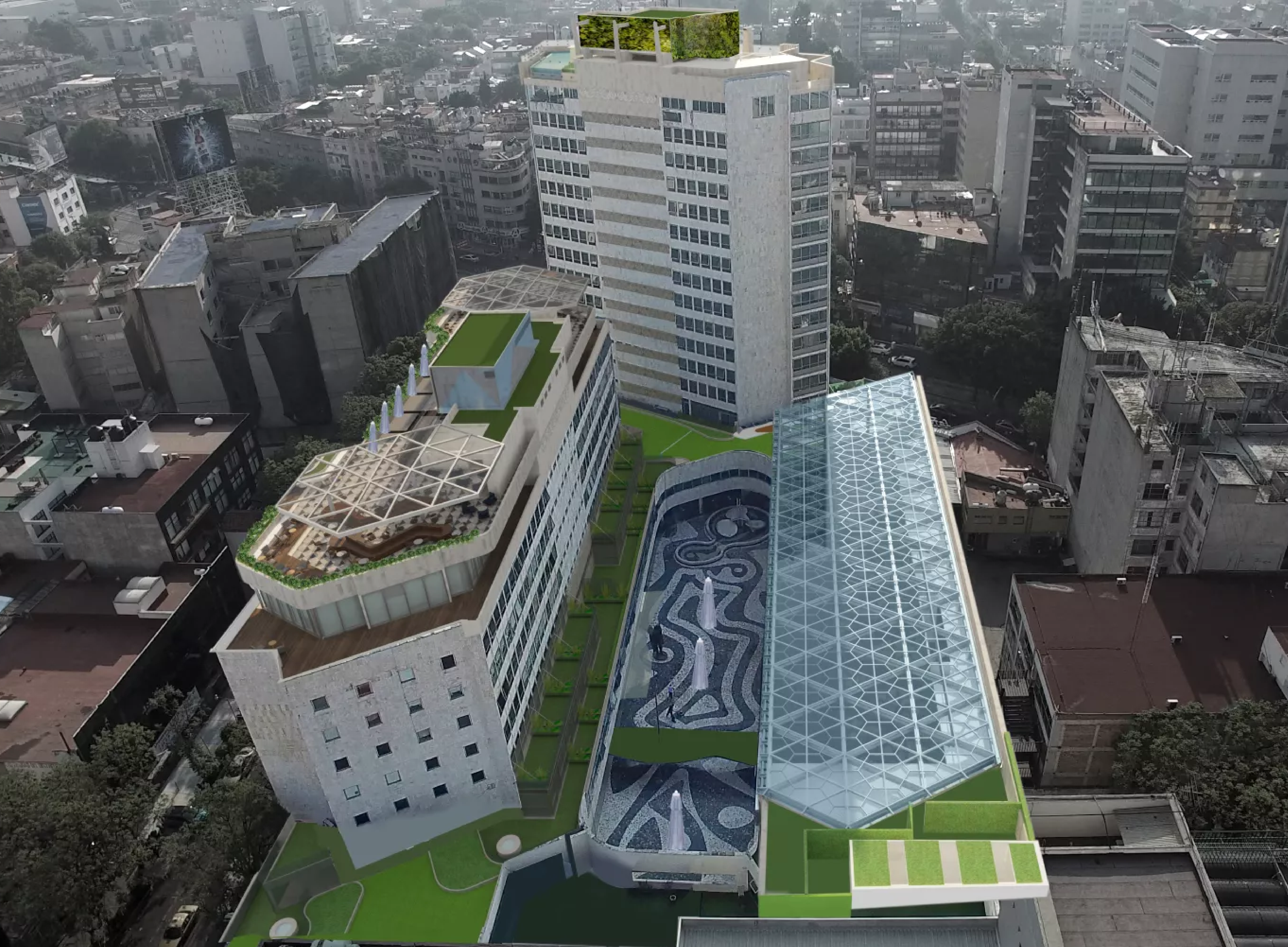
Three buildings make up this hotel complex, which is a leader in the sustainable conversion of existing buildings in Mexico.
Energy savings are expected to be 26%. This is possible because the hotel has a reduced proportion of windows in relation to walls, a variable coolant volume system, a highly efficient water heater, low consumption bulbs in both indoor and outdoor spaces and lighting control systems for stairs and corridors.
Water savings are expected to be 35%. This is due to the use of water faucets and shower heads with reduced flow and automatic closing, energy-efficient flushing systems for toilets and urinals, aerators for water faucets, rainwater collection systems for non-drinkable uses and pool covers.
The hotel is projected to have a 75% less of energy embedded in materials. This has been achieved mainly by the reuse of existing slabs, roof, walls and window frames (reusing existing elements in a building contributes to a lower demand for new materials, saving energy in the production, transport and waste management process).
The Feeling hotel, with 3,026 square meters of floor area, located in Medellín, Colombia, has received the preliminary EDGE certificate.

Energy savings are estimated to be of 30%. This is due to the reduction in the ratio between windows and walls, the incorporation of external shading elements and low-emissivity glass, and the inclusion of low-energy bulbs in indoor and outdoor spaces.
Water savings are expected to be 32%. This is achieved thanks to the use of energy-efficient showers and faucets, efficient flushing systems for toilets, water aerators for faucets, as well as self-closing faucets.
The hotel is forecast to have a 53% less of energy incorporated in materials. This is possible due to the use of clay blocks with internal and external honeycomb-like coating for internal walls, and to concrete slabs poured in situ for external walls, floors and roof.
The Le Parc hotel, located in Quito, Ecuador, is EDGE Advanced certified.
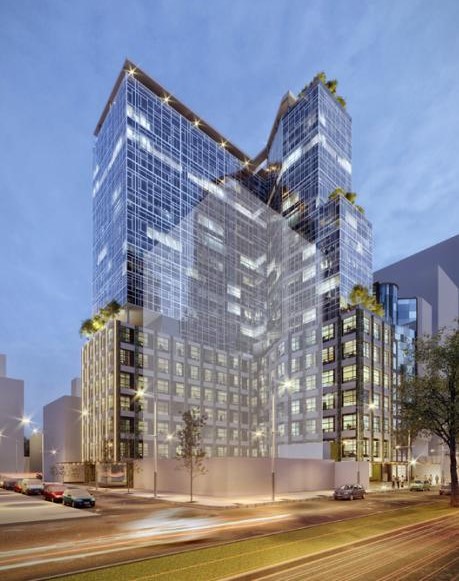
Energy savings are expected to be 48%. This is because the hotel has a reduced ratio between windows and walls, insulation on the roof and exterior walls, glass with improved thermal efficiency, a heat pump system for heating water, and photovoltaic solar energy. It also uses efficient lighting in interior areas and lighting control systems for outdoor spaces and common areas.
Water savings are projected to be 59%. Thanks to the fact that it has toilets with a dual flush system in all bathrooms, energy-efficient showers and urinals, aeration devices and faucets with automatic closure, and a rainwater collection system.
It is estimated that the hotel has a 35% less of energy incorporated in materials. This has been achieved through the use of reinforced concrete placed in situ and steel structure, drywall mounted on metal structures for interior and exterior walls, polystyrene foam insulation for ceilings and fiberglass insulation for walls.
Source: edgebuildings.com
If you are interested in accessing EDGE certification contact us.
Leaf Global. Copyright © 2026. All rights reserved.