He leads projects and consulting services under LEED, EDGE, and FITWEL standards, integrating facade optimization strategies, life cycle assessments, and energy modeling to develop high-performance buildings.
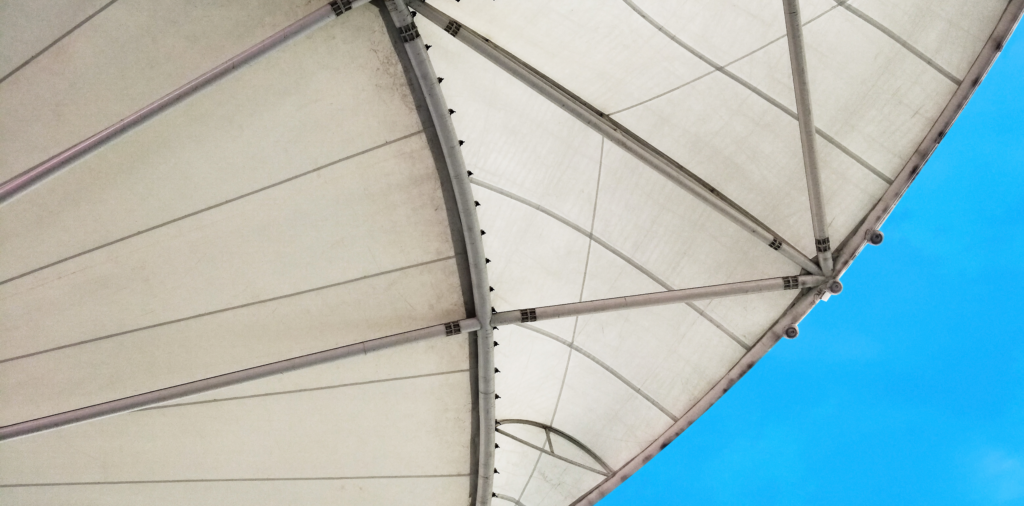
Textile architecture, an ancient construction technique used since the dawn of civilizations to erect shelters and houses, has undergone revitalization thanks to technological development and the improvement of materials. This construction method, now very popular, stands out mainly in the creation of tensioned roofs on large surfaces, allowing for a structural design with large spaces between support points.
The tensile structure uses a variety of materials, such as PES, PVC, PVDF, thermoplastic polymers and silicone. Recent technologies have improved these raw materials, making them lighter, stronger, more durable and with better thermal and light behavior. Surface treatments improve properties such as reflectance and bending resistance.
Textile architecture, with its diverse applications and outstanding characteristics, stands as an innovative and functional way of approaching construction today.
Leaf Global. Copyright © 2026. All rights reserved.