He leads projects and consulting services under LEED, EDGE, and FITWEL standards, integrating facade optimization strategies, life cycle assessments, and energy modeling to develop high-performance buildings.
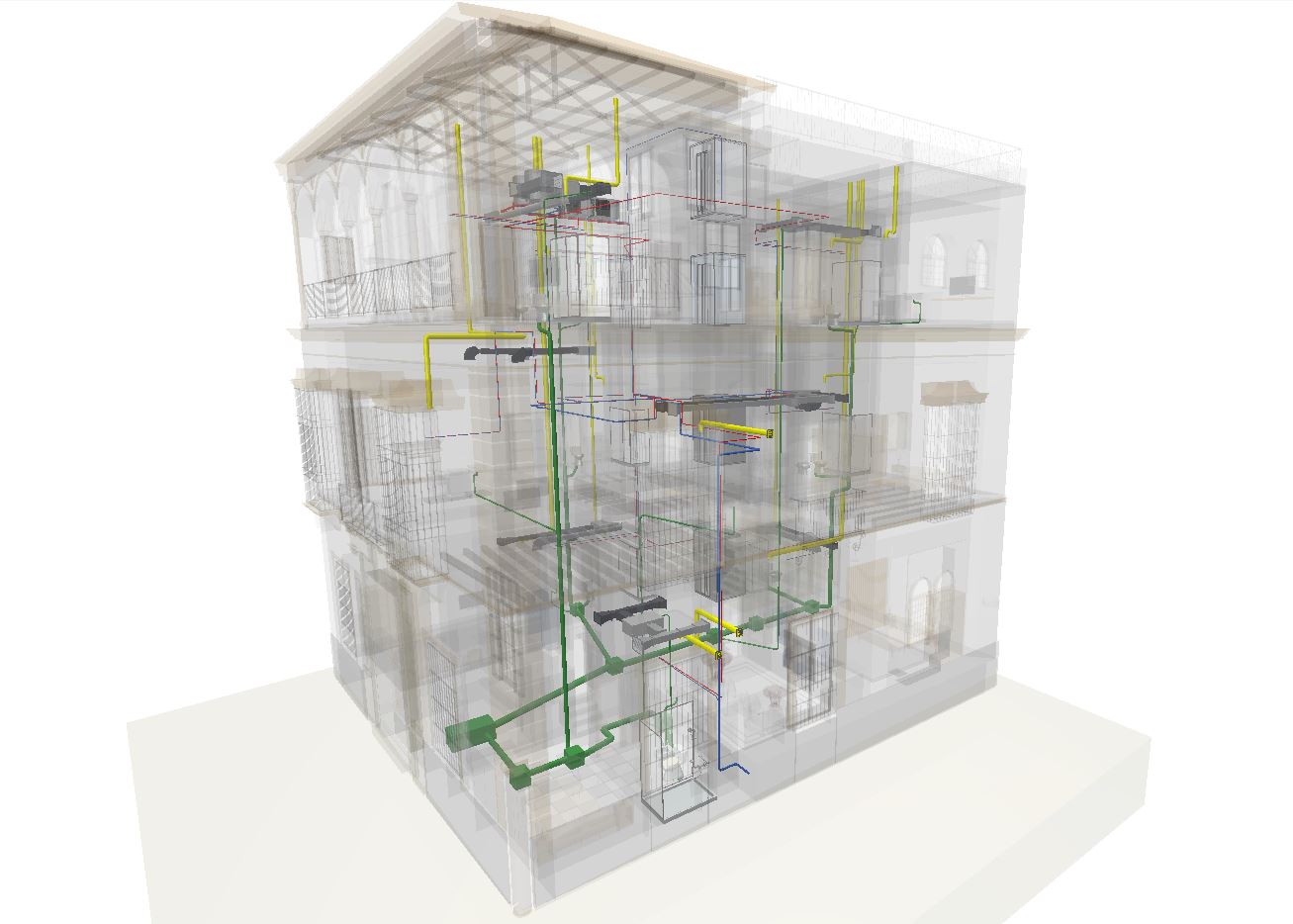
Image from bimnd.es
3D energy modeling with BIM offers a wide range of benefits for sustainable construction, transforming the way buildings are designed and operated.
This methodology not only facilitates the design of buildings that consume less energy and emit less pollutants, but it also allows for more efficient management of resources throughout the building's life cycle.
From the design phase to operation, 3D modeling makes it possible to integrate renewable energies, improve energy efficiency and reduce operating costs. In addition, this technology offers a more complete view by including additional dimensions such as time and cost, which optimizes the planning and execution of sustainable projects.
BIM, Building Information Modeling, is a collaborative methodology used in the construction sector to efficiently manage the data and information of a building throughout its entire life cycle.
This methodology not only focuses on the creation of three-dimensional models, but also encompasses the integration of multiple dimensions such as time, cost, sustainability and maintenance.
The main objective of BIM is to optimize results and improve the efficiency of construction processes. By using detailed digital models, BIM allows for energy simulations and analyses that improve the design and energy efficiency of buildings.
In addition, it facilitates the integration of renewable energies and the reduction of environmental impact, making it a key tool to promote more sustainable development in construction.
This methodology also optimizes the life cycle of materials and the operation of buildings, ensuring a more efficient and sustainable construction.
BIM extends beyond simple three-dimensional representations to include multiple dimensions that enrich the construction process:
© CADBIM Surveys
These dimensions allow for comprehensive project management, optimizing resources, minimizing environmental impact and improving energy efficiency, resulting in more sustainable and profitable constructions.
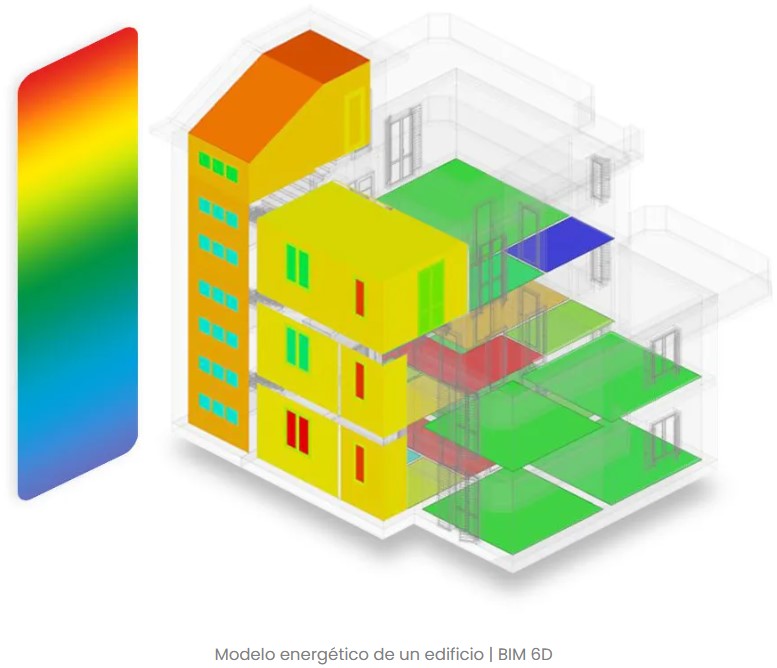
Image from biblus.accasoftware.com

Image from ibheinrichs.de
Energy simulations are essential for evaluating the energy performance of buildings. By considering factors such as materials, type of occupancy and weather conditions, these simulations make it possible to improve the energy efficiency of construction.
The use of BIM makes it easy to simulate the performance of green technologies, such as solar panels and water collection systems, helping to improve the energy efficiency of buildings.
Integrating BIM with energy analysis and parametric design allows architects to explore diverse configurations that maximize project sustainability. This ability to forecast energy performance before construction facilitates informed decisions during design, ensuring that buildings are as efficient and sustainable as possible.
The use of BIM facilitates comprehensive analyses of the life cycle of buildings, optimizing the use of sustainable materials and evaluating environmental impacts from material extraction to completion. This analysis is crucial for selecting environmentally friendly materials and minimizing the use of unsustainable materials, which is essential for environmentally friendly design.
BIM provides a material database that allows informed decisions to be made, minimizing the use of unsustainable materials and maximizing efficiency at all stages of the building's life cycle. This holistic approach ensures that every phase of the building, from design to operation, contributes to the sustainability of the project.
Reducing CO2 emissions is essential to mitigate climate change and achieve carbon neutrality in the construction sector by 2050. Energy models allow us to calculate the annual CO2 emissions of a building and to evaluate the environmental impact of materials throughout their life cycle. This makes it easier to adopt sustainable practices that not only reduce emissions, but also optimize energy efficiency.
BIM contributes significantly to the reduction of waste through efficient construction practices, standardization and prefabrication of components. Strategic planning for waste management through BIM minimizes the waste generated and optimizes the reuse of materials, thus promoting a circular approach to construction.
Sustainable construction practices not only help reduce emissions and waste, but they also promote efficiency and long-term savings. By adopting advanced technologies and methodologies such as BIM, the construction industry can move towards a more sustainable and efficient future.
The implementation of energy models not only simplifies obtaining green certifications, but also guarantees a more efficient, sustainable design aimed at user comfort.
BIM centralizes all project information in a single digital model, accessible in real time, allowing strategic decisions to be made with greater precision and agility. In addition, its ability to automatically reflect changes ensures consistency and efficiency at every stage, from design to operation.
BIM planning not only optimizes the use of materials and human resources during construction, but it also allows, through tools such as Revit, anticipate and resolve potential problems before they materialize. In addition, energy simulations facilitate adjustments to the building's performance during its operation, maximizing efficiency and reducing its environmental impact.
The use of energy modeling in conjunction with BIM has proven to be highly effective in sustainable and large construction projects.
A prominent example is the Estadio Metropolitano de Madrid, where the BIM methodology was key to coordinating teams, optimizing the prefabrication of elements and solving complex problems. Although the main focus was on coordinating processes, their implementation contributed to a more efficient construction with less environmental impact.
Another emblematic case is the Nanjing Youth Cultural Center, where BIM played a crucial role in optimizing materials and improving collaboration between multidisciplinary teams. This project, completed in 34 months, reflects how BIM can transform planning and execution to achieve sustainable results.
These case studies highlight how BIM, together with energy modeling tools, improves energy efficiency, optimizes resources and reduces emissions. Its integration contributes significantly to sustainable development in the construction sector.
Meeting energy efficiency standards, such as those in ASHRAE 90.1, is essential to reduce the environmental impact of buildings and ensure their sustainability. The BIM methodology plays a crucial role in this process by integrating energy simulation and collaborative design tools into a centralized digital model.
Thanks to BIM, it is possible to adopt an integrative design that encourages collaboration between all the disciplines involved, such as architecture, structural engineering and HVAC systems, allowing us to accurately analyze the interactions between the different building systems.
For example, the simulation of the thermal envelope and its effect on energy consumption can be performed directly in the BIM model, optimizing the capacity of the HVAC equipment and ensuring that each element of the design contributes to the building's energy performance.
In addition, BIM not only improves design and planning, but also ensures that updates and adjustments to the model are made in real time, promoting consistency and efficiency at all stages of the project.
Extending to the operation of the building, BIM provides key information for maintenance and monitoring, ensuring efficient energy management throughout its life cycle.
Energy modeling with BIM is a key methodology that transforms the design and management of sustainable construction projects. Through advanced tools such as DesignBuilder and Green Building Studio, professionals can perform detailed analyses to improve energy efficiency and minimize the environmental impact of buildings.
DesignBuilder, with its simulation engine EnergyPlus, offers an intuitive environment for modeling and analyzing buildings, evaluating energy consumption, thermal comfort, lighting and carbon emissions. Its ability to perform simulations from the early design stages allows us to optimize key decisions, ensuring that every aspect of the project contributes to sustainability.
For its part, Green Building Studio, integrated with Revit and cloud-based, it provides rapid simulations and analysis of the building's life cycle. It provides valuable information on energy consumption, carbon emissions and the feasibility of integrating renewable energy, all from an accessible interface designed for interdisciplinary collaboration.
These tools highlight how energy modeling with BIM not only improves planning and sustainable design, but also allows professionals to make informed decisions during all stages of the project. Thus, a more efficient construction is achieved, with a reduced environmental impact and an optimized use of resources throughout the building's life cycle.
Energy modeling with BIM can transform sustainable construction. From the optimization of architectural design to the integration of renewable energy and the reduction of emissions, this methodology offers significant benefits for both the environment and the economy.
Adopting these technologies is crucial to building a greener and more efficient future. The ability to make informed decisions and plan effectively using BIM ensures that projects are not only sustainable, but also economically viable.
At the end of the day, energy modeling not only improves energy efficiency, but it also contributes to a more sustainable world.
BIM is a collaborative work methodology in construction that organizes building data to optimize the management of engineering, architecture and construction projects. Its main objective is to improve the results and effectiveness of construction processes.
The influence of the use of BIM standards in the construction sector is significant, since it allows a more efficient management of information and a better visualization of the project, facilitating changes before starting construction.
This translates into agile decision-making and effective communication between the teams involved.
BIM helps sustainability through data integration and collaboration between all actors in the life cycle of a project, which optimizes resources from design to demolition. This allows for more efficient and responsible management of environmental impact.
Energy modeling with BIM is a technique that uses digital models to improve the design and energy efficiency of buildings, allowing the integration of renewable energy and minimizing environmental impact.
This tool is essential to promote more sustainable development in construction, since it allows a detailed analysis of energy consumption and the optimization of resources throughout the life cycle of the project.
BIM is integrated into sustainable project planning by offering a centralized and accessible digital model in real time, which optimizes decision-making and facilitates the implementation of precise design changes.
This ensures more efficient planning adapted to sustainability principles, allowing each stage of the project to contribute to energy efficiency and the reduction of environmental impact.
Leaf Global. Copyright © 2026. All rights reserved.