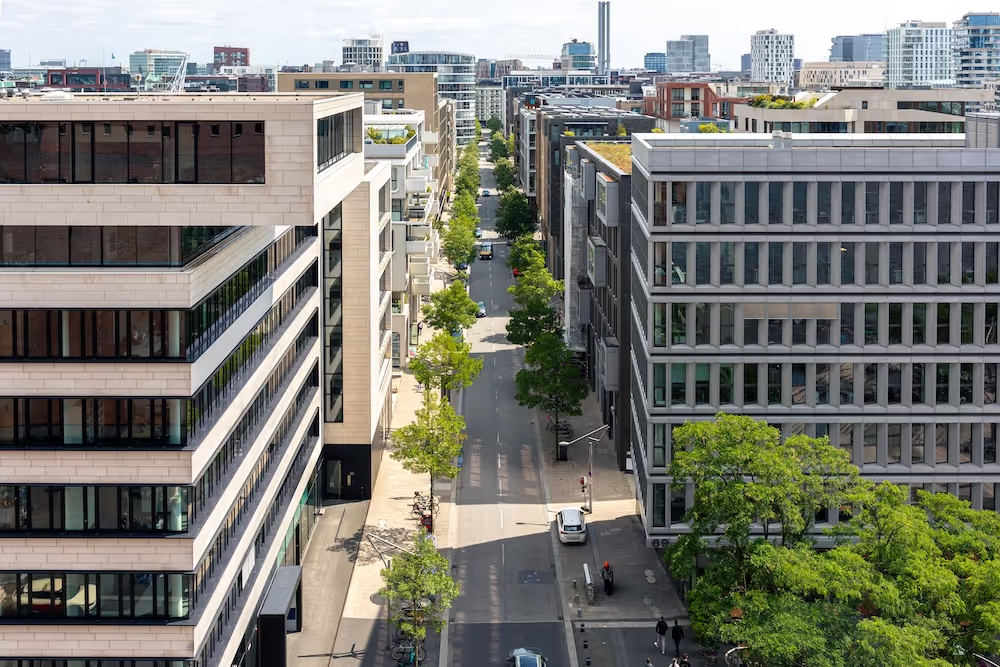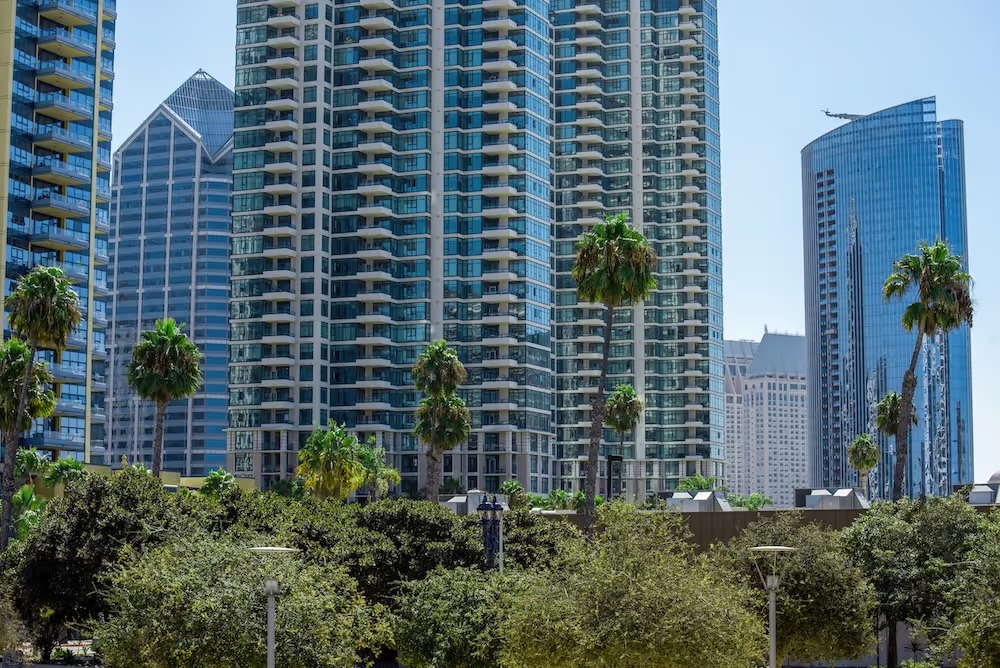
South Africa faces two realities that make LEED an irrefutable business case: load shedding (scheduled outages of up to 12 hours daily) and water scarcity that brought Cape Town days away from Day Zero in 2018. These aren't LEED obstacles — they're opportunities. Energy & Atmosphere (EA) credits recognize solar and battery storage systems as resilience strategies, while Water Efficiency (WE) credits validate recirculation and rainwater harvesting already required operationally. Johannesburg and Cape Town have office markets where tenants like Nedbank, Standard Bank, and top global consultancies favor LEED assets, while the Green Building Council South Africa (GBCSA) Green Star is the local alternative system.
South African feasibility analysis: we assess the project considering Eskom's grid realities, local water regulations, and Johannesburg or Cape Town market requirements.
Credit strategy: we prioritize EA (solar, efficient HVAC) and WE (water recovery) — the highest operational and certification impact credits in South Africa.
Technical coordination: LEED Online documentation with energy models calibrated to Johannesburg (climate zone 2) or Cape Town (climate zone 3).
GBCI certification: we manage review cycles accounting for GBCI response times for projects in the African region.

Green Star (GBCSA) has stronger local recognition. LEED is preferred for projects with multinational tenants or international capital market exposure. Many projects pursue both certifications.
Load shedding is an opportunity: solar generation and battery storage systems installed for operational necessity also generate points in the EA Optimize Energy Performance and Renewable Energy credits.
Yes, through LEED O+M (Operations & Maintenance). It's especially relevant in Sandton where property owners want to upgrade assets for ESG compliance without major civil works.
Leaf Global. Copyright © 2026. All rights reserved.