He leads projects and consulting services under LEED, EDGE, and FITWEL standards, integrating facade optimization strategies, life cycle assessments, and energy modeling to develop high-performance buildings.

Vertical gardens or green walls are structures composed of plants that are inserted into a growing medium and placed on walls inside or outside buildings for aesthetic purposes (they beautify the space, create a more natural and attractive environment) or functional (they improve air quality, reduce temperature, increase biodiversity, work as an acoustic barrier).
They are built with a skeletal structure hung with sections containing the plants. In addition, some green walls have hidden pipes that make a self-watering mechanism possible, in other cases, plants must be watered manually.
They can be categorized into three types of common systems: panel/modular systems, tray systems and independent walls.

They bring value to the biodiversity by using specific plant species, including native and pollinating plants.
You can incorporate species with properties of air purification, contributing to its quality.
They promote the health and well-being of the occupants. They are particularly beneficial in the case of offices, as there is increasing evidence that people who work in an environment with plants are more productive and suffer less stress than those who work in a space without natural elements.
Unlike brick or concrete, green walls reflect solar energy, they don't store it, so both indoor and outdoor vertical gardens help cool the air in summer through evapotranspiration, which can contribute to energy efficiency and thermal comfort.
Green walls help to meet the environmental objectives and to achieve construction standards such as WELL and BREEAM.
People are naturally attracted to spaces with elements of nature (biophilia), so having spaces such as vertical gardens is beneficial for investment value in commercial projects, making a building more financially attractive.
Regarding the visual benefits, a vertical garden can be designed using different varieties of plants with different colors and blooms, drastically improving the appearance of a building, making it more attractive to its occupants and the community.
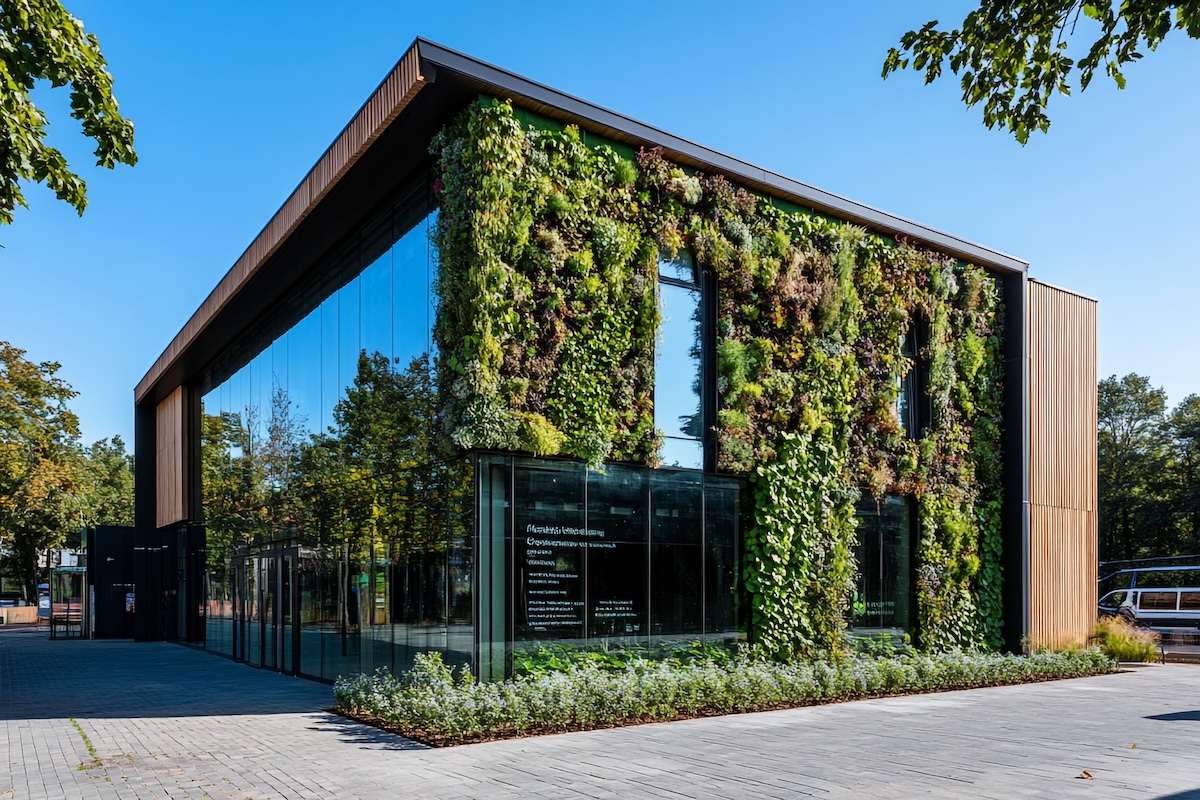
Outdoor vertical gardens protect buildings from temperature fluctuations, divert water away from walls during heavy rain, and provide protection against UV radiation.
For its implementation, plants must be selected that are more resistant to outdoor environmental conditions, such as some species of vines, succulents and plants that can withstand the changes of season (ivy, ferns, sage, among others).
An efficient drainage system is essential to prevent water from accumulating and roots rotting.
In the case of external vertical walls, they may need more frequent maintenance due to exposure to natural elements of the environment (frequent pruning, adequate watering, cleaning of plants and structures).

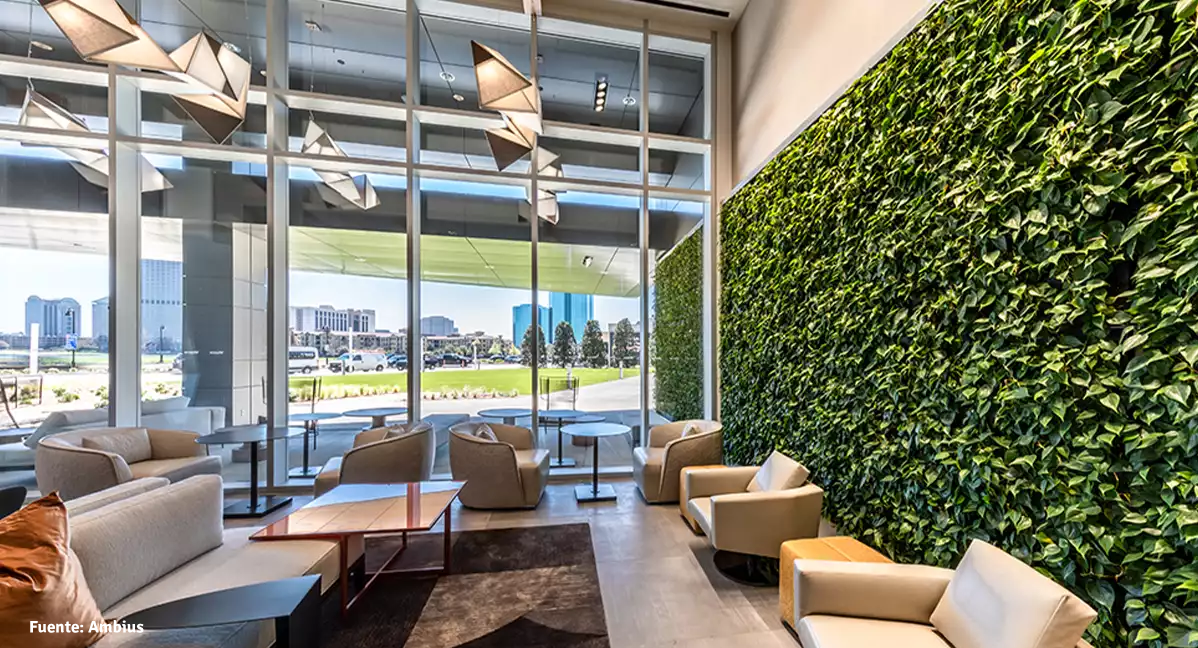
Implementing this type of garden can contribute to improving indoor air quality, reducing noise, increasing occupant well-being, improving productivity, as well as a more attractive interior design.
In addition, artificial lighting may be needed to meet the needs of plants, depending on how much natural light is available in the interior space.
It should also be noted that in interior green walls it is essential to maintain an adequate moisture balance to avoid problems such as the appearance of mold and the proliferation of insects, so irrigation systems must be controlled.
Sources consulted: Viritopia, Ambius, Architizer.
Leaf Global. Copyright © 2026. All rights reserved.