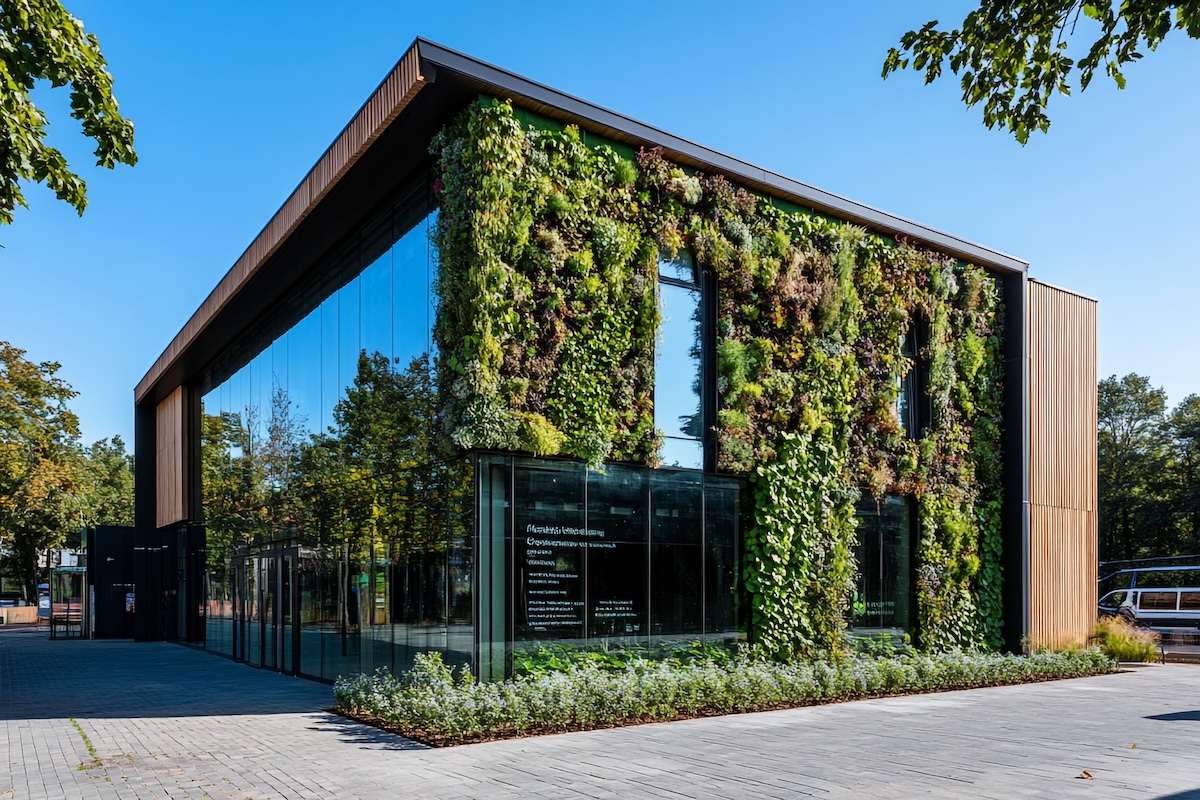
He leads projects and consulting services under LEED, EDGE, and FITWEL standards, integrating facade optimization strategies, life cycle assessments, and energy modeling to develop high-performance buildings.
Practical strategies to reduce the environmental impact of your construction project: materials, energy, and waste management. Free consultation with Leaf Global.

How to reduce the environmental impact of a building? In this article, you'll discover effective techniques and practical examples to make your projects more sustainable.

Image by Camila Forero
Reducing pollution on construction sites is a crucial objective to protect the environment. One of the first measures to consider is the creation of policies that promote the construction of buildings with low energy consumption both in its manufacture and in its operation. These policies may include incentives for the adoption of efficient technologies and the use of sustainable materials.
Proper management of liquid waste is also essential.. During construction, the generation of polluting liquid waste, such as water used to wash tools, can be significant. Technologies such as Washbox make it possible to recycle purified water in a closed circuit system for washing tools, thus reducing water pollution. In addition, the use of rainwater collectors in projects can save between 10% and 15% of water.
Another important measure is the adequate regional planning to reduce environmental impact. Calculating and implementing appropriate regional planning policies helps minimize the negative effects of urbanization and construction. The main focus should be to promote sustainable construction and environmental control from the start of the project.

Image taken from realestatemarket.com.mx
The use of sustainable materials in construction is one of the most effective strategies for reducing environmental impact.
Recycled steel, for example, is one of the most recycled construction materials and significantly reduces carbon emissions when used in new buildings.
In addition, recycled glass can replace natural aggregates in cement, improving sustainability in construction practices.
Recycled plastics also play an important role in reducing environmental waste. Using these materials not only contributes to the circular economy, but also promotes more sustainable practices in the construction sector.
Another sustainable material is Terrazzo, an environmentally friendly floor material made from recycled aggregates, which not only reduces waste but is also durable.
Natural materials such as reclaimed wood and bamboo are also great options. Reclaimed wood prevents waste and supports biodiversity by reducing the need to cut down new trees. On the other hand, bamboo is known for its rapid growth and its strength-to-weight ratio, making it highly sustainable.
Finally, these innovative materials are gaining popularity for their sustainable properties:

Image taken from www.technosun.com
The implementation of renewable energy in construction projects is essential to reduce environmental impact and promote sustainability.
Incorporating renewable energy not only improves the energy sustainability of buildings, but also encourages innovation and the development of new technologies in the sector.
In addition, integrating renewable energy sources into building design can further improve their energy sustainability. Using solar, wind or geothermal energy in buildings helps reduce dependence on non-renewable energy sources and reduces greenhouse gas emissions.

Image taken from cocircular.es
Efficient waste management in the construction sector is crucial for reducing pollution and environmental impact.
The construction industry is responsible for approximately 30% of the solid waste generated globally. If these wastes are not properly managed, they can contaminate soil and water, causing significant harm to the environment.
Complying with waste management regulations not only avoids penalties, but also improves the reputation of construction companies.
Separating recyclable materials at construction sites is a crucial practice for effective waste management.
In addition, the training of workers in waste management is essential to ensure appropriate and safe practices.
A prominent example of efficient waste management is the High Line Park in New York, which has transformed an old railroad line into a sustainable urban park.
This project has implemented an advanced waste management system to minimize its environmental impact. The separation and recycling of construction materials were key during its development, as was the reuse of organic waste to create compost.
In addition, the park has integrated waste reduction practices at all stages of its construction and maintenance, which has resulted in a significant reduction in the carbon footprint and has established a new standard for sustainability in urban projects.

Image taken from autodeskjournal.com
Technological innovations play a crucial role in the transformation of construction towards more sustainable practices.
Technology helps improve productivity and reduce environmental impact in construction. From sustainable planning and design, it is possible to minimize waste generation and optimize the use of resources.
The use of clean technologies makes it easier to monitor and maintain equipment with low environmental impact. For example, drones are used in industrial inspections to quickly identify problems and minimize environmental impact.
Worker training can also be significantly improved with the use of innovative technologies, increasing the effectiveness of safety and environmental training.
For example, virtual reality is being used to simulate construction environments, allowing workers to practice in a safe environment and learn to manage risky situations without real consequences.
In addition, the use of mobile applications facilitates access to up-to-date information on regulations and procedures, ensuring that workers are always up to date with best practices.
One of the most innovative technologies in the construction sector for sustainable waste management is the use of automated classification systems. These systems use artificial intelligence and advanced sensors to identify and separate recyclable materials from construction and demolition waste.
Automated sorting technology allows for a more accurate and efficient separation of materials such as wood, metal, plastic and concrete. This not only reduces the amount of waste that ends up in landfills, but it also facilitates the recycling and reuse of materials, promoting a circular economy in the construction sector.
Not only do these innovations contribute to the reduction of environmental impact, but they can also offer significant savings in operating and maintenance costs. This shows that technology and sustainability can be effectively integrated into the sector.
The design of energy efficient buildings is essential to reduce environmental impact and improve sustainability.
Bioclimatic design maximizes the use of natural resources, which enhances energy efficiency in buildings. The integration of renewable energy sources, such as solar energy, is essential to reduce the carbon footprint of buildings and improve their energy efficiency.
Building planning should maximize natural light and ventilation to reduce the use of lighting and air conditioning systems.
In addition, the proper use of insulation and thermal mass helps to stabilize indoor temperatures, reducing the need for heating and cooling.
Buildings that fully meet their energy needs through renewable sources are considered to be highly energy efficient. Energy efficiency in buildings is based on reducing energy demand, using renewable sources and maximizing the efficiency of facilities.
Reducing environmental impact in buildings is not only beneficial to the environment, but it also has significant economic benefits.
Sustainable buildings generate significant savings in operating costs in the long term, thanks to their efficient use of resources such as water and electricity.
Buildings designed to be energy efficient tend to decrease dependence on traditional energy sources, thereby reducing electricity costs. The use of environmentally friendly materials and green technologies also reduces maintenance costs over the lifespan of the building.
The implementation of renewable energy in construction not only reduces emissions, but it also reduces costs in both construction and maintenance. In addition, proper waste management can result in significant savings for construction companies.
Implementing rainwater collection systems in buildings can alleviate pressure on local water resources and contribute to water savings.
These economic benefits make adopting sustainable practices a smart investment for any construction project.
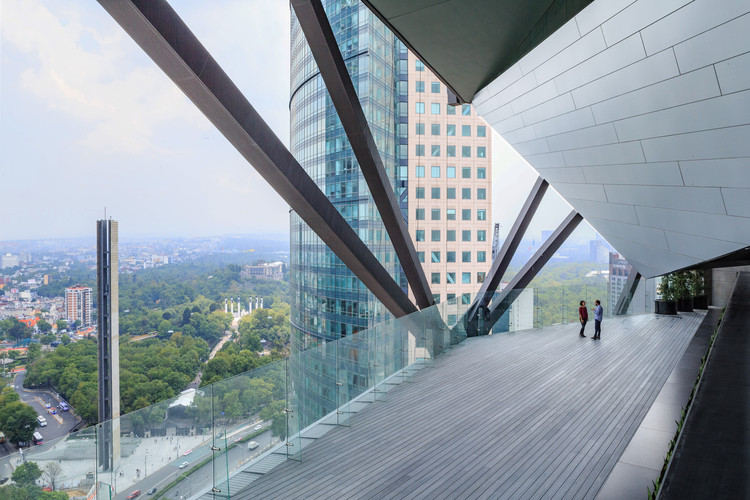
Torre Reforma, Mexico City.
There are numerous success stories that demonstrate how it is possible to reduce environmental impact in construction. Promoting open communication on sustainable practices is essential to involve all levels in a construction project and ensure its success.
A prominent example is the Torre Reforma in Mexico City, recognized as one of the most sustainable skyscrapers in Latin America. This building achieves savings of 24% in energy and 30% in water. In addition, it treats 100% of its wastewater and uses 85% of regional construction materials, of which 20% are recycled.
The tower's design allows 90% of its occupied areas to have outdoor views, taking advantage of natural lighting to reduce operating costs and improve the work environment. The Torre Reforma has obtained the LEED Platinum Certification, the highest level of LEED, thanks to its innovative sustainable practices.
These success stories serve as inspiration and role models for future projects.
In short, reducing environmental impact in construction is not only necessary but also possible through a series of sustainable practices and technologies. From implementing policies and measures that reduce pollution, to the use of recycled materials and renewable energy, every step counts. Efficient waste management, the design of energy efficient buildings and the training of workers in sustainable practices are fundamental pillars in this process.
Adopting these practices not only benefits the environment, but it also provides significant long-term economic benefits. The success stories presented demonstrate that it is possible to achieve sustainable constructions without compromising functionality or aesthetics. The key lies in planning, innovation and the commitment of everyone involved in the sector.
To reduce pollution, construction companies must implement sustainable construction policies, use technologies such as Washbox to recycle water, and carry out adequate planning that minimizes environmental impact.
Sustainable materials in construction include recycled steel, recycled glass, recycled plastics, reclaimed wood, bamboo, cork, Hempcrete and mycelium.
Renewable energies can be integrated into construction projects through the installation of solar panels and rainwater collection systems, which optimizes the use of resources and reduces the ecological footprint of the building. Not only does this improve the sustainability of the project, but it can also be a competitive advantage in the market.
Adopting sustainable construction practices provides savings in operating costs, as well as a significant reduction in electricity and maintenance costs. This translates into more efficient resource management and lower costs in the long term.
Worker training is essential to identify and mitigate environmental risks in construction, thus fostering a culture of prevention and sustainable practices that improve quality of life. This ensures the long-term sustainability of the sector.
Leaf Global. Copyright © 2026. All rights reserved.