He leads projects and consulting services under LEED, EDGE, and FITWEL standards, integrating facade optimization strategies, life cycle assessments, and energy modeling to develop high-performance buildings.

The Sustainable Sites Initiative (Sustainable SITES Initiative) is managed by Green Business Certification Inc. (GBCI). It is a rating system that guides, evaluates and certifies sustainability in the design, development and management of landscapes and other outdoor spaces.
SITES provides support to implement nature-based solutions to landscape architects, planners and other professionals dedicated to improving biodiversity, mitigating climate change, conserving resources, improving public health and protecting ecosystems.

Projects that are in outdoor spaces with or without buildings can be certified with SITES, such as: public parks, streets, corporate headquarters, university campuses, botanic gardens, hotels and resorts, mixed-use developments, among others.
Unlike LEED, SITES is specifically designed to promote sustainable practices in outdoor environments and outdoor ecosystems. Therefore, it does not cover issues that are included in LEED, such as internal energy efficiency, indoor air quality and construction materials used inside buildings, among others.
To better understand the difference between the two, LEED applies both to the construction of a project and to the site where it is located, while SITES covers everything on the project site, except for the building (with some exceptions).
In addition, SITES and LEED are complementary rating systems, and can be used independently or together. If you want to certify a project with both, you can take advantage of their synergy and exchange credits (learn more hither).
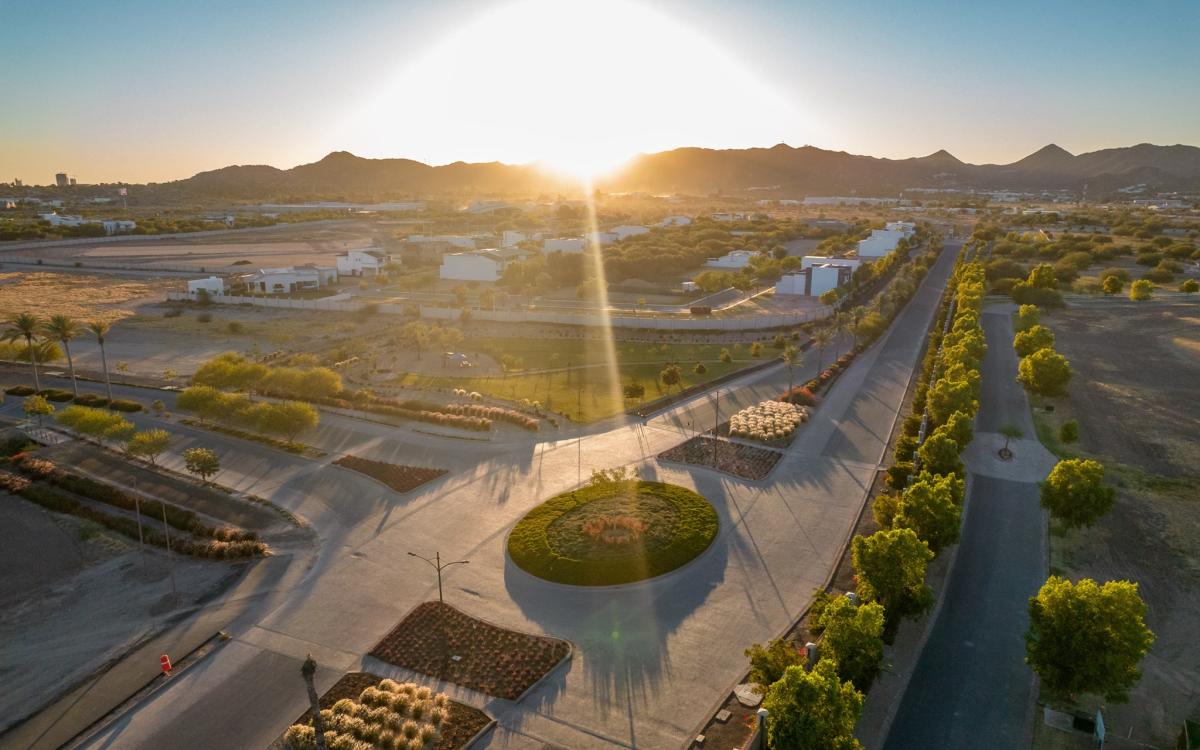
The Riverbanks is a 115-hectare residential project certified with SITES Gold. It has a golf course, a school, an equestrian area, 25 km of linear parks with bike paths and hiking trails, a nursery with a community garden and more spaces in harmony with the environment.
The project promotes biodiversity and respect for the local ecosystem by preserving native plants that were on the site before and incorporating only native plants into the landscape design.
In addition, thanks to the wastewater treatment plant, drinking water is not used to irrigate green areas, favoring water efficiency.
100% of the pruning waste from vegetation and food scraps are composted, contributing to the improvement of soil health.
100% of the vegetation, mineral, rock and soil waste generated during the construction of the project was reused and recycled, reducing the environmental impact during this stage.
For the reasons mentioned above, the design of Las Riberas enables a harmonious and sustainable relationship between the community and nature.
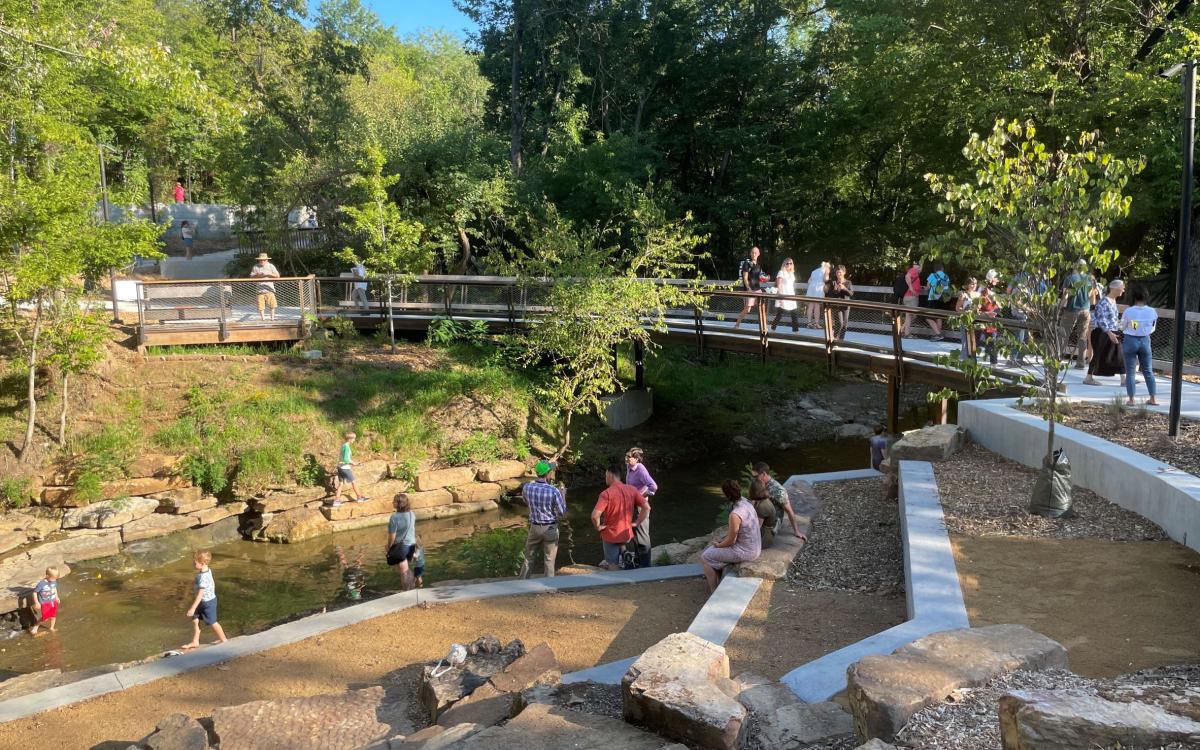
The Lower Ramble is an outdoor park located in downtown Fayetteville that allows the community to connect to the forest and stream.
This park includes trails, panoramic viewpoints, recreational spaces, and parking for bicycles.
He was also able to obtain credit 3.6 from SITES: Restore Aquatic Ecosystems, because efforts were made to restore the stream, creating micro ponds, rapids and structures that facilitate aeration within the stream to increase dissolved oxygen, allowing habitat restoration.
In addition, it fulfilled SITES credit 5.6: Use of Regional Materials, thanks to the fact that 36% of the materials used for its construction come from regional sources, reducing its environmental impact.
The Lower Ramble is the first SITES certified project in Arkansas and has helped the city of Fayetteville reaffirm its commitment to sustainable and functional public landscapes to improve the quality of life of its inhabitants.
Source: sustainablesites.org
If you are interested in accessing the SITES certification contact us.
Leaf Global. Copyright © 2026. All rights reserved.