He leads projects and consulting services under LEED, EDGE, and FITWEL standards, integrating facade optimization strategies, life cycle assessments, and energy modeling to develop high-performance buildings.
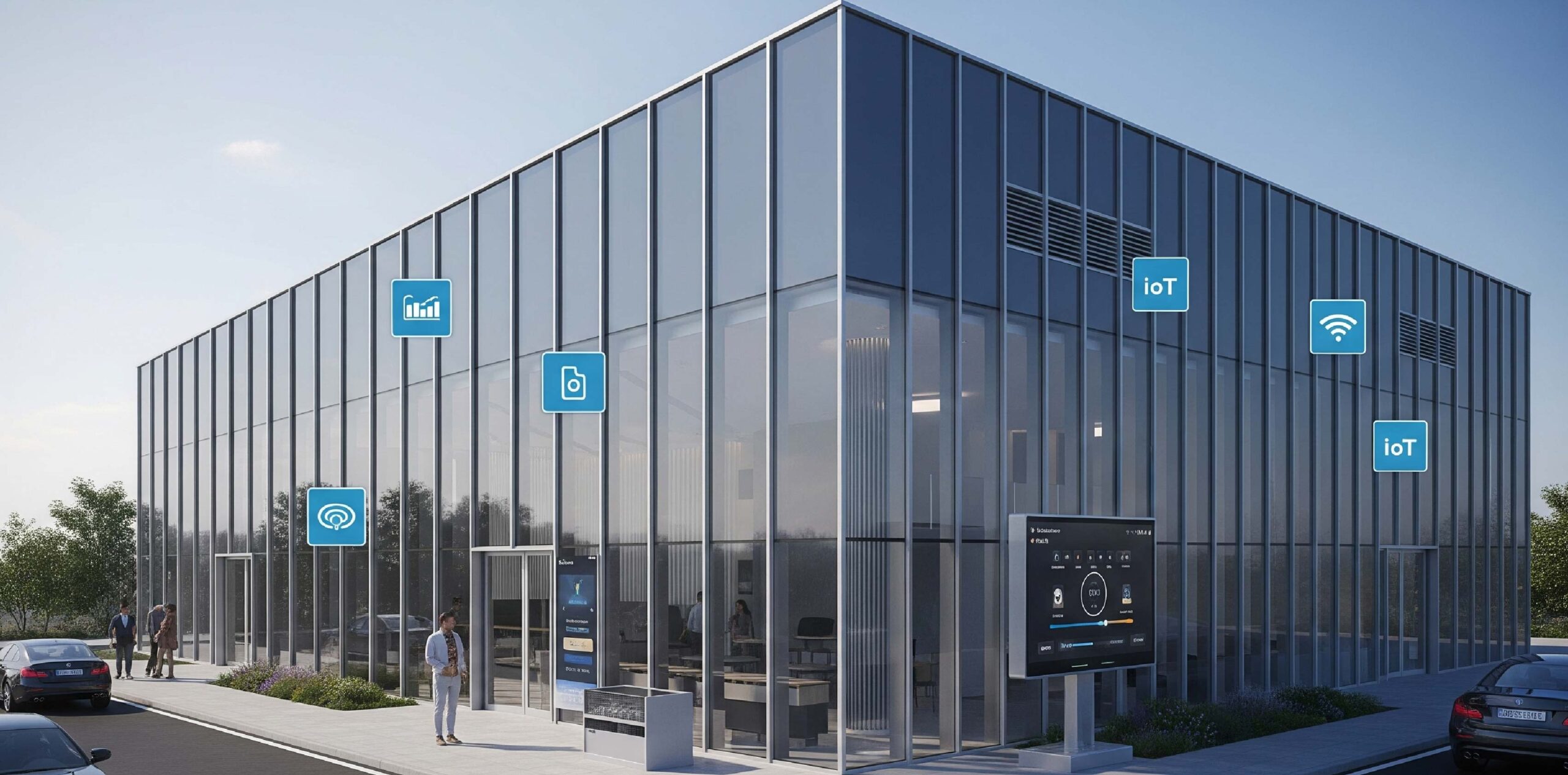
How are smart buildings changing in Latin America with the help of IoT and automation? Here you will discover how this technology is improving efficiency, reducing costs and creating safer and more comfortable spaces in our cities.

An intelligent building is a space that incorporates advanced technology with the objective of Make life easier, improve security and optimize the use of resources. These buildings are characterized by their ability to automatically adjust to the needs of their occupants, saving energy, reducing costs and ensuring a safe and comfortable environment.
The architecture of an intelligent building is based on:
In addition to efficiency and convenience, smart buildings also stand out for their focus on sustainability. They use sensors to detect empty rooms and automatically adjust light and climate systems, reducing the waste of resources. In this way, they improve the quality of life of their occupants, while contributing to a more responsible use of energy resources.

The benefits of intelligent buildings are multiple and significant. Primarily, these buildings improve energy efficiency by optimizing the consumption of resources such as electricity, heating, air conditioning and lighting through automated systems and intelligent sensors. This translates into a significant reduction in operating costs and a lower environmental impact, contributing to sustainability.
In addition, intelligent buildings offer greater comfort and safety to their occupants, by automatically adjusting environmental conditions according to needs and preferences, and by having advanced access control and surveillance systems. They also allow efficient management of space and resources thanks to the collection and analysis of data in real time, facilitating decision-making and predictive maintenance, reducing faults and repair costs.
In short, intelligent buildings optimize the use of resources, reduce costs and allow the creation of more sustainable and connected cities.
The Internet of Things (IoT) is an essential component in the automation of intelligent buildings. In this context, it refers to the interconnection of objects and systems, such as:
All of them are connected via the internet, allowing for remote control. The integration of IoT in this type of building allows:
One of the great advantages of the IoT is its ability to enable predictive maintenance systems. These systems allow equipment problems to be identified before they become costly failures, improving reliability and reducing maintenance costs.
In addition, the advanced technology incorporated in these buildings helps to create more efficient and comfortable environments, optimizing resource management.
Another key trend in the transition to intelligent and sustainable buildings is the electrification of transport, together with the integration of charging systems for electric vehicles. This evolution not only improves the energy efficiency of the building, but also promotes the adoption of cleaner and more sustainable technologies at the urban level.

Birman 32 Building, São Paulo
In Latin America, intelligent buildings stand out for their use of advanced technologies that optimize resources and offer a more efficient and comfortable solution for their users. These buildings aim to raise the quality of life through sustainable solutions, automated systems, IoT connectivity and efficient management under committed technical teams.
Next, we explore three emblematic examples: the BBVA Tower in Mexico City, Birman 32 in São Paulo and the Pacific Center in Panama City.
The BBVA Tower in Mexico City is a benchmark in technological innovation applied to architecture. This building uses an automation system that integrates state-of-the-art technologies, allowing efficient management of energy, lighting, air conditioning and water.
This building stands out for its sustainable solutions, such as rainwater recovery systems and the use of renewable energy. In terms of security, it has a comprehensive automated surveillance and access control system, which guarantees a protected and reliable environment for its occupants.
These characteristics make the BBVA Tower an outstanding example of how technology can transform the built environment and building management, offering innovative solutions for urban well-being and sustainability.
Birman 32 in São Paulo is another outstanding example of intelligent and sustainable building in Latin America. This building has obtained the LEED Platinum certification, the highest distinction in energy efficiency and environmental design.
Its initiatives include recycling programs, the reuse of water and the efficient use of materials. In addition, its automation systems make it possible to manage resources such as energy and water in real time, optimizing building performance.
The integration of advanced technologies and sustainable practices in Birman 32 positions it as a role model in the construction industry in the region.
The Pacific Center in Panama City is a multifunctional complex that combines offices, shops and recreational spaces. Designed as an intelligent building, it incorporates technologies such as:
The combination of multiple uses and advanced technologies makes the Pacific Center a prominent example of how intelligent buildings can transform urban spaces, contributing to the development of more sustainable cities.

Automation and control are essential components in intelligent buildings. Its features and benefits include:
Artificial intelligence (AI) plays a crucial role in building automation, helping to identify patterns and predict problems before they occur. Remote monitoring systems allow managers to monitor the operation of buildings without needing to be physically present, improving efficiency and reducing maintenance costs.
In addition, the integration of interconnected subsystems, such as lighting and security, allows remote control that optimizes energy consumption and improves occupant safety. These technological advances demonstrate how automation and control can transform building management, offering innovative solutions for a more efficient and secure environment.

Smart buildings have a significant impact on reducing the carbon footprint thanks to their focus on efficiency and sustainability. Some of his main contributions are:
An example of these practices is the BBVA Tower in Mexico City, recognized for its leadership in sustainable construction. This building incorporates:
On the other hand, Birman 32 in São Paulo, Brazil, is a pioneer in practices such as:
The future of smart buildings in Latin America is promising, with a growing trend in the construction of intelligent and sustainable buildings. This growth represents a major challenge in terms of energy efficiency and adaptation to climate change. It is essential that new buildings are designed to be resilient to extreme weather events, using eco-friendly materials and energy automation technologies.
It is projected that by 2050, nearly 68% of the world's population—some 6.7 billion people—will live in urban areas, which could increase global energy demand by more than 50%, if efficiency measures and clean energy sources are not adopted
(Source: United Nations,
are emerging as a key solution to respond to the demands of accelerated urbanization. The adoption of technologies such as the Internet of Things (IoT), artificial intelligence, system automation, and renewable energy generation will improve energy efficiency, reduce emissions and provide more comfortable and sustainable spaces for urban inhabitants
(Source: Global Alliance for Buildings and Construction —
Architects, developers and governments must prepare to integrate these technologies into the design and operation of buildings of the (not so distant) future. With a clear focus on innovation and sustainability, it is possible to transform Latin American cities and significantly improve the quality of life of their inhabitants.
Smart buildings in Latin America represent a significant evolution in architecture and urban management thanks to the integration of advanced technologies, IoT and automation.
These buildings optimize energy efficiency, improve safety and provide a more comfortable and sustainable environment for their occupants. Prominent examples such as the BBVA Tower in Mexico City, Birman 32 in São Paulo and the Pacific Center in Panama City demonstrate how technological infrastructure and the use of sensors, software and connected devices can be effectively applied in the region.
As the market and urbanization in Latin America continue to grow, the adoption of solutions based on IoT and automation will be crucial to building more resilient and sustainable smart cities. The future of smart buildings in Latin America is projected with constant growth, transforming the way we live, work and manage resources, improving the quality of life of users and contributing to a lower environmental impact.
An intelligent building is defined by its ability to integrate advanced technology that optimizes the efficiency, safety and comfort of users, automatically adapting to their needs. This ensures a more functional and sustainable environment.
Smart buildings offer significant benefits by promoting energy efficiency, reducing operating costs and improving environmental sustainability.
The IoT contributes to the automation of intelligent buildings by allowing remote monitoring and control of systems such as lighting and air conditioning, which optimizes resources and improves comfort. This results in a more efficient and comfortable environment for users.
Notable examples include the BBVA Tower in Mexico City, Birman 32 in São Paulo and Pacific Center in Panama City, all of which incorporate advanced technologies that promote efficiency and sustainability.
The future of smart buildings in the region is projected with significant growth, focused on sustainability and resilience in the face of climate change. This approach will allow for a transformation in the way buildings are designed and operated.
Leaf Global. Copyright © 2026. All rights reserved.