He leads projects and consulting services under LEED, EDGE, and FITWEL standards, integrating facade optimization strategies, life cycle assessments, and energy modeling to develop high-performance buildings.

This type of architecture seeks to optimize resources and reduce the environmental impact of buildings.
Sustainable architecture focuses on efficiency and the use of renewable resources, while sustainable architecture encompasses a broader approach, integrating urban design practices that optimize energy efficiency and promote the responsible use of innovative technologies. Both seek to create spaces that are not only functional and aesthetically pleasing, but also minimize their environmental impact and respect the natural environment.
In Mexico City, for example, sustainable architecture projects are transforming the way we conceive of buildings, integrating the use of renewable energy, such as solar energy, and recyclable materials to minimize our carbon footprint.
A prominent example of this is the Vasconcelos Library, which combines a public library with a botanical garden, maximizing natural lighting and ventilation and using green roofs and sustainable materials.
By adopting these principles, buildings not only improve the quality of life of their occupants, but they also contribute to the preservation of the planet. This innovative approach is crucial to meeting the challenges of climate change and to ensure a sustainable future for cities and their inhabitants.
Sustainable architecture is an innovative approach that seeks to design and build buildings in a way that is efficient in the use of natural resources and minimizes their impact on the environment.
This type of architecture not only focuses on the functionality and aesthetics of living spaces, but also on their sustainability and respect for the natural environment.
At its core, sustainable architecture is based on principles that promote responsible use of materials, energy efficiency and waste reduction. For example, the use of recyclable and local materials is prioritized, which not only reduces the carbon footprint associated with transportation, but also supports local economies.
In addition, systems are implemented that optimize the use of natural light and ventilation, thus reducing dependence on non-renewable energy sources.

Sustainable architecture seeks to design in a responsible manner to optimize resources and reduce the environmental impact of buildings.
This type of architecture can be found under various names, such as ecological, green and bioclimatic architecture. Although there are nuances between these terms, they all share the same objective: to create buildings that respect and protect the environment.
The importance of well-thought-out architecture in sustainable projects lies in its ability to reduce environmental impact and promote energy efficiency.
By focusing on social, economic and environmental sustainability, these projects not only seek to minimize waste, but also promote community satisfaction and general well-being.
A crucial aspect of sustainable architecture is bioconstruction, which uses materials with low environmental impact or recyclable. From planning to execution, every step in a sustainable architecture project is designed to be as efficient and environmentally friendly as possible.
Sustainable architecture projects prioritize the use of environmentally friendly materials that can be recycled.
The integration of construction with the natural environment is essential to maximize the use of resources such as light, wind and water. The correct orientation of a building in relation to the sun and the winds can optimize the use of natural light and ventilation, reducing the need for energy. This not only reduces energy consumption, but also improves the quality of life of the occupants in the building.
Energy efficiency is a fundamental principle in sustainable architecture, seeking to reduce energy consumption throughout the life of the building.
From initial design to daily operation, every aspect of a sustainable architecture project is carefully planned to be as efficient as possible.
Mexico is not far behind in the adoption of sustainable architecture. Two outstanding projects, the Torre Reforma and the BBVA Bancomer Tower in Mexico City, illustrate how sustainability can be integrated into architecture. These projects not only represent advances in design and technology, but they also show a commitment to the environment and the community.
These examples of sustainable architecture demonstrate that it is possible to combine functionality and aesthetics with sustainability. La Torre Reforma, with its certification LEED Platinum, stands out for its focus on energy efficiency, the use of natural lighting and the use of local materials.
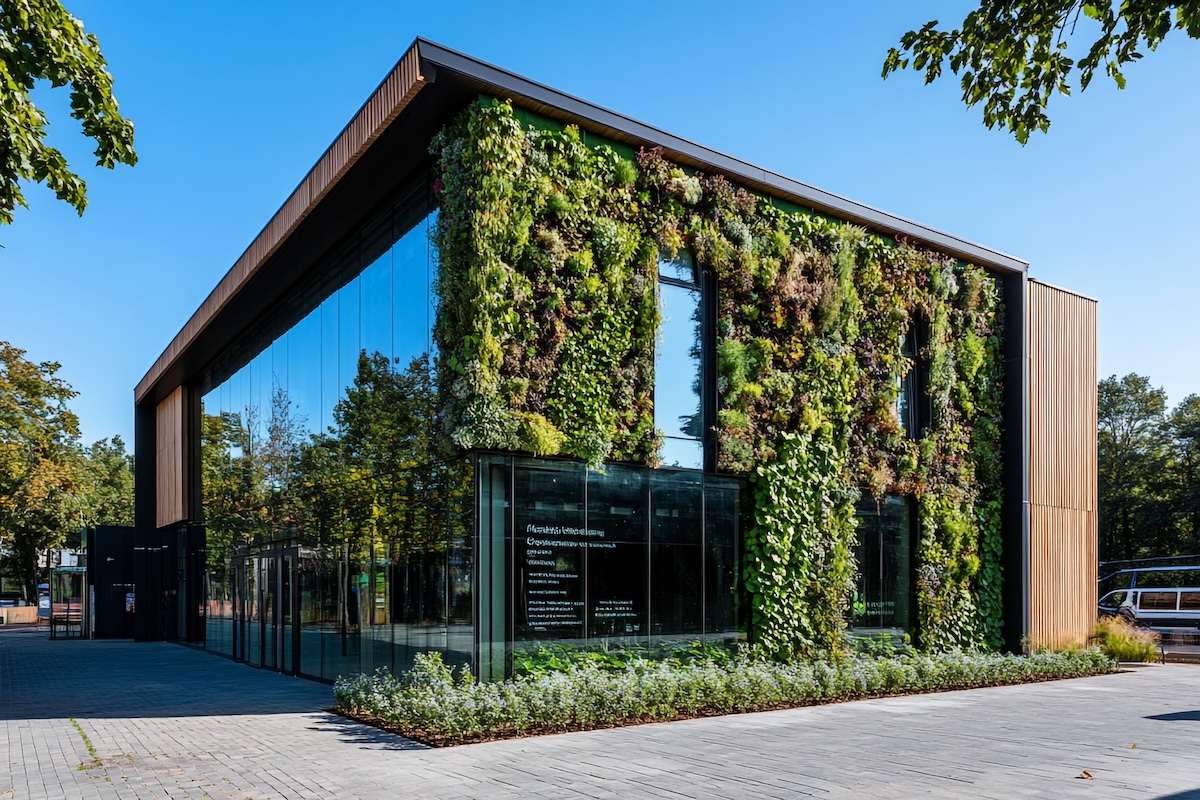
For its part, the BBVA Bancomer Tower, certified LEED Gold, incorporates advanced technological innovations, such as intelligent energy control systems and vertical gardens, thus contributing to a more sustainable future.

Image taken from mexicodesign.com
The Reforma Tower, designed by architect Benjamín Romano, is an iconic skyscraper that stands out as one of the most sustainable buildings in Latin America.
Certified LEED Platinum, the building incorporates energy-saving technologies, such as high-performance concrete and glass facades, which optimize energy consumption and reduce the environmental footprint.
Its architectural design also prioritizes the use of local materials, which significantly reduces carbon emissions associated with transport and supports the local economy.
In addition, the Torre Reforma is distinguished by its innovative anti-seismic structural design, which guarantees its stability in the face of large earthquakes.
This building exemplifies how sustainable architecture can be efficient, aesthetic and functional, setting a standard for responsible construction in Mexico.

© But. Dolores Robles Martinez G
The BBVA Bancomer Tower, designed by the architectural firms Rogers Stirk Harbour + Partners + LEGORRETA, is an iconic skyscraper that combines innovative design and sustainability.
Certified with LEED Gold, this tower stands out for its focus on energy efficiency, integrating intelligent lighting and ventilation systems, as well as a façade that maximizes the use of natural light and reduces the need for artificial lighting.
In addition, the building has an advanced system of water management, which includes the collection and reuse of rainwater, contributing significantly to water sustainability. Its design also prioritizes integration with the urban environment, connecting to the Chapultepec Park by means of a pedestrian bridge.
These characteristics make the BBVA Bancomer Tower an outstanding example of how sustainable architecture can optimize resources, respect the natural environment and improve the user experience.
Globally, there are also impressive examples of sustainable architecture. The One World Trade Center in New York and the Bosco Verticale in Milan are two projects that stand out for their commitment to sustainability. Not only do these buildings incorporate advanced technologies, but they also demonstrate how architecture can have a positive impact on the environment and the quality of urban life.
These international sustainable architecture projects show how different approaches and technologies can converge to create buildings that are both functional and ecological.
From waste management to incorporating vegetation into the design, these buildings are inspiring examples of what's possible when sustainability is prioritized.

Photo © James Ewing | EIGHT
The One World Trade Center in New York is a prominent example of sustainable architecture on a large scale. This skyscraper incorporates multiple sustainable features, including energy efficiency systems and waste management.
For example, the building generates 4.8 megawatts of energy using PureCell phosphoric acid fuel cells, demonstrating an innovative approach to energy.
In addition, the One World Trade Center was certified at the LEED Gold Level, confirming its commitment to sustainable construction practices.
This building is not only an architectural landmark, but also a model of how large projects can be environmentally friendly.

Image taken from nuovo it.com
The Bosco Verticale in Milan is an impressive example of how architecture can contribute to urban biodiversity. This project consists of two residential towers that house more than 9,000 plants, helping to reduce CO2 and promoting urban biodiversity.
The Bosco Verticale towers also house 711 trees and 15,000 plants, improving air quality and acting as a natural filter against polluting particles. Not only does this approach improve air quality, it also creates a more livable and healthy environment for city residents.
Sustainable architecture offers a wide range of both economic and health benefits.
Economically, these projects tend to have lower operating costs, a higher property value and reduced maintenance costs thanks to sustainable materials. In addition, initial investment in sustainable technology and materials is often recouped through long-term savings.
From a health perspective, sustainable buildings improve indoor air quality, which promotes the health of occupants and improves productivity. Sustainable architecture also contributes to quality of life by creating healthier and more comfortable living and working environments.
Finally, these projects have a significant positive impact on the environment. By reducing resource consumption and emissions, sustainable architecture contributes to the mitigation of climate change.
These benefits make investing in sustainable architecture not only an intelligent economic decision, but also a moral obligation to our planet.
Implementing a sustainable architecture project requires careful planning and the adoption of specific strategies.
One of the first steps is to integrate energy saving systems and resource management, such as the rainwater collection And the waste recycling, which not only reduce environmental impact, but also generate significant long-term savings.
The energy efficiency is another crucial aspect, which is achieved through a better insulation And a passive design which minimizes energy demand, taking advantage of natural sources such as sunlight and cross ventilation.
These steps, combined with a effective resource management and the selection of sustainable materials are essential for the success of any sustainable architecture project.

Image taken from premiosproactivo.org
Technological innovations are revolutionizing sustainable architecture, integrating renewable energies such as solar and wind to reduce dependence on polluting sources.
These emerging green technologies are redefining efficiency in sustainable construction. For example, the integration of photovoltaic systems in homes is a growing trend that promotes energy self-sufficiency.
In addition, innovation in materials, such as recycled concrete and certified wood, is revolutionizing sustainable construction. Not only are these materials healthier for occupants, but they also have a lower environmental impact.
In addition, home automation is allowing the optimization of energy consumption through intelligent technology in homes.
These innovations not only make buildings more efficient, but they also improve the quality of life of occupants by offering more precise control over their environment.
One of the main challenges in sustainable architecture is the lack of environmental awareness among the population, which makes it difficult to adopt sustainable practices in construction and design. Education and awareness-raising are essential to overcome this obstacle.
Sourcing sustainable materials also presents challenges, such as limited availability and high production and shipping costs. To resolve this, it is essential to encourage research and development of new materials, as well as to establish clear standards for evaluating product sustainability.
Sustainable architecture plays a crucial role in the future of cities, as it has the potential to significantly reduce the environmental impact of building construction and use.
By adopting sustainable practices, such as using green materials, designing buildings that make the most of natural light and ventilation, and implementing energy efficient systems, we can reduce the carbon footprint of our cities.
One of the main benefits of sustainable architecture is the improvement of air and water quality. Buildings designed with sustainable principles often incorporate water management systems that allow rainwater to be collected and reused, as well as air purification technologies that reduce indoor pollution.
In addition, sustainable architecture can transform public spaces, making them more attractive and safe. The integration of green areas, such as botanic gardens and parks, not only beautifies the urban environment, but also provides recreational and recreational spaces for the community. These green spaces act as urban lungs, improving air quality and providing shelters for biodiversity.
In conclusion, sustainable architecture is essential for the development of more resilient and livable cities. By reducing environmental impact and improving the quality of life of citizens, this architectural approach becomes a necessary investment for a more sustainable and healthy future.

Image taken from expansion.com
The future of sustainable architecture is marked by trends that seek to further reduce the environmental impact of buildings.
Passivhaus buildings, which seek almost zero energy consumption, are gaining popularity as a sustainable construction model. These buildings use advanced insulation and ventilation techniques to minimize the need for artificial heating and cooling.
In addition, the context of climate change and energy crisis is driving the need for more efficient buildings.
The integration of intelligent technologies and the use of sustainable materials will be key to the future of sustainable architecture. These advances will not only reduce the carbon footprint of buildings, but will also improve the quality of life of their occupants.
Sustainable architecture is redefining the way we conceive and build our living spaces. From the use of recycled materials to the implementation of green technologies, these projects demonstrate that it is possible to combine sustainability with innovative design.
In short, the adoption of sustainable architecture practices is vital to address current environmental challenges. Not only do these projects provide economic and health benefits, but they also contribute significantly to the mitigation of climate change.
The key to a greener and healthier future lies in the integration of these principles into all aspects of construction and design.
To achieve sustainable architecture, it is essential to take advantage of natural lighting, use renewable energy and select local materials, in addition to encouraging the reuse of resources and adapting to the climate of the area. Not only do these practices reduce environmental impact, but they also promote a more efficient and conscious design.
Sustainable architecture is defined as the design of buildings that optimize resources and minimize environmental impact through the use of recyclable materials and efficient technologies.
Its goal is to create spaces that are environmentally friendly and sustainable in the long term.
The Reforma Tower and the BBVA Bancomer Tower are outstanding examples of sustainable architecture in Mexico, evidencing an effective integration of sustainable practices in their design. These buildings not only stand out for their aesthetics, but also for their commitment to the environment.
Sustainable architecture projects offer economic benefits by reducing operating costs, improving health through higher air quality, and generating a positive environmental impact by reducing emissions and resource consumption. These aspects make sustainability an integral option for the future.
Leaf Global. Copyright © 2026. All rights reserved.