.jpg)
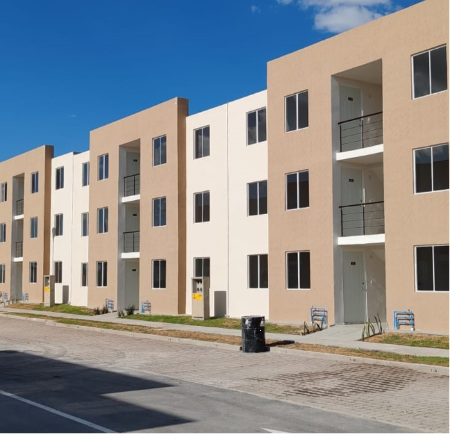
In Peru, over 1 million square meters are EDGE-certified, and the trend is accelerating. Buyers gain access to preferential financing from BCP, BBVA, and Interbank for choosing certified projects, and corporate tenants with ESG commitments already require it as a minimum standard. Projects without certification not only lose out on this segment but also compete at a disadvantage in perceived value and absorption rate.
Initial assessment: We analyze the project design and identify the necessary measures to achieve the 20% savings in energy, water, and materials required by EDGE.
Registration and modeling: We create the project file in the EDGE platform and calculate the efficiency score, calibrated for the project's specific climatic zone in Peru.
Technical audit: An IFC-accredited auditor validates compliance with EDGE criteria before construction and upon project completion.
Certification issued: The project receives the official EDGE seal, enabling access to green financing benefits and positioning it as a certified sustainable building in the Peruvian market.

EDGE requires a minimum of 20% simultaneous savings in energy, water, and embodied energy in materials. The platform calibrates parameters according to the project's climatic zone, so calculations are specific to each Peruvian city.
It applies to residential, offices, hotels, healthcare facilities, education, and mixed-use projects. In Peru, the corporate segment is experiencing the highest growth, especially in Lima, where international tenants already require green-certified buildings as a minimum standard.
Between 4 and 8 weeks from registration to the issuance of the design certificate, depending on project complexity. The final construction certification is issued once construction is complete.
Leaf Global. Copyright © 2026. All rights reserved.