He leads projects and consulting services under LEED, EDGE, and FITWEL standards, integrating facade optimization strategies, life cycle assessments, and energy modeling to develop high-performance buildings.
Sustainable development is a concept that seeks to meet the needs of the present without compromising the ability of future generations to meet their own needs. In this regard, the United Nations 2030 Agenda for Sustainable Development establishes 17 objectives that seek to achieve a more just, peaceful and equal world for all, and that are related to the protection of the environment and the promotion of sustainable development.
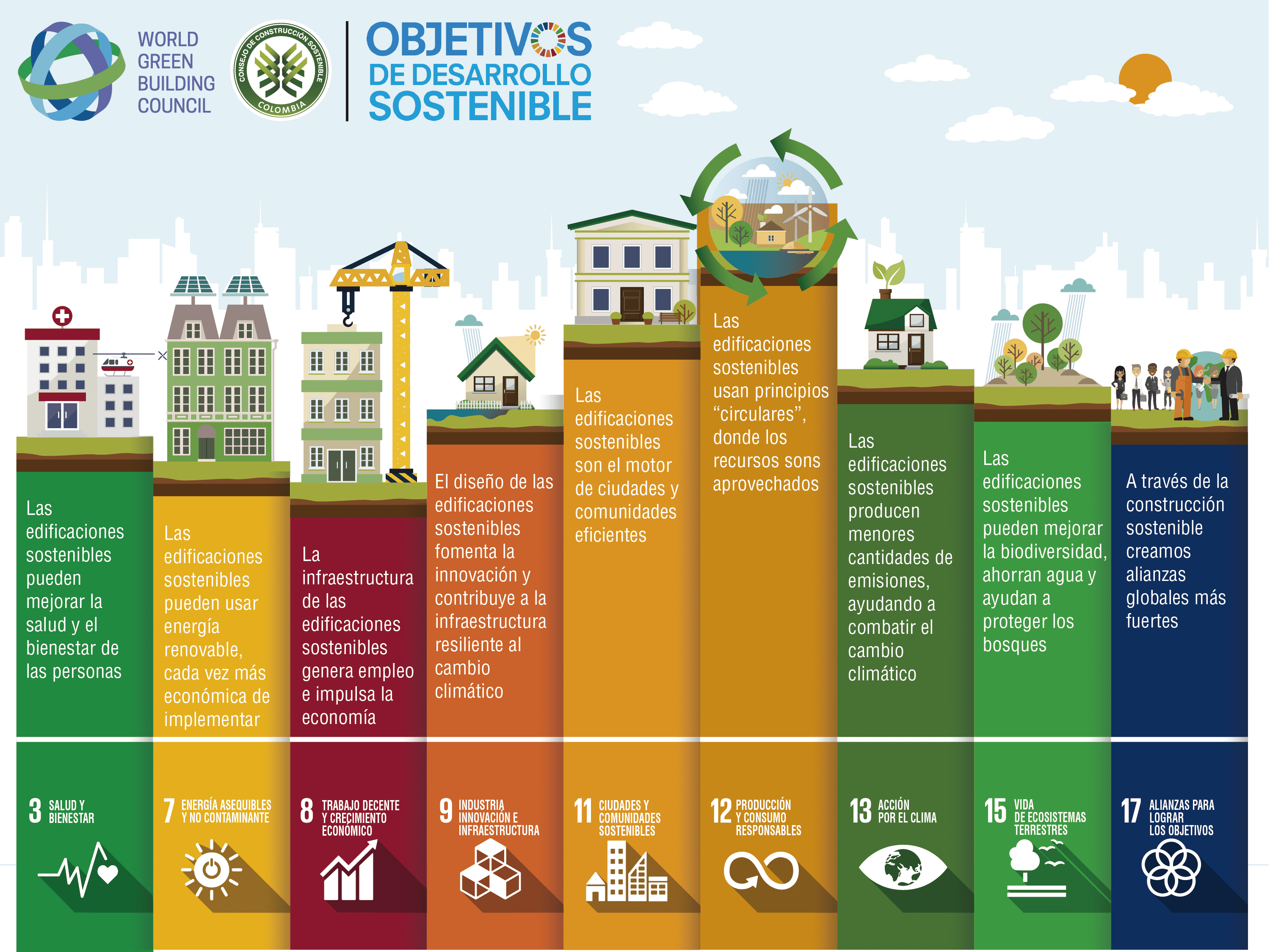
The World Green Building Council summarized in a high-value infographic its analysis of the role and impact of 9 of the 17 SDGs.
Source: WorldGBC
The construction sector is one of those with the greatest impact on the environment and on the use of natural resources. Therefore, it is important to take into account certain actions to positively promote sustainable development in this area. Some of them are:
There are several certifications in the construction sector that validate the implementation of actions to promote sustainable development. Some of the best known are:
In conclusion, the implementation of actions to promote sustainable development in the construction sector is key to reducing environmental impact and creating a more sustainable future.
If you want to certify your next construction project, contact us here.
Leaf Global. Copyright © 2026. All rights reserved.