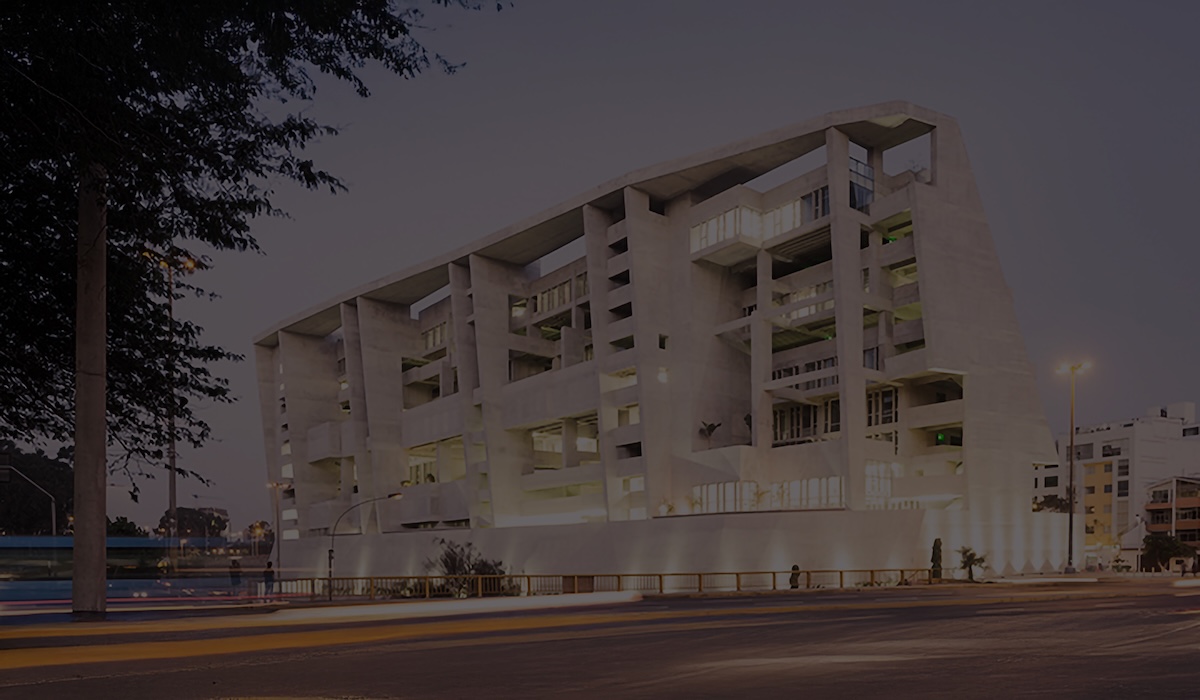
The education sector has a unique LEED argument: the benefits are not only operational but pedagogical. Education infrastructure projects seeking financing from the IDB, IFC or CAF must demonstrate verifiable environmental standards — and LEED BD+C: Schools has specific prerequisites that make it the reference standard for the sector. The research is clear: students perform better in spaces with adequate natural light, good acoustics and controlled air quality. The biggest obstacle is budget: educational institutions — especially public ones — have tight budgets where the LEED premium is hard to justify. Leaf has proven strategies to maximize credits with the lowest incremental cost.
LEED Schools diagnosis: we assess the project against the system's specific prerequisites (acoustics, air quality, mold prevention) and design the scorecard optimized for the institutional budget.
Integrated education design: we work with the architecture team on classroom orientation for natural light, acoustic design, and ventilation systems that meet air quality prerequisites.
Documentary management and technical coordination including MEP systems commissioning.
GBCI certification: we manage review cycles through to LEED Schools certification.
GBCI registration and review fees range from USD 1,200 (projects under 4,600 m²) to USD 22,500 (projects over 185,000 m²), depending on the rating system and project size, plus Leaf's consulting fee. The construction cost premium is typically 1% to 4% over conventional budget when planned from the design stage — one of the building types with the best cost-benefit ratio, since operating savings accumulate over decades. The process typically takes 12 to 20 months. Beyond the construction budget, there are three ways to fund the premium: development banks (IDB, CAF, World Bank) with preferential rates for sustainable educational infrastructure, international cooperation funds, or showing the board that 10-year operating savings outweigh the upfront investment.

The construction premium for LEED Schools is typically 1-4% above conventional budget when planned from design. Schools are one of the building types where LEED's cost-benefit ratio is most favorable, because operational savings accumulate over decades.
LEED BD+C: Schools applies to any building whose primary function is K-12 or post-secondary education. For university campuses with multiple buildings, Leaf can design a certification strategy per building or for the full campus.
Three main paths: (1) green financing from the IDB, CAF, and World Bank with preferential rates for sustainable educational infrastructure; (2) international cooperation funds; (3) demonstrating to the board that 10-year operational savings exceed the construction cost premium.
Leaf Global. Copyright © 2026. All rights reserved.