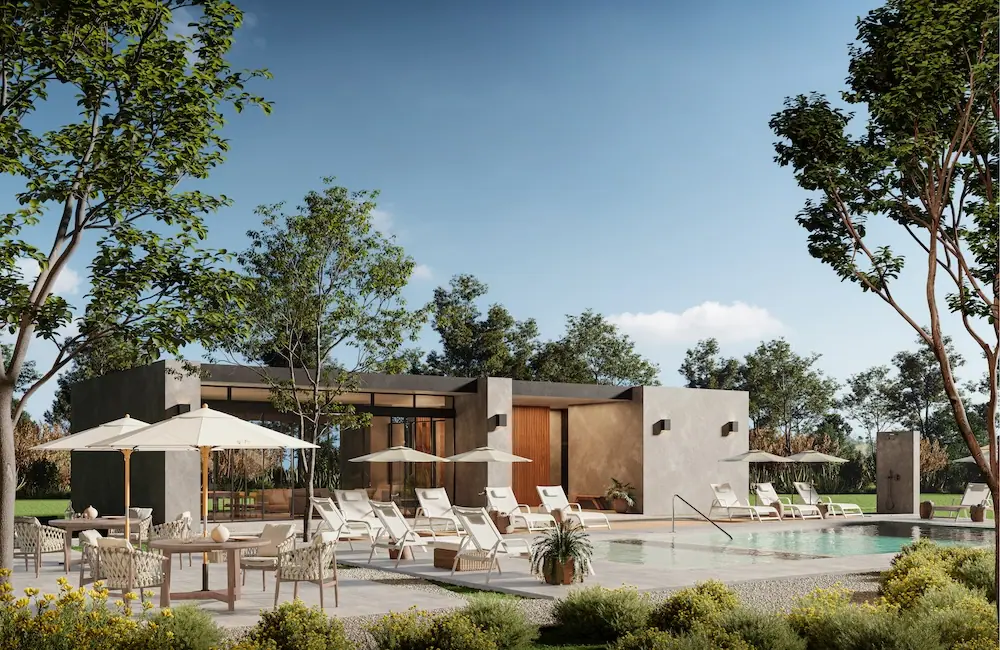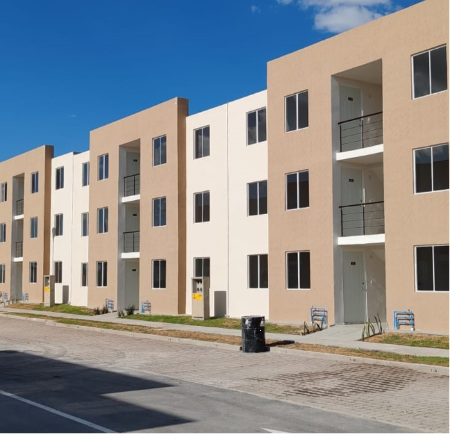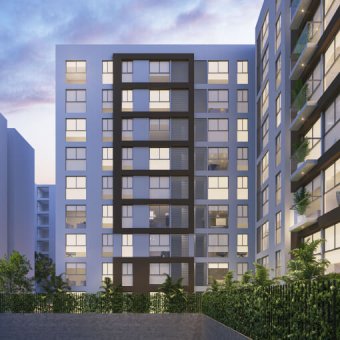
The office market is undergoing a clear bifurcation: green-certified buildings have lower vacancy rates, higher rents and stronger demand from quality tenants. Companies with public ESG commitments — most multinationals and a growing number of local firms — need their offices to meet verifiable environmental standards for their GRI, GRESB and CDP reports, making EDGE an access requirement, not just a competitive advantage. Buildings without certification compete on price against those that have it — and lose. In that context, EDGE is the certification that allows an office building to enter the arena where the best rents are won.
Initial assessment: We analyze the office building design and identify the measures needed to achieve EDGE's required 20% savings in energy, water, and materials.
Registration and modeling: We create the project file in the EDGE platform and calculate the efficiency score calibrated for the office use type and the project's climate zone.
Technical audit: An IFC-accredited auditor validates compliance with EDGE criteria before construction and upon project completion.
Certification issued: The project receives the official EDGE seal for office use, enabling access to premium corporate tenants, REITs, and investment funds with ESG criteria.
Registration with GBCI/IFC is a flat fee of USD 349 per project, plus a certification charge of approximately USD 0.22 per built m² (excluding parking areas), plus Leaf's consulting fee — the same structure applies in every country. The construction cost premium needed to reach the required 20% savings stays in the 0%–3% range of the budget. The design certificate is issued 4 to 8 weeks after registration; the as-built certificate, once construction is complete.
In office buildings, the cost premium concentrates in efficient HVAC and lighting — the two items with the biggest weight in a corporate building's energy use.

Between 10 and 20% more in rent compared to equivalent conventional buildings, according to JLL and CBRE studies in Latin American markets. They also sign longer leases and have lower turnover, improving the asset's predictable cash flow.
Yes. EDGE is an IFC standard recognized in the GRESB, GRI, and CDP frameworks. Tenants reporting under those frameworks can include an EDGE-certified building in their Scope 1 and 2 carbon footprint metrics.
Between 4 and 8 weeks from registration to the issuance of the design certificate. The final construction certification is issued once construction is complete.
Leaf Global. Copyright © 2026. All rights reserved.