He leads projects and consulting services under LEED, EDGE, and FITWEL standards, integrating facade optimization strategies, life cycle assessments, and energy modeling to develop high-performance buildings.

LEED v5 is what is coming in sustainable construction certification, this version responds more than ever to the pressing need to reinforce the alignment of the built environment with the objectives set out in the Paris Agreement for 2030 and 2050.
Its structure is based on three objectives: climate action, quality of life and ecological conservation and restoration (associated with the ESG strategy and for both O&M and D&NC projects). These objectives can be achieved through the decarbonization of the construction industry; investing in the well-being and health of the community; promoting built spaces that are adaptive and resilient, which also take into account criteria of Diversity, Equity, and Inclusion; as well as, by encouraging flourishing of ecosystems through regenerative development practices.
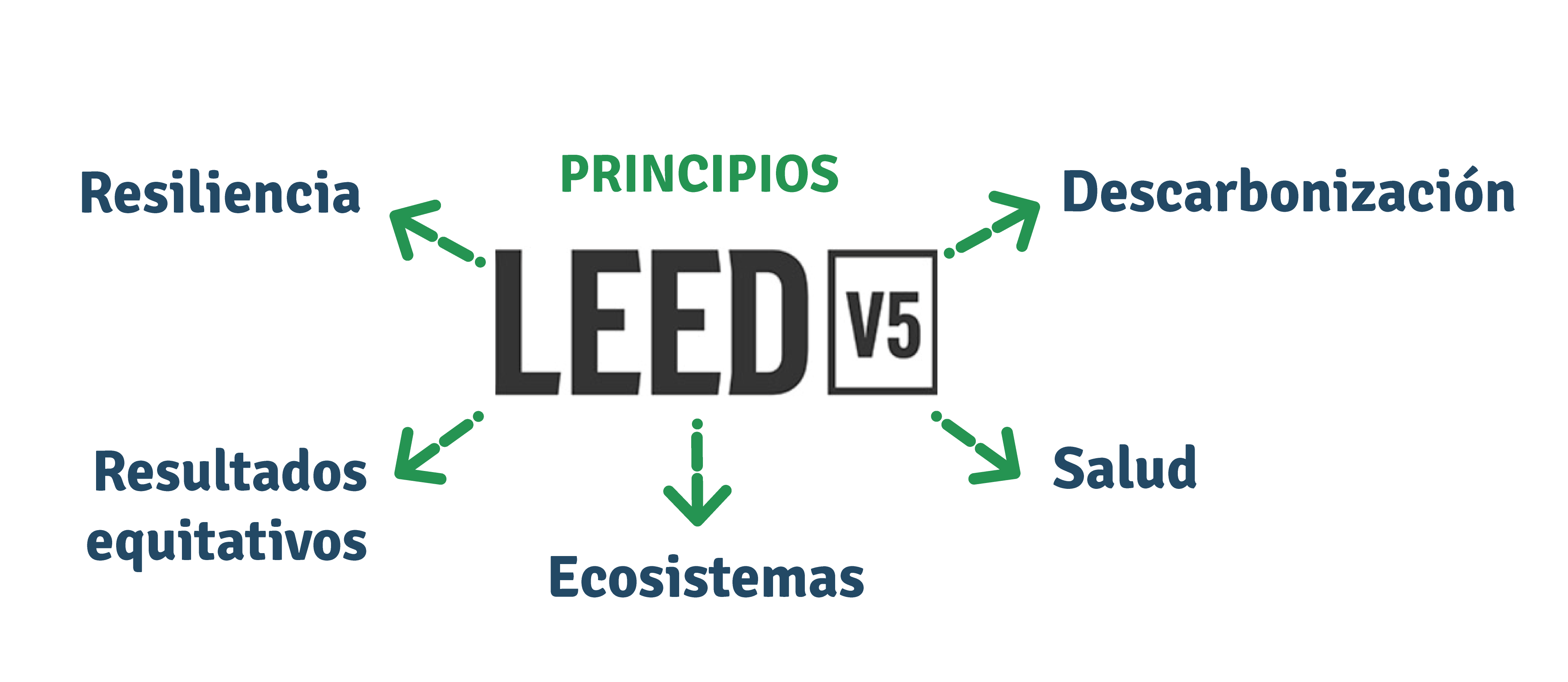
Learn about the relationship between each of the objectives and principles of LEED v5:

LEED v5 focuses on the decarbonization, taking into account the main sources of carbon emissions in building construction, as well as the emissions generated in the operation by the energy used in its operation, including the emissions associated with transportation to and from the building. Additionally, those projects that certify LEED v5 will be provided with a GHG projection during operation.
They have been added new categories to consider a wider variety of aspects related to sustainability.
They have been introduced new credits and prerequisites mandatory associated with the principles of decarbonization, resilience, equity, health and well-being, and ecosystem regeneration.
It places an unprecedented emphasis on the factors that impact the health and well-being of the occupants.
The distribution of the weight of each of the three objectives in the certification will be:
Find out the distribution of credits according to each objective in the beta scorecard:

Since the end of 2023, a beta version has been implemented for existing buildings and in the design and construction stages, which has allowed access to valuable feedback from the community. The latest version of LEED is scheduled to be fully available and optimized for use in 2025, after which the development cycle for new versions of the LEED rating system will be five years.
In short, LEED v5 responds to urgent global requirements to combat climate change from the construction sector, committing itself to promoting sustainable construction at a global level, focusing on climate action, quality of life and ecological restoration, through principles of decarbonization, resilience, health and well-being, and ecosystems.
If you are interested in accessing the LEED certification contact us.
Leaf Global. Copyright © 2026. All rights reserved.