What materials are used in sustainable architecture?
Cesar Montes
Project Manager
He leads projects and consulting services under LEED, EDGE, and FITWEL standards, integrating facade optimization strategies, life cycle assessments, and energy modeling to develop high-performance buildings.
Sustainable architecture
Sustainable architecture is a practice that seeks to create buildings and structures that are friendly to the environment and that use resources efficiently. One of the main ways this is achieved is through the use of sustainable materials. In this article, we will explain the requirements of sustainable architecture and the materials used in it.
Requirements for sustainable architecture
Sustainable architecture aims to create buildings that are sustainable and that minimize their environmental impact. This is achieved through a series of requirements that must be met during the design and construction process. Some of these requirements include:
Energy Efficiency: This means that they must have a design that makes the most of natural light, good ventilation, adequate thermal insulation and efficient heating and cooling systems.
Water Management: Responsibly. This includes rainwater collection, wastewater treatment and the use of efficient irrigation systems.
Sustainable materials: Built with sustainable materials with low environmental impact.
Waste management: That includes the reduction, reuse and recycling of materials.
Health and Wellness: Design that promotes the health and well-being of the people who occupy them. This includes indoor air quality, lighting and acoustics.
Materials used in sustainable architecture
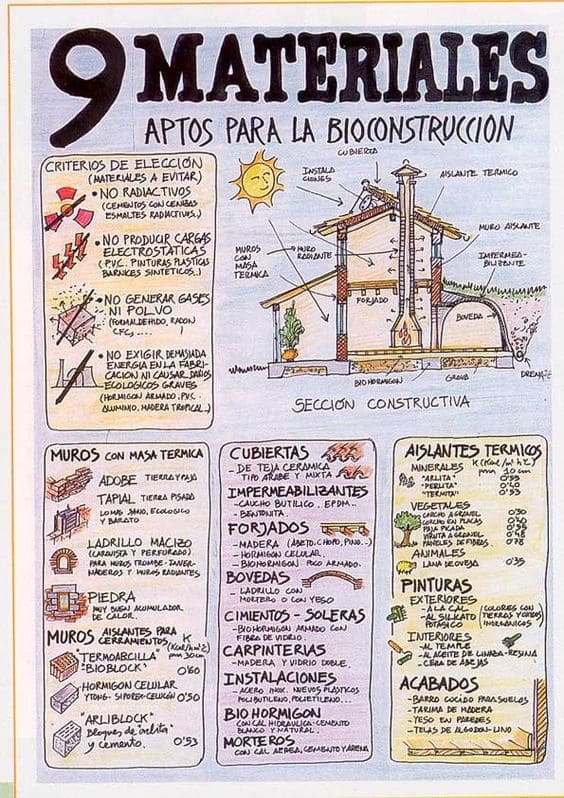
The materials used must be sustainable, with low environmental impact, durable, renewable, recyclable and have a low carbon footprint. Some of the most common materials used are:
Certified wood: Certified wood is a popular choice in sustainable architecture. The wood must be certified by a recognized organization, such as the Forest Stewardship Council (FSC), which guarantees that it has been produced in a responsible and sustainable manner.
Low-carbon concrete: Concrete is one of the most used materials in construction, but its production emits large amounts of carbon dioxide. New production methods, such as the incorporation of recycled materials and the use of low-carbon cements, are making concrete more sustainable.
Natural stone: Natural stone is a durable, low-maintenance material that is commonly used in sustainable architecture. Stone must be mined and produced in a responsible and sustainable way.
Compressed Earth Bricks: Compressed earth bricks are a sustainable alternative to conventional brick. These bricks are produced using local soil and a compression process that does not require the burning of fossil fuels.
Low-E glass: Low-E glass is a type of glass coated with a layer that reduces heat transfer and reduces the need for air conditioning. This type of glass also reduces the amount of UV rays entering the building, protecting interiors from fading and damage.
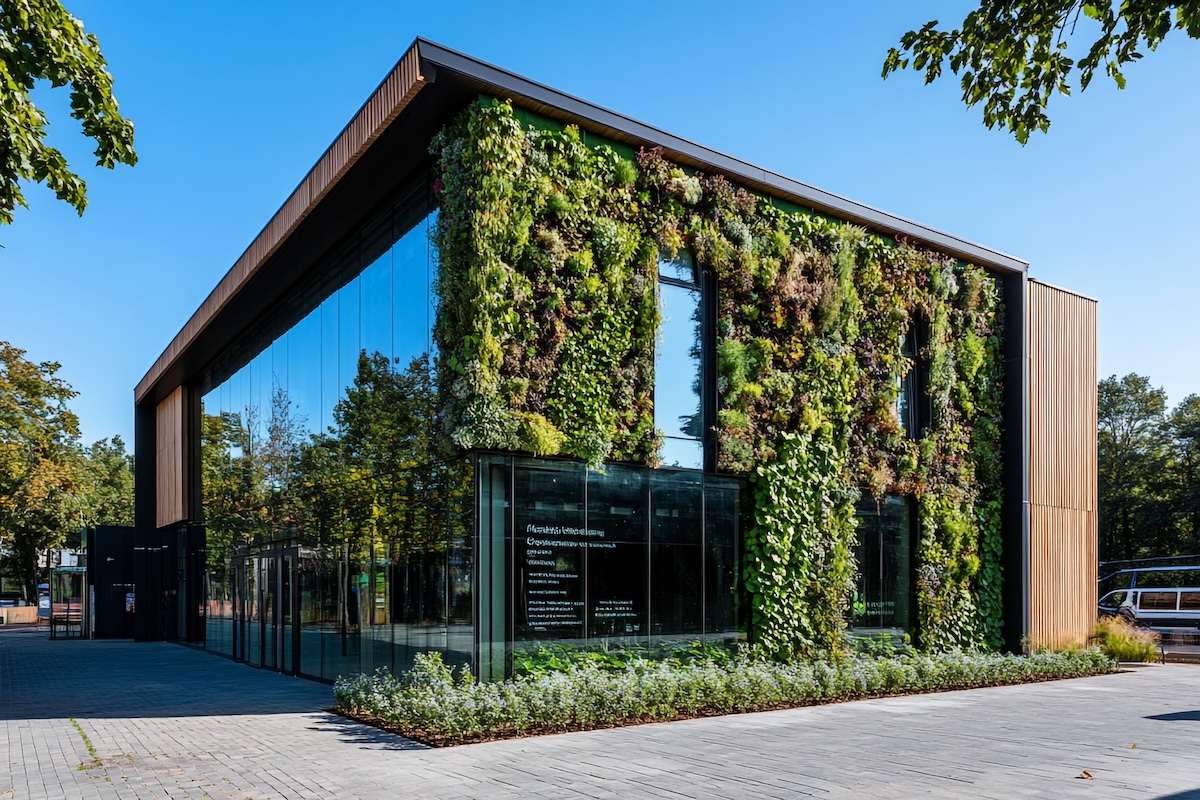
Here is an image that represents what we have mentioned so far:
Source: Ovacen.com
Conclusion
In conclusion, sustainable architecture requires a careful selection of materials to minimize its environmental impact and maximize energy efficiency. It is important to consider the durability, renewability, recyclability and carbon footprint of the materials used. In addition, there are certifications that can help identify sustainable and responsible materials.
If you are about to build a sustainable property, contact us to advise you on the sustainable certification process.