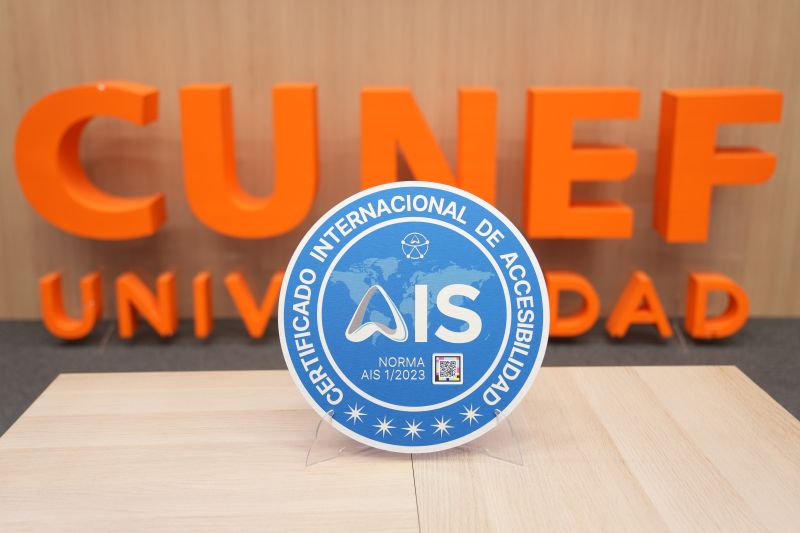
In January 2019, Nigeria's Discrimination Against Persons with Disabilities (Prohibition) Act came into force, giving owners of public buildings a five-year transition period to make them accessible, with fines for companies and individuals who don't comply. That period ended in January 2024. The Act also requires public organizations to reserve at least 5% of jobs for people with disabilities, and it created a national commission to oversee compliance. Applying the WHO's global estimate, more than 30 million Nigerians live with a disability, yet in Lagos or Abuja entrances with steps, lifts that depend on a generator and restrooms a wheelchair can't reach are still the norm. For banks, telcos, multinationals and developers competing for corporate tenants, the question is no longer whether to adapt but how to prove it. AIS certification, from Fundación ARS, assesses the building in use against international criteria and recognizes it with 1 to 5 stars published in a public registry.
On-site assessment: we walk the building from the vehicle entrance and security checkpoints to the emergency exit, measuring ramps, lifts, restrooms, counters and signage against AIS criteria and the 2018 Act.
Prioritized improvement plan: we rank gaps by impact and cost, with solutions local contractors can deliver and that account for reliance on generators and backup power.
Implementation and training: we support the upgrades and train reception, security and emergency teams to assist and evacuate people with disabilities, with clear procedures during power cuts.
Certification and registry: we manage verification with Fundación ARS, which issues the certificate with its star rating and publishes it in the AIS Public Registry.
The cost of AIS depends on the type of asset (physical space, website or product), its size and its complexity, and includes the authorized advisor's assessment and support plus Fundación ARS certification fees. Investment in upgrades is the most variable part: in existing offices, banks and shops, many gaps are closed with ramps, signage, grab bars, restroom adjustments and evacuation chairs, and only some require construction. For an operating building with minor upgrades, the process usually takes 3 to 6 months from assessment to certificate.

Yes, to the extent they're used by the public: offices that receive visitors, banks, hotels, malls, hospitals or schools. The five-year transition period has ended, so it's wise to have a documented assessment and improvement plan before an inspection or complaint arrives.
A lot. In a building where the lift is the only way to reach upper floors, people with reduced mobility are stranded when the grid fails and the generator doesn't start. AIS assesses backup power, refuge areas and assisted evacuation procedures.
Yes. The street isn't in the owner's hands, but the route from the parking area or drop-off point to the interior is. AIS assesses what the building controls and helps solve arrival with measures such as covered drop-off zones and ramps at the entrance.
Leaf Global. Copyright © 2026. All rights reserved.