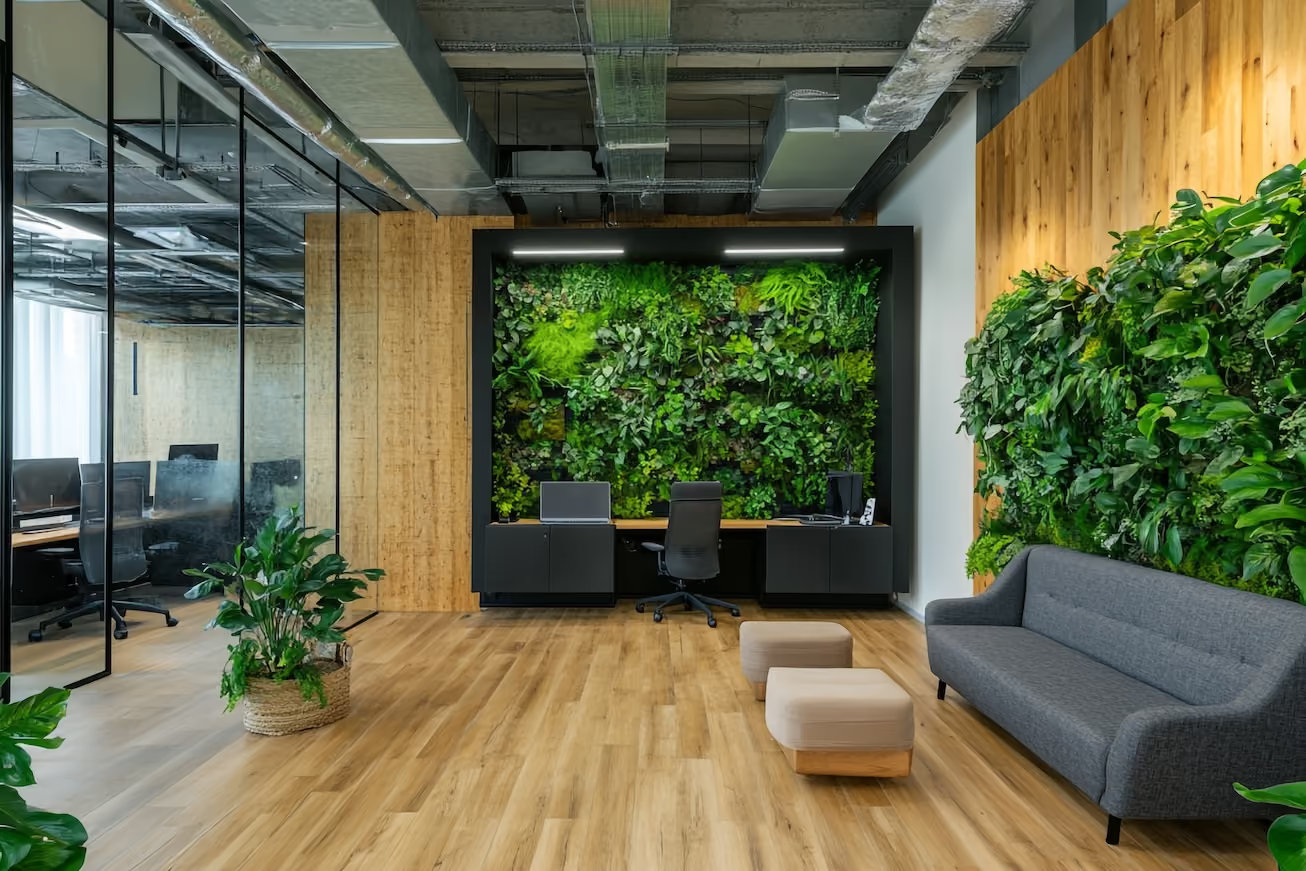
Mental health conditions have topped Chile's medical leave statistics for years, and regulation has responded one step after another: SUSESO's psychosocial risk surveillance protocol, Law 21.643 —known as the Karin Law— which since August 2024 requires employers to prevent workplace harassment and violence, and the gradual reduction of working hours under the 40-hour Law. Companies have updated their rules and protocols, but the space their people work in has often stayed the same. On top of that, Chile ranks among the OECD countries with the highest obesity rates, despite pioneering front-of-pack food labeling. Fitwel, created by the U.S. CDC and GSA, certifies that the building contributes to that agenda: restorative and break spaces, inviting stairs, drinking water, healthy food, lactation rooms, active mobility and emergency protocols, which are essential in an earthquake-prone country. For offices in Nueva Las Condes, El Golf or Providencia, it's how wellbeing moves off paper and into the space.
Assessment: we evaluate the building against the applicable Fitwel scorecard and cross-check results with the company's existing psychosocial risk plans and Karin Law measures.
Registration and strategy: we register the project with Fitwel and set the target level, from one to three stars, together with the people and risk prevention teams.
Implementation: we coordinate break spaces, stairs, bike parking, water stations and lactation rooms, and draft policies on healthy food, smoke-free spaces and emergencies.
Certification: we submit the documentation, secure the seal valid for three years and set up the recertification schedule.
Fitwel charges a registration fee and a per-building certification fee, with special terms for portfolios. Since it doesn't require on-site performance testing, the total cost is well below WELL's. Physical investment usually focuses on break spaces, bike parking, water stations, stair signage and lactation rooms. The process takes 4 to 8 months for existing buildings, and certification is valid for three years.

The Karin Law is the company's obligation and is met through protocols, reporting channels and training. Fitwel doesn't replace that, but it improves the work environment with break spaces, restorative settings and wellbeing policies that are part of psychosocial risk prevention.
If the main goal is indoor air during air-quality pre-emergency episodes, WELL is more demanding because it tests air and water on site. If you want a serious wellbeing commitment that's fast and reasonably priced, especially in an existing building, Fitwel is usually the better choice. Many owners use Fitwel across most of their portfolio.
Yes. Fitwel has no mandatory prerequisites and doesn't require major works, so an existing building can be certified with minor upgrades and good policies. The initial assessment defines which level is achievable without touching the structure.
Leaf Global. Copyright © 2026. All rights reserved.