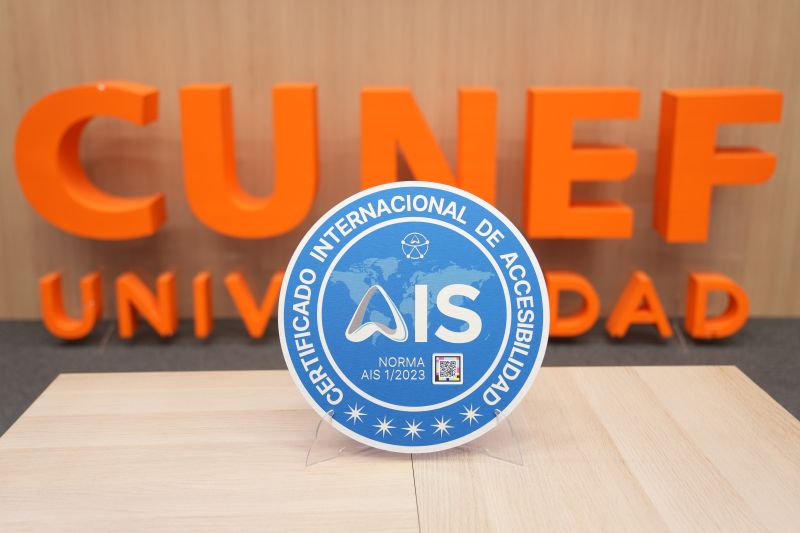
Years of load shedding taught many building managers in Johannesburg and Cape Town a hard lesson: when the power cuts and the lift stops, a wheelchair user is stuck on their floor or, worse, has no way to evacuate. It's just one of the gaps between what regulation requires and what happens day to day. Part S of SANS 10400 regulates facilities for persons with disabilities in new buildings, the Employment Equity Act sets targets for employing people with disabilities, and the B-BBEE codes award points for including them in the workforce and in skills development spend. But meeting those targets is hard if the office, distribution center or mall doesn't let people work and move around independently, and most existing buildings were never reviewed after plan approval. AIS certification, from Fundación ARS, assesses the building in use, from the parking bay to evacuation, and recognizes it with 1 to 5 stars published in a public registry.
On-site assessment: we walk the building against AIS criteria and SANS 10400-S, reviewing entrances, security controls, ramps, lifts, restrooms, workstations, signage and evacuation plans, including during power cuts.
Prioritized improvement plan: we rank gaps by impact and cost and align them with your Employment Equity and B-BBEE targets, so each investment also counts toward those indicators.
Implementation and training: we support the upgrades and train reception, security and floor marshals to assist and evacuate people with disabilities, with specific procedures for each type of disability.
Certification and registry: we manage verification with Fundación ARS, which issues the certificate with its star rating and publishes it in the AIS Public Registry.
The cost of AIS depends on the type of asset (physical space, website or product), its size and its complexity, and includes the authorized advisor's assessment and support plus Fundación ARS certification fees. Investment in upgrades varies the most: in existing offices, malls and logistics warehouses, many gaps are closed with signage, grab bars, restroom adjustments, evacuation chairs and changes to access control, and only some require construction. For an operating building with minor upgrades, the process usually takes 3 to 6 months from assessment to certificate.

AIS doesn't award B-BBEE points on its own, but it solves the condition that makes them sustainable: a workplace where people with disabilities can get in, move around, work and evacuate independently. Without that, hiring tends to end in turnover and the points are lost at the next verification.
It's one of the aspects we review most carefully. We check whether there are refuge areas, evacuation chairs, visual alarms and assigned procedures to assist people who can't use the stairs, and whether lifts have backup power. A plan that doesn't cover these cases doesn't meet AIS criteria.
Yes. The assessment starts from current conditions and lets you close gaps in phases without shutting down. In multi-tenant buildings you can certify the whole building or the common areas the owner controls.
Leaf Global. Copyright © 2026. All rights reserved.