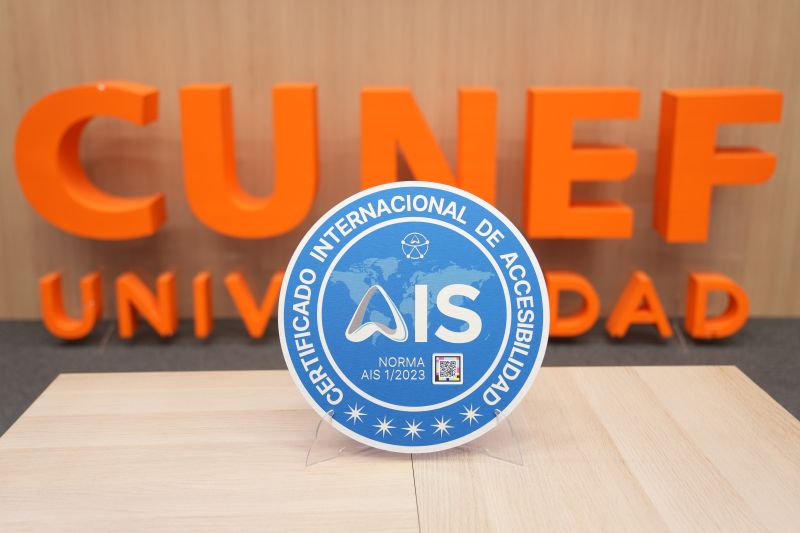
In Lima it's common to find ramps with impossible slopes, accessible restrooms used as storage rooms and sidewalks that end in a 20-centimeter curb. Almost all of those projects got their permit, because Standard A.120 of the National Building Regulations is reviewed on drawings, and nobody checks how the building works once it opens. The audience is not small: according to INEI's 2017 Census, more than 3 million Peruvians, around 10% of the population, live with a disability, on top of older adults, people with injuries and families with strollers. Law 29973 also requires private companies with more than 50 employees to have people with disabilities make up 3% of their workforce, a quota that's hard to meet if the office doesn't let a wheelchair user work there or someone who can't hear the alarm evacuate. AIS certification, backed by Fundación ARS and present in 32 countries, assesses the full journey, from arriving by taxi or public transport to evacuating, and recognizes it with a 1 to 5 star rating shown in a public registry.
On-site assessment: we walk the building the way a wheelchair user, a person with low vision or a person with hearing loss would, and measure ramps, doors, restrooms, counters, signage and evacuation routes against AIS criteria and Standard A.120.
Prioritized improvement plan: we rank each gap by impact and cost, separating what can be solved through management (furniture, signage, protocols) from what requires construction, so you reach your target star rating without overspending.
Implementation and training: we support your maintenance team and contractors through the upgrades and train front-desk and security staff to assist every user without improvising.
Verification and certificate: we submit the file to Fundación ARS, which issues the certificate with its star rating and publishes it in the AIS Public Registry.
The cost of AIS depends on the type of asset (physical space, website or product), its size and its complexity, and includes the authorized advisor's assessment and support plus Fundación ARS certification fees. The most variable part of the investment is the upgrades: in an existing office or commercial building, many gaps are closed with signage, furniture, grab bars or restroom adjustments, and only some require construction. For an operating building with minor upgrades, the process usually takes 3 to 6 months from assessment to certificate.

A.120 sets the minimums to obtain a permit and is reviewed on drawings. AIS assesses the building in use, with on-site measurement, and covers aspects the standard doesn't control or that get lost in day-to-day operation, such as signage, customer service and the evacuation of people with disabilities. It also grades the result in stars, so you can show a level rather than simple compliance.
Yes. The assessment starts from current conditions and proposes solutions that suit the property, including options for heritage buildings where the facade or original staircase can't be altered. Many gaps can be closed with removable ramps, platform lifts, signage and furniture adjustments.
No. AIS considers physical, visual, hearing and cognitive disabilities, as well as people with reduced mobility due to age or a temporary condition. That's why it reviews everything from color contrast and signage to visual alarms and how easy routes are to understand.
Leaf Global. Copyright © 2026. All rights reserved.