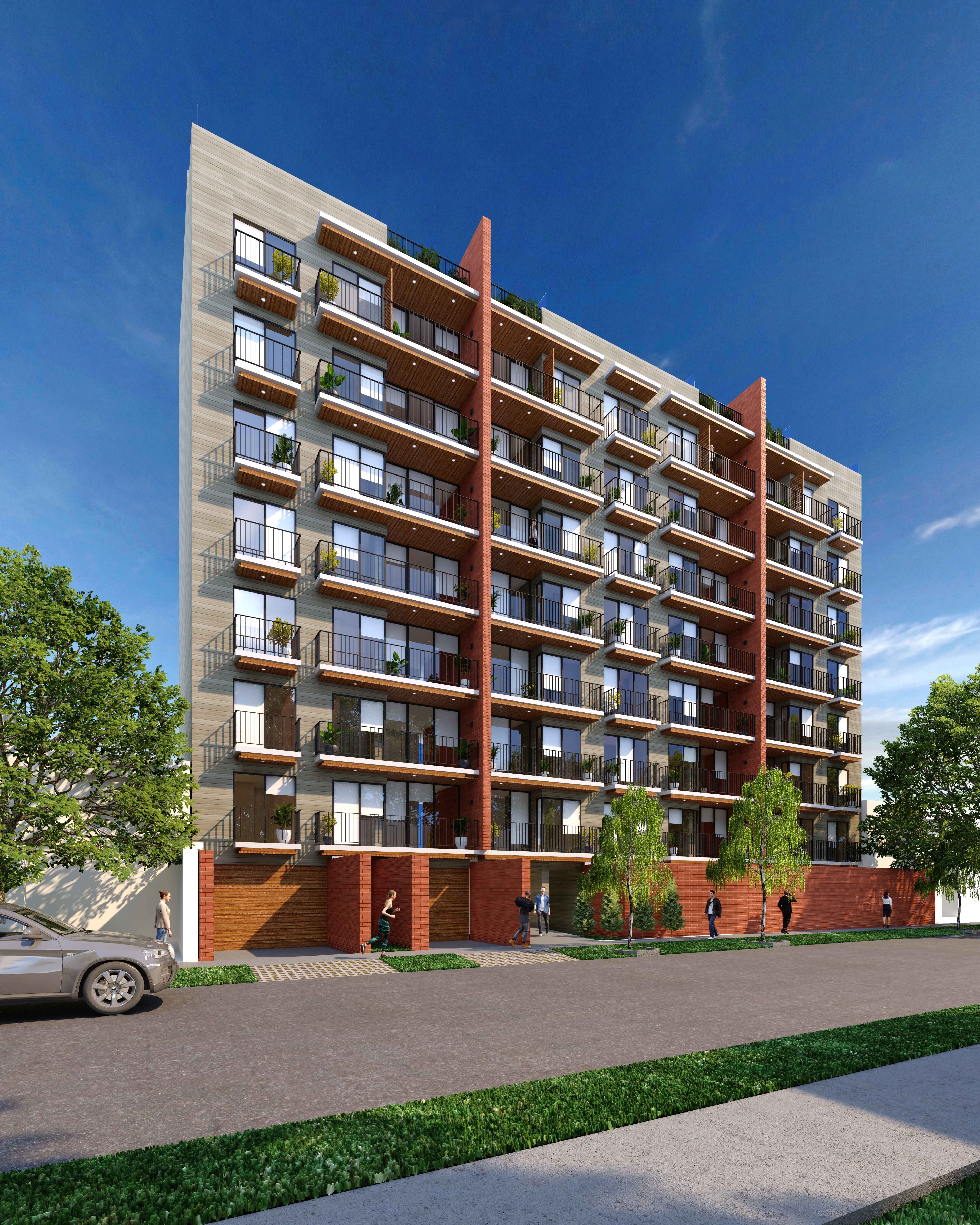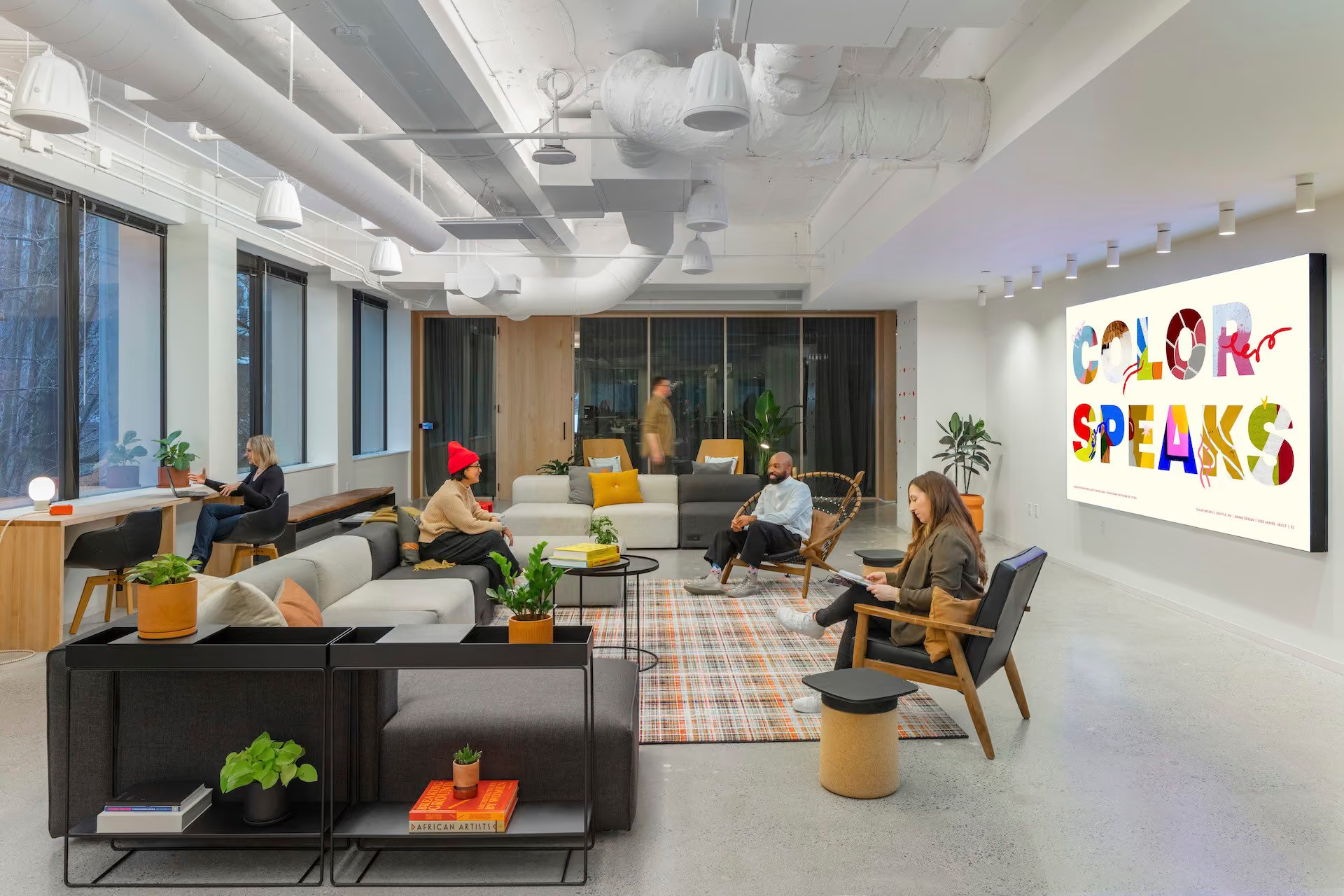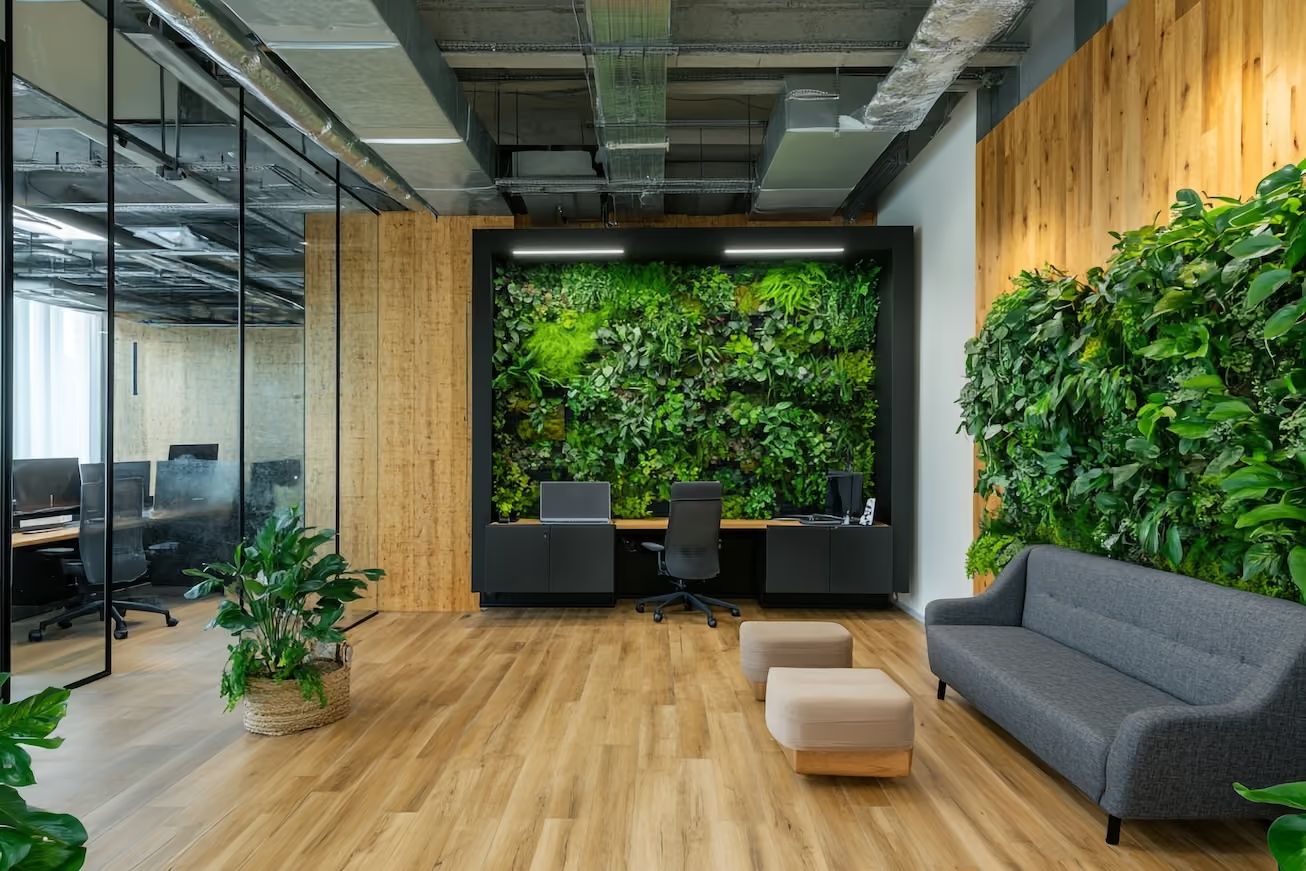
Since NOM-035-STPS-2018 came into force, companies in Mexico have been required to identify and prevent psychosocial risk factors at work. Most handled it with questionnaires and a policy PDF, but the physical environment stayed the same: offices with no daylight, nowhere to eat away from the desk, and not a single space to switch off. Meanwhile, ENSANUT reports that roughly three in four adults in Mexico are overweight or obese, and diabetes is among the country's leading causes of death. Fitwel, developed by the U.S. CDC and GSA, brings that problem into building design: visible, inviting stairs, water stations, healthy food, break areas, lactation rooms and access to active transportation. For corporate offices on Reforma, in Santa Fe, Monterrey or Guadalajara, it's a way to prove through an independent third party that the building takes care of the people inside it.
Gap assessment: we review the building or project against the applicable Fitwel scorecard and cross-check findings with what your company has already documented for NOM-035.
Registration and target level: we register the project on the Fitwel portal and set a one-, two- or three-star goal based on budget and timeline.
Implementation: we coordinate physical upgrades (stairs, water stations, break areas, bike racks) and draft policies on healthy food, smoke-free spaces and emergency and earthquake preparedness.
Certification and follow-up: we submit documentation for review, secure the seal —valid for three years— and set up the recertification plan.
Fitwel charges a registration fee and a per-building certification fee, with preferential terms for portfolios, which matters for FIBRAs and developers with multiple assets. Because it doesn't require on-site performance testing, the total cost is considerably lower than WELL's. Physical investment usually goes into low-cost upgrades such as water stations, bike racks, stair signage and break-area furniture. For existing buildings, the process takes 4 to 8 months; certification is valid for three years.

No. NOM-035 is a legal obligation of the employer, while Fitwel is a voluntary building certification. What Fitwel does is provide physical evidence —break areas, wellbeing policies, restorative environments— that strengthens your psychosocial risk prevention program and makes it easier to defend during an inspection.
It depends on the goal. If the main issue is air quality during environmental contingencies, WELL is more demanding because it tests air and water on site. If the goal is to show a serious commitment to wellbeing at a reasonable cost and on a short timeline, especially in an existing building, Fitwel is the more efficient option. Many portfolios use Fitwel across most buildings and reserve WELL for flagship headquarters.
Yes, through its workplace scorecard. In warehouses and logistics centers, it focuses on cafeterias, hydration, break areas, safe pedestrian routes and staff transportation, which are exactly the issues driving operator turnover in the Bajío and northern Mexico.
Leaf Global. Copyright © 2026. All rights reserved.