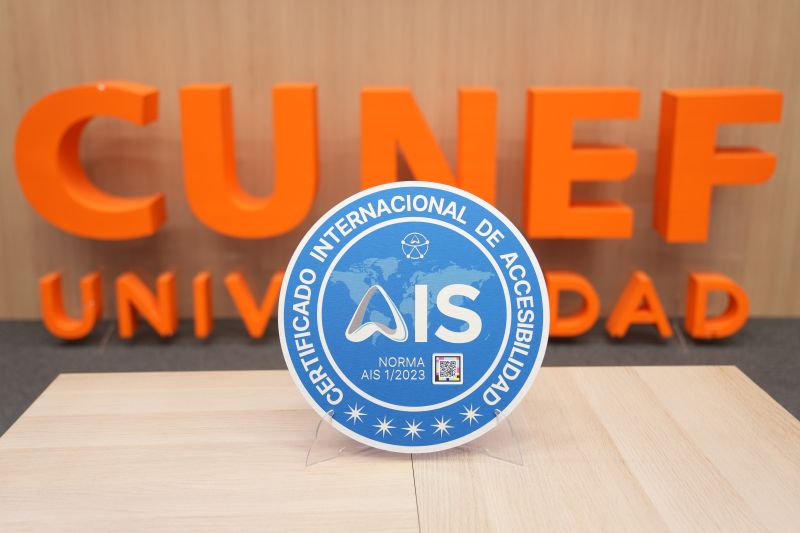
According to the Third National Disability Study of 2022, 17.6% of adults in Chile live with a disability, a share that will keep growing as the population ages rapidly. The legal framework is clear: Law 20,422 sets universal accessibility as a principle, MINVU's Supreme Decree 50 added specific requirements to the General Urban Planning and Construction Ordinance (OGUC) for buildings open to the public, including existing ones, and Law 21,015 requires companies with 100 or more employees to have at least 1% of their workforce be people with disabilities or disability pension recipients. In practice, many companies end up complying through donations or supplier contracts because their own offices and plants can't take those people in. And in an earthquake-prone country, evacuation plans rarely account for someone who uses a wheelchair or can't hear the alarm. AIS certification, from Fundación ARS, assesses on site whether a building really works for everyone, from the parking lot to the assembly point, and recognizes it with 1 to 5 stars shown in a public registry.
On-site assessment: we measure parking, accessible routes, ramps, elevators, restrooms, counters, signage and escape routes against AIS criteria and the OGUC's universal accessibility requirements.
Budgeted improvement plan: we prioritize each gap by impact and cost, separating what can be solved through management, furniture or signage from what requires construction or a building permit.
Implementation and training: we support the upgrades and prepare reception, security guards and joint health and safety committees to assist and evacuate people with disabilities, including new hires under Law 21,015.
Certification and registry: we submit the file to Fundación ARS, which issues the certificate with its star rating and publishes it in the AIS Public Registry.
The cost of AIS depends on the type of asset (physical space, website or product), its floor area and its complexity, and includes the authorized advisor's assessment and support plus Fundación ARS certification fees. Investment in upgrades is the most variable part: in existing offices, retail and service buildings, many gaps are closed with signage, dual-height counters, grab bars, visual alarms and restroom adjustments, and only some require construction. For an operating building with minor upgrades, the process usually takes 3 to 6 months from assessment to certificate.

The OGUC sets the minimums to approve the permit and the final inspection. AIS starts from that base and assesses how the building works day to day: whether accessible routes are clear, whether signage is understandable, whether staff know how to assist and whether evacuation accounts for everyone. It also grades the result in stars, so you can show continuous improvement.
The law requires 1% hiring in companies with 100 or more employees, and many end up using alternative measures because they can't retain the people they hire. AIS identifies the adjustments to workstations, restrooms, cafeterias and routes that make inclusion viable in your own space, which is what ultimately sustains direct hiring.
Yes. You can certify the whole building or the areas controlled by building management, such as entrances, parking, elevators and common areas. Tenants can then certify their own floors, building on the base building assessment.
Leaf Global. Copyright © 2026. All rights reserved.