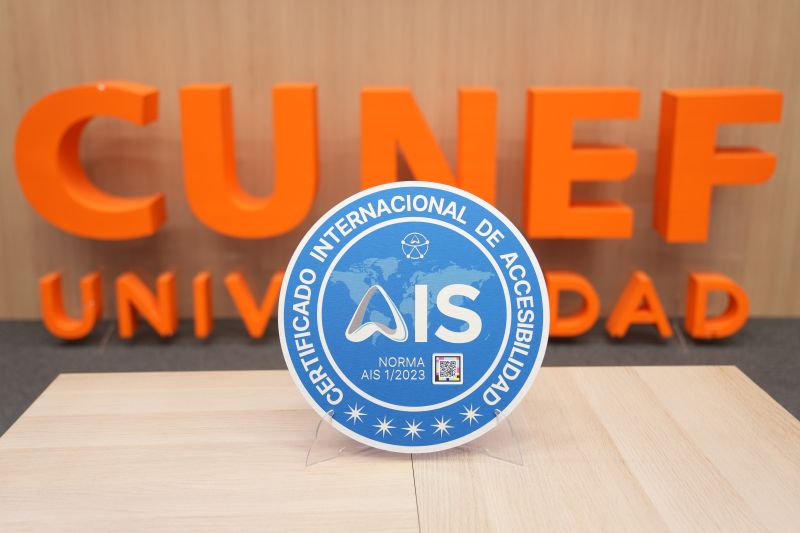
By the end of 2023, China had around 297 million people aged 60 or over, more than one in five, and the China Disabled Persons' Federation estimates that about 85 million live with a disability. The government responded with the Law on the Construction of a Barrier-Free Environment, in force since September 1, 2023, which requires buildings, transport, services and information to be accessible, and with the mandatory GB 55019-2021 code for accessibility in buildings. The pressure shows everywhere: older residential compounds retrofitting elevators, malls redesigning entrances, banks and hospitals reworking their counters. For multinationals with offices in Shanghai, Beijing or Shenzhen, and for the landlords competing for them, the challenge is different: proving with an internationally recognized standard that the building complies, beyond local approval. AIS certification, from Fundación ARS, assesses the building in use against international criteria with Chinese regulations as a reference, and recognizes it with 1 to 5 stars in a public registry.
On-site assessment: we walk the building against AIS criteria and GB 55019-2021, measuring entrances, ramps, elevators, restrooms, counters, tactile paving, bilingual signage and escape routes.
Prioritized improvement plan: we rank gaps by impact and cost, separating what can be solved through management and furniture from what requires construction and local approvals.
Implementation and training: we support the upgrades with the property management team and train customer service and security staff to assist older people and people with disabilities.
Certification and registry: we manage verification with Fundación ARS, which issues the certificate with its star rating and publishes it in the AIS Public Registry.
The cost of AIS depends on the type of asset (physical space, website or product), its size and its complexity, and includes the authorized advisor's assessment and support plus Fundación ARS certification fees. Investment in upgrades varies the most: in existing offices, malls and hotels, many gaps are closed with signage, tactile paving, grab bars and restroom and counter adjustments, and only some require construction. For an operating building with minor upgrades, the process usually takes 3 to 6 months from assessment to certificate.

Local approval confirms the project complied when it was built. AIS assesses how it works today, with on-site measurements, and includes operations, customer service and evacuation. It also delivers a star rating recognized in 32 countries, useful for international tenants and investors who don't know the details of local codes.
Yes. In housing and senior residences, AIS reviews everything from the compound entrance and elevators to restrooms, lighting and signage, and helps prioritize the upgrades with the greatest impact on residents' independence.
Yes. A tenant can certify its own space, as long as the route from the street to the office is accessible. If the base building has gaps, the assessment identifies them so improvements can be coordinated with the landlord.
Leaf Global. Copyright © 2026. All rights reserved.