He leads projects and consulting services under LEED, EDGE, and FITWEL standards, integrating facade optimization strategies, life cycle assessments, and energy modeling to develop high-performance buildings.

Sustainable development is a concept that has become a crucial issue in today's world due to the impact of human activity on the environment and the need to balance economic growth with the preservation of the planet. In this regard, it is important to know the characteristics that define this approach in order to be able to apply it effectively.
The following are the principles of sustainability, the types of sustainability and the sustainable framework of work that make up the characteristics of sustainable development.
The principles of sustainability are the guidelines that guide the approach to sustainable development. These principles are based on the idea that human activities must respect the limits of natural resources and maintain a balance between economic growth, social welfare and environmental protection. Sustainability principles include:
Sustainability can be approached from different perspectives, depending on the field in which it is applied. The following are the main types of sustainability:
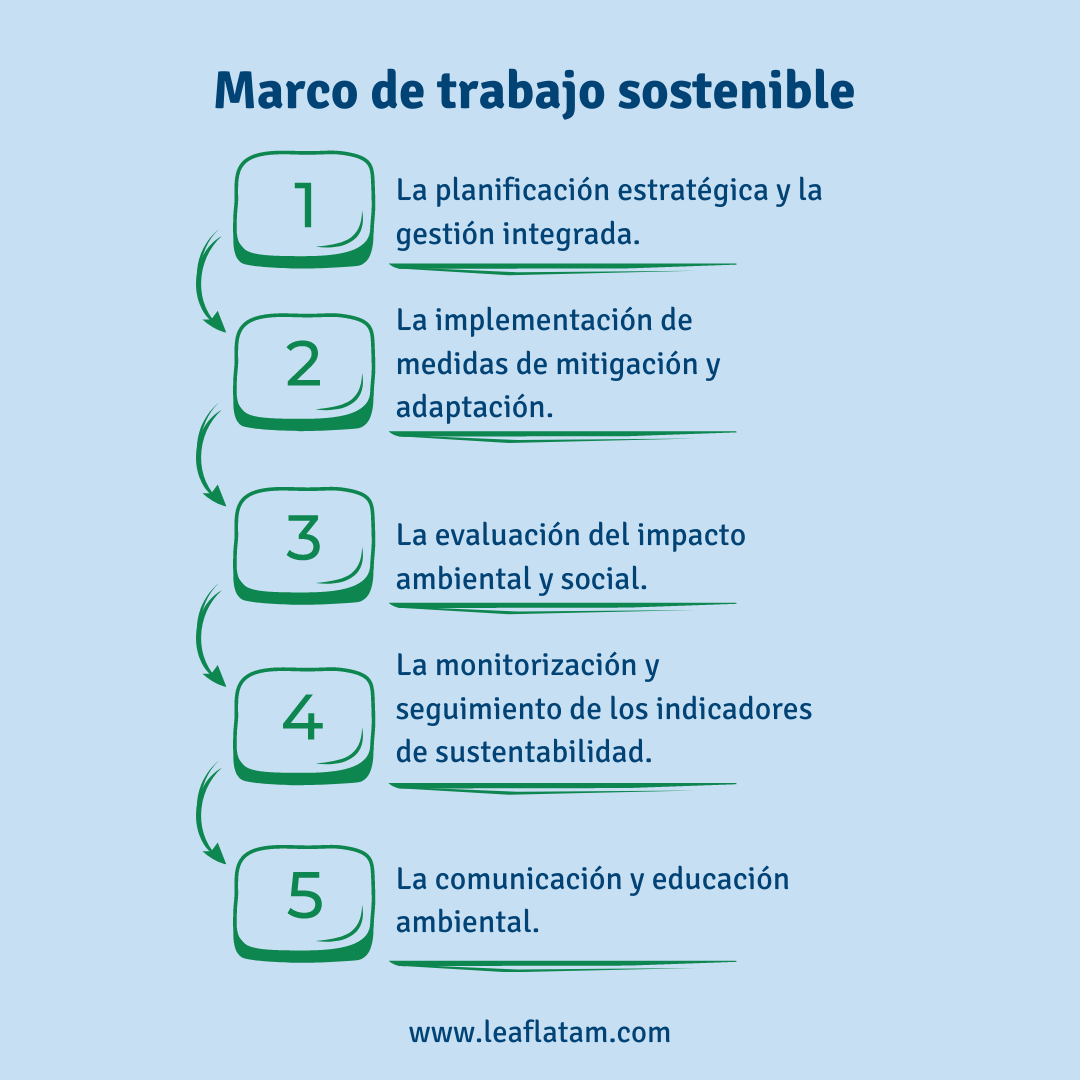
The sustainable work framework is a tool that allows the practical application of sustainable development. This framework is based on the integration of the three types of sustainability mentioned above and focuses on identifying innovative and efficient solutions to achieve balanced development. The elements that make up the sustainable work framework are:
In conclusion, sustainable development is an essential tool for achieving a balance between economic growth, social well-being and environmental protection.
They are environmental sustainability (protecting natural resources), social sustainability (community well-being and equity) and economic sustainability (growth without compromising environmental and social balance).
It's the tool that integrates the three types of sustainability to apply them in practice, identifying innovative and efficient solutions toward balanced development.
International certifications such as LEED, EDGE or WELL are concrete ways of applying these principles to a building or real estate development. Leaf Global supports developers across Latin America in obtaining this type of certification.
Leaf Global. Copyright © 2026. All rights reserved.